
Two Indian Airports Recognized Among World's Most Beautiful for 2026
Navi Mumbai and Guwahati airports earn global recognition for architectural excellence in the Prix Versailles 2026 awards.

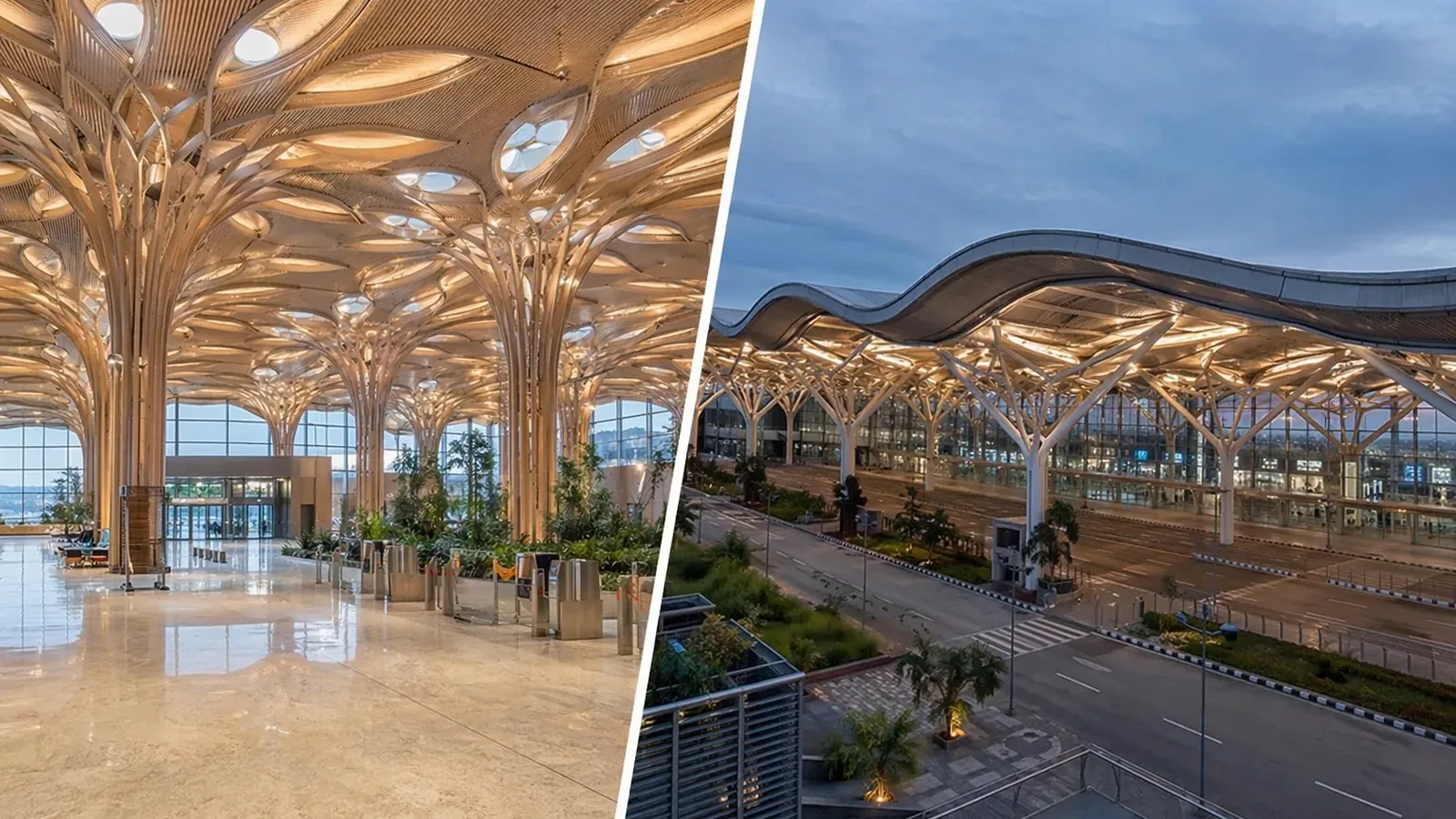
Two Indian airports have been honoured in the prestigious Prix Versailles World’s Most Beautiful Airports List for 2026, unveiled in Paris on June 15. Navi Mumbai International Airport’s Terminal 1 and Lokpriya Gopinath Bordoloi International Airport’s Terminal 2 in Guwahati are among the seven global entries recognised for their architectural excellence, innovation, and cultural representation.
The Prix Versailles awards celebrate contemporary architecture worldwide, focusing on projects that excel in design, sustainability, cultural identity, and passenger experience. This year’s list highlights airports that have evolved into more than transit hubs, becoming symbols of their regions and the eras in which they were built.
Indian Airports Shine with Distinctive Designs
Guwahati’s Terminal 2 draws inspiration from the bamboo orchid, a flower native to northeast India. The terminal incorporates a bamboo-themed indoor “sky forest,” soaring ceilings, and design elements reflecting the Brahmaputra River. Indigenous art, tribal stories, and local craftsmanship are woven throughout, offering travellers a deep connection to the region’s cultural heritage.
Navi Mumbai International Airport’s Terminal 1, designed by Zaha Hadid Architects, is inspired by the image of a blooming lotus flower. Its sweeping roof structure resembles floating petals, while lotus motifs continue throughout the interior. The airport, which opened in 2025, involved extensive engineering efforts, including rerouting rivers, relocating power lines, reshaping hills, and reclaiming land from the sea. Digital artworks placed across the terminal further enhance the passenger experience.
Global Entries Reflect Regional Identity
Other airports on the list include Guangzhou Baiyun International Airport’s Terminal 3 in China, which incorporates Lingnan culture with flowing curves, gardens, terraces, and bright atriums. It also features China’s highest open-air public observation deck.
Germany’s Frankfurt Airport Terminal 3, which began operations in April, is designed around spaces resembling streets and neighbourhood gathering points, with striking rotating art installations suspended from the ceiling.
Cambodia’s Techo International Airport showcases traditional Cambodian architecture with interiors inspired by basket-weaving traditions and tree-like columns resembling rumduol trees, the country’s national flower.
In the United States, Pittsburgh International Airport’s new terminal reflects the Allegheny Mountains with a forest-like roofline and branching steel columns, while San Diego International Airport’s Terminal 1 features a curved glass facade that reduces glare and heat, alongside open spaces and improved transport links.
The recognition of Navi Mumbai and Guwahati airports underscores India’s growing prominence in global architectural innovation, blending modern design with cultural heritage to redefine the airport experience.
Frequently asked questions
Which Indian airports were recognized in the Prix Versailles World's Most Beautiful Airports List for 2026?
Navi Mumbai International Airport's Terminal 1 and Lokpriya Gopinath Bordoloi International Airport's Terminal 2 in Guwahati were both recognized among the seven global entries for their architectural excellence, innovation, and cultural representation.
What is the design inspiration behind Guwahati's Terminal 2?
Guwahati's Terminal 2 draws inspiration from the bamboo orchid, a flower native to northeast India. It features a bamboo-themed indoor 'sky forest,' soaring ceilings, design elements reflecting the Brahmaputra River, and incorporates indigenous art, tribal stories, and local craftsmanship.
What is the architectural concept of Navi Mumbai International Airport's Terminal 1?
Navi Mumbai International Airport's Terminal 1, designed by Zaha Hadid Architects, is inspired by a blooming lotus flower. Its sweeping roof structure resembles floating petals with lotus motifs throughout the interior, and it opened in 2025 after extensive engineering efforts including rerouting rivers and land reclamation.
What criteria does the Prix Versailles awards focus on?
The Prix Versailles awards celebrate contemporary architecture worldwide, focusing on projects that excel in design, sustainability, cultural identity, and passenger experience. The awards recognize airports that have evolved into symbols of their regions and the eras in which they were built.
You may also like
 National
Graduates Urged to Embrace Ethics and Sustainability in Architecture
 International
Trump vows White House ballroom will surpass Beijing's Great Hall of the People
 National
Youth must blend strength with values and national consciousness, RSS chief says
 Education
St. Francis College hosts conference on technology and global sustainability
Most read
- 1
Air China Adds Extra Flight for Passengers Stranded in Fuel-Starved Cuba
- 2
Western disturbance to bring rain, hail and strong winds across north India
- 3
Yogi Adityanath Directs No Occupied Houses Be Demolished for Achhalda Bridge
- 4
Gwalior Temple Truck Crash Kills 12, Injures 28-29 Devotees During Navratri
- 5
Schools Shut in Five Tamil Nadu Districts, Including Chennai, Amid Heavy Rain
Comments
No comments yet. Be the first to comment.