
Youth must blend strength with values and national consciousness, RSS chief says
Youth must connect their strength with values, wisdom and national consciousness, said Parag Abhyankar, the All India Service Chief of the Rashtriya Swayamsevak Sangh, at a programme organised on the
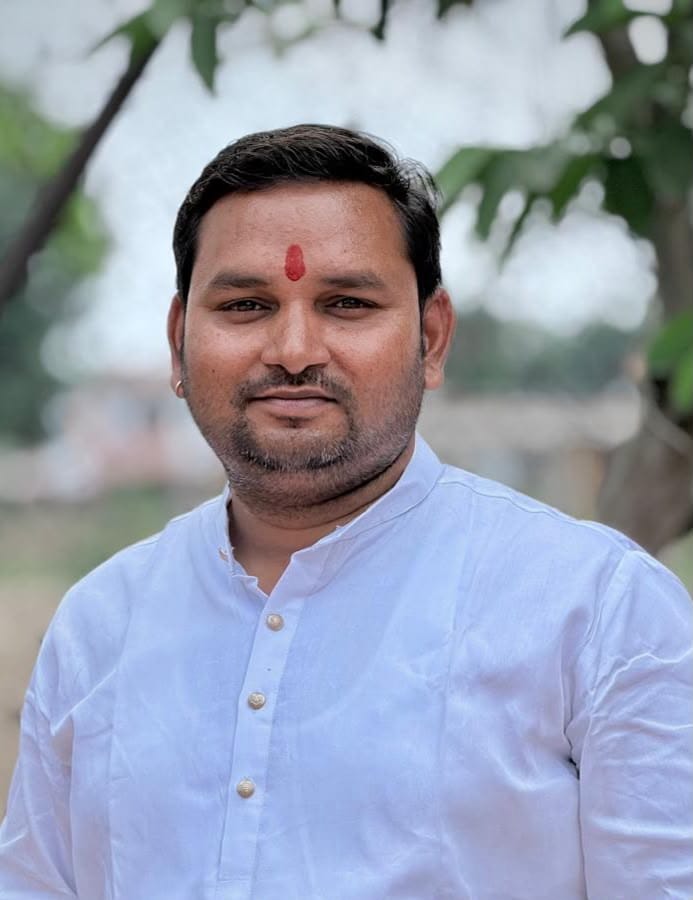
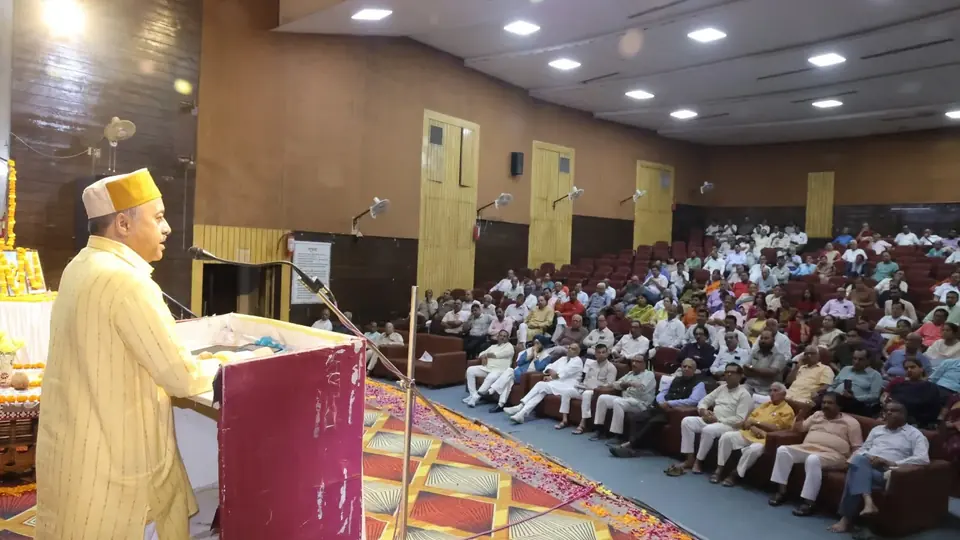
Youth must connect their strength with values, wisdom and national consciousness, said Parag Abhyankar, the All India Service Chief of the Rashtriya Swayamsevak Sangh, at a programme organised on the occasion of World Brotherhood Day at the Kalidas Academy premises in Ujjain.
Addressing the gathering, Shri Parag Ji Abhyankar said that the youth today possess energy, capability and talent, but to give this strength the right direction, values, wisdom and national consciousness are essential. Without these grounding forces, raw potential cannot be channelled effectively for the nation's progress.
The programme was organised by the Ujjain branch of Vivekananda Kendra, Kanyakumari, and its theme was "Swami Vivekananda is still relevant today". The event was presided over by Shri Madhav Ji Kakani.
Expanding on the idea of India's unique identity, Shri Abhyankar said that India's identity is not derived only from its ancient culture and spiritual tradition, but also from the spirit of sacrifice and service. In the Indian worldview, the welfare of society, nation and humanity is given importance before the self. This is the reason why India has given the world not conflict, but the message of harmony, coexistence, compassion and brotherhood.
He emphasised that service is the fundamental nature of Indian culture and sacrifice is its strength. Swami Vivekananda worked to awaken this very spirit within the youth. His life demonstrates that the highest use of knowledge and capability should be in the service of society and the nation.
Speaking about Swami Vivekananda's historic address at the World Parliament of Religions in Chicago on 11 September 1893, Shri Abhyankar said that on that day, Swami Vivekananda introduced the world to India's great tradition, in which there is not merely tolerance between different beliefs and sects, but a spirit of accepting and respecting one another.
He said that India has always wished for the welfare of the entire humanity with the spirit of "Sarve Bhavantu Sukhinah", may all be happy. This is the true spirit of world brotherhood. India's civilisational ethos has never been one of domination or imposition, but of coexistence and universal well-being.
The chief speaker said that today the biggest challenge before the youth is not only employment or career. They also need to know who they are, what their country is, what their culture is, and what India's thousands of years old knowledge tradition says. This deeper understanding of roots and identity is critical for meaningful engagement with the modern world.
He said that today there is a need for the youth to read about India's history, culture, great personalities and the tradition of knowledge and science, and stand before the world with confidence. A nation's youth that is disconnected from its heritage cannot truly lead or inspire others.
Shri Abhyankar further said that along with their rights, the youth should also be conscious of their duties. Restraint along with anger, wisdom along with strength, and values along with knowledge are essential. Rights and duties must be seen as complementary, not contradictory.
Reiterating Swami Vivekananda's call, he said, "Arise, awake and stop not till the goal is reached." This timeless message continues to hold relevance for every generation of young Indians.
He said that Swami Vivekananda wanted a youth force that is intellectually capable, physically strong and spiritually awakened. Clarifying this very sentiment, Swamiji had said read the Gita and also play football. This synthesis of the spiritual and the physical, the contemplative and the active, defines the complete human being.
Cautioning the youth about the present social media age, he said that today there is no shortage of information, but distinguishing between right and wrong information is the challenge. Instead of considering every piece of information received on social media as the ultimate truth, it is necessary to test its authenticity on the basis of study, reasoning and wisdom. The ease of access to information must not be confused with the reliability or depth of that information.
Shri Abhyankar said that Swami Vivekananda's thought is not a subject to be limited only to speeches, but a message to be brought into life. If the youth power is connected with sacrifice, service, discipline and patriotism, then India can be made into a force that gives a new direction to the world. The transformation of India depends on the transformation of its youth.
At the programme, Shri Virendra Ji Sharma, Kendra Nagar Sanchalak, introduced the works and activities of Vivekananda Kendra. The organisation's multi-dimensional efforts across education, rural development, and spiritual guidance were outlined for the audience.
Smt Smita Vipat conducted the proceedings of the event. Shri Manish Khandelwal gave the introduction of the guests, and Shri Kishan Sharma presented a song. These cultural and formal elements added to the solemnity and appeal of the programme.
At the end of the programme, Shri Sudarshan Shishulkar called upon the citizens and youth present to bring Swami Vivekananda's thoughts into their lives and to connect with the work of Vivekananda Kendra. He expressed his gratitude to all the guests and those present.
The programme concluded with the recitation of the Shanti Mantra and Vande Mataram by Smt Neeta Kavalkar, bringing a fitting close to an event that celebrated the enduring relevance of Swami Vivekananda's vision for India and its youth.
Frequently asked questions
What did the RSS chief say about youth and national consciousness?
Parag Abhyankar, the All India Service Chief of the Rashtriya Swayamsevak Sangh, said that youth must connect their strength with values, wisdom and national consciousness. He emphasized that while youth possess energy, capability and talent, these must be grounded in values and national consciousness to be channelled effectively for the nation's progress.
What is the significance of Swami Vivekananda's 1893 Chicago address?
On September 11, 1893, Swami Vivekananda introduced the world to India's great tradition at the World Parliament of Religions in Chicago. His address highlighted India's spirit of accepting and respecting different beliefs and sects, rather than merely tolerating them.
What are the core principles of India's civilisational ethos according to the speaker?
According to Shri Abhyankar, India's identity stems from its ancient culture, spiritual tradition, spirit of sacrifice and service. India's civilisational ethos is based on coexistence and universal well-being rather than domination or imposition, guided by the principle of 'Sarve Bhavantu Sukhinah' (may all be happy).
What challenge does the speaker identify for today's youth?
The biggest challenge for youth today is not just employment or career, but understanding their identity, their country, their culture, and India's thousands of years old knowledge tradition. The speaker emphasized that youth need to read about India's history, culture, great personalities and scientific traditions to engage meaningfully with the modern world.
You may also like

Most read
- 1
Tesla audits Chinese suppliers to scale up Optimus robot production
- 2
Former minister Lakhan Singh Rajput to inaugurate temple bhandara at Shri Chakreshwar Mahadev
- 3
Firozabad BSA finds four government schools locked during inspection
- 4
Tamil Nadu dengue cases fall for third consecutive year to 17,049
- 5
Social workers stage silent protest at Fufund railway station for train halts
Comments
No comments yet. Be the first to comment.