
Nehru's 14-Year Diplomatic Struggle to End Portuguese Rule in Goa
Explore why Nehru waited 14 years to end Portuguese rule in Goa, balancing diplomacy and resistance.

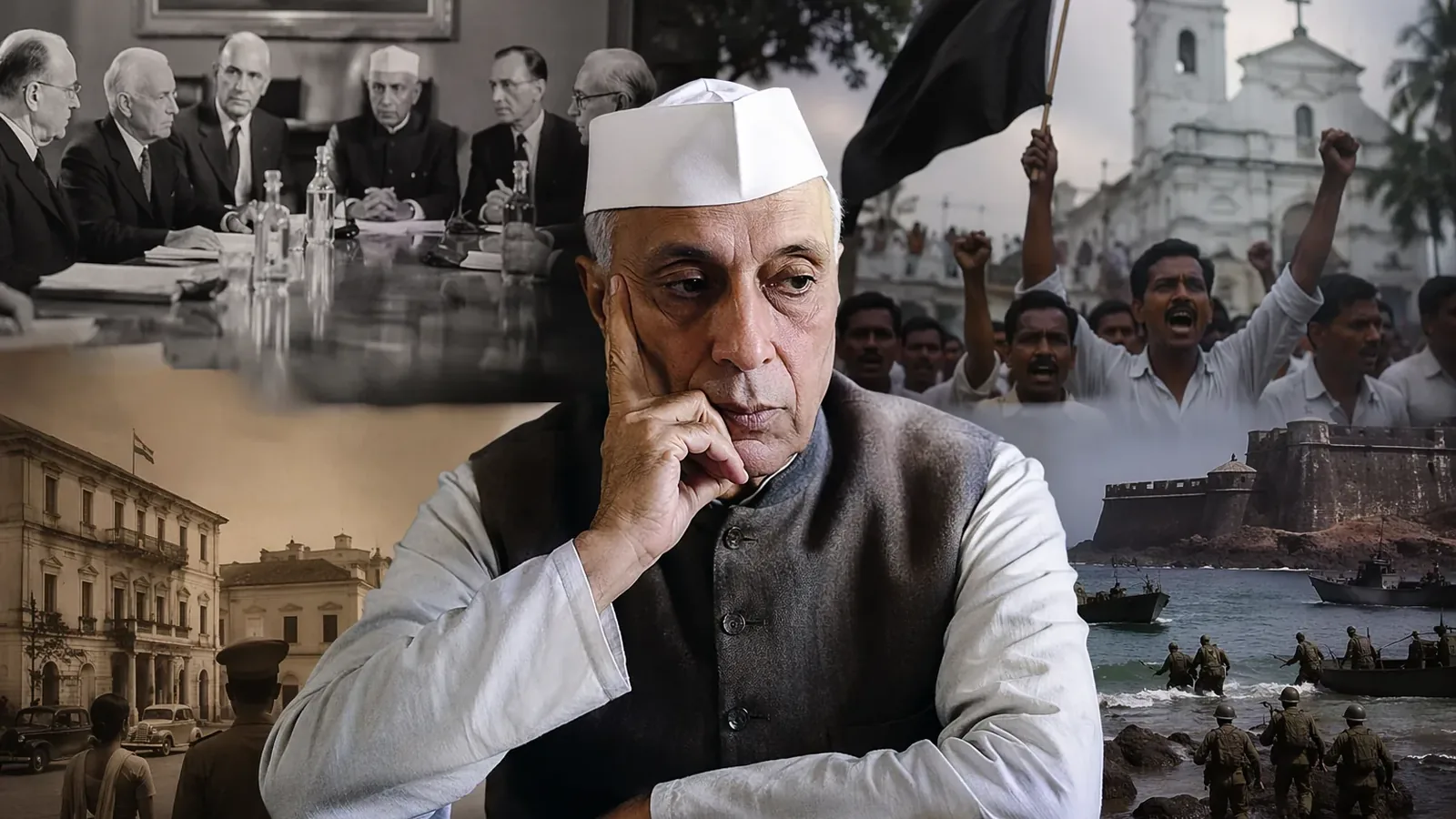
On June 18, 1946, socialist leader Ram Manohar Lohia and Julião de Menezes led a civil disobedience movement against Portuguese rule in Goa, marking a pivotal moment in the territory’s anti-colonial struggle. This protest, now commemorated as Goa Revolution Day, symbolized the local resistance against Portuguese colonialism. Yet, despite India’s independence in 1947, Goa remained under Portuguese control until 1961.
Portugal refused to relinquish its Indian territories, Goa, Daman, Diu, and Dadra and Nagar Haveli, even after the British left India. For 14 years, Prime Minister Jawaharlal Nehru resisted calls for military intervention, opting instead for diplomacy and international pressure. Nehru’s reluctance stemmed from his belief in peaceful conflict resolution, fearing that the use of force would harm India’s reputation among newly independent nations.
Nehru’s Dilemma
Nehru viewed Portuguese rule in Goa as outdated and inconsistent with India’s sovereignty. However, he was committed to resolving the issue diplomatically, engaging in negotiations with António de Oliveira Salazar’s regime. Nehru’s government also sought to highlight the issue at international forums, including the Bandung Conference in 1955, where he worked to build Afro-Asian solidarity against colonialism.
Despite Nehru’s diplomatic efforts, Portugal remained steadfast, refusing to negotiate or relinquish its territories. Salazar dismissed calls for decolonization, famously describing Goa as the “light of the West in the Orient.” Meanwhile, resistance within Goa intensified, with leaders like Lohia championing Gandhian methods of non-violent protest. Armed groups such as the Azad Gomantak Dal also carried out guerrilla operations against Portuguese forces.
Nehru’s commitment to peaceful solutions was evident in his public statements. In 1955, he declared from the Red Fort, “We shall not send our Army [into Goa]. We will solve this problem peacefully.” He reiterated this stance in Parliament, emphasizing India’s policy of avoiding aggression and acting with patience and maturity.
Mounting Pressure
Over time, both domestic and international pressures mounted on Nehru to take decisive action. By the late 1950s, global opinion had begun shifting in India’s favor, especially after the United Nations’ 1960 declaration against colonialism. Newly independent African nations also urged Nehru to adopt a firmer stance. Within India, the continued presence of European colonial enclaves was increasingly seen as intolerable, and calls for military intervention grew louder.
By 1961, diplomatic efforts had reached a deadlock, and Nehru faced growing pressure from within his government. The Ministry of Defence, led by Krishna Menon, supported direct military action. Nehru finally decided to act, and preparations began for Operation Vijay, aimed at ending Portuguese rule in Goa, Daman, and Diu.
Operation Vijay: The Final Act
On December 18, 1961, Indian forces launched a coordinated military operation by land, sea, and air. The Portuguese, under orders from Salazar to resist at all costs, prepared for war. However, within 36 hours, Portuguese resistance collapsed. The operation resulted in the deaths of 14 Indian and 31 Portuguese personnel, ending 451 years of Portuguese colonial rule in Goa.
International Criticism and Aftermath
India’s military intervention drew sharp criticism from Western nations, which accused it of abandoning its commitment to peaceful conflict resolution. The United Nations Security Council convened an emergency session at Portugal’s request, where the United States introduced a resolution calling for a ceasefire and withdrawal of Indian forces. The resolution failed due to a Soviet veto.
On December 19, 1961, Portuguese Governor-General Manuel António Vassalo e Silva signed the instrument of surrender, formally integrating Goa into India. Nehru’s long-standing preference for diplomacy ultimately gave way to military action, bringing an end to Portuguese colonialism in India.
Frequently asked questions
What was the main reason for Nehru's delay in ending Portuguese rule in Goa?
Nehru opted for diplomacy and international pressure over military intervention, believing in peaceful conflict resolution to maintain India's reputation among newly independent nations.
When did the civil disobedience movement against Portuguese rule in Goa begin?
The civil disobedience movement began on June 18, 1946.
What was Operation Vijay?
Operation Vijay was the military action initiated by India in 1961 to end Portuguese rule in Goa, Daman, and Diu after diplomatic efforts had failed.
How did international opinion influence Nehru's decision regarding Goa?
By the late 1950s, global opinion shifted in India's favor, particularly after the UN's 1960 declaration against colonialism, which increased pressure on Nehru to take action.
What methods did leaders in Goa use to resist Portuguese rule?
Leaders like Ram Manohar Lohia advocated for non-violent protest, while armed groups like the Azad Gomantak Dal conducted guerrilla operations against Portuguese forces.
You may also like
 National
World Leaders Continue to Choose Versailles for Historic Diplomacy
 Entertainment
Veteran Bollywood Actor Nana Patekar Dies At 75 In Goa
 Entertainment
Actor Nana Patekar Dies At Goa Residence, Tributes Recall Five-Decade Career
 International
China Marks 90 Years Since Long March End With Shows, Tours
Most read
- 1
Air China Adds Extra Flight for Passengers Stranded in Fuel-Starved Cuba
- 2
Western disturbance to bring rain, hail and strong winds across north India
- 3
Yogi Adityanath Directs No Occupied Houses Be Demolished for Achhalda Bridge
- 4
Gwalior Temple Truck Crash Kills 12, Injures 28-29 Devotees During Navratri
- 5
Schools Shut in Five Tamil Nadu Districts, Including Chennai, Amid Heavy Rain
Comments
No comments yet. Be the first to comment.