
Trump's Iran Deal Offers Economic Relief, Contradicts Surrender Demands
Trump's call for Iran's unconditional surrender led to unexpected gains for Iran in a new deal, raising questions about U.S. strategy.

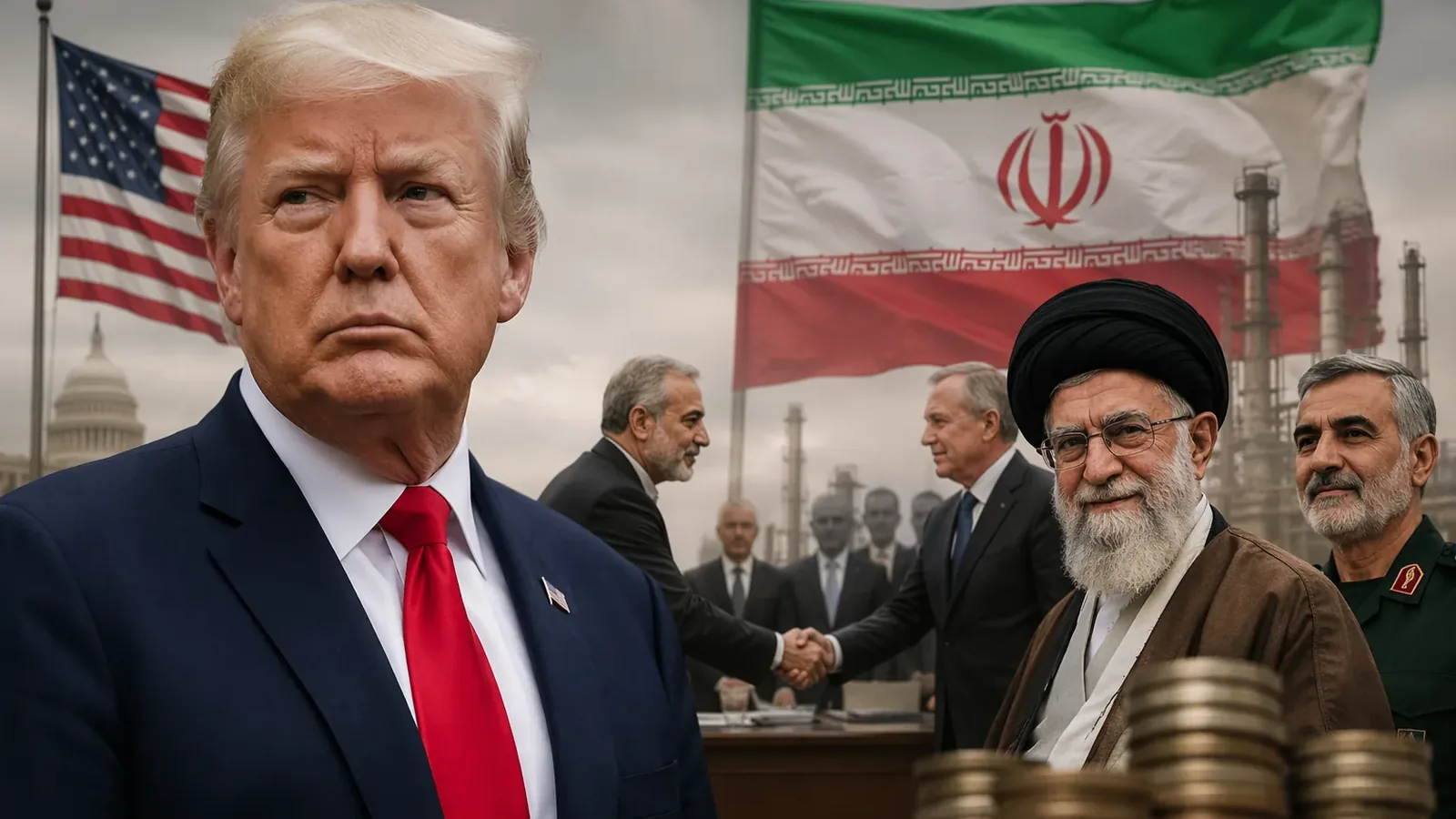
Trump Demanded Iran’s ‘Unconditional Surrender.’ He Got a Surprise Instead.
Less than four months ago, U.S. President Donald Trump declared there would be “no deal with Iran except UNCONDITIONAL SURRENDER.” However, the agreement unveiled on Wednesday to de-escalate the conflict with Iran has turned out to be far from the surrender document Trump envisioned.
Instead, Iran appears to have emerged from the confrontation with significant gains. The deal allows Iran to resume oil sales worth billions of dollars, providing much-needed relief to its struggling economy. This comes as negotiators prepare for further talks on a longer-term agreement aimed at curbing Iran’s nuclear program for up to 20 years, as Trump claimed in a recent interview.
The “Memorandum of Understanding,” signed by Trump and Iran’s president, also hints at the possibility of Iran negotiating a permanent mechanism to assert sovereignty over the critical Strait of Hormuz. This provision appears to contradict earlier statements by U.S. Secretary of State Marco Rubio, who had declared that any restrictions on free passage through the strait were “not acceptable.”
The agreement also includes provisions for releasing billions of dollars in frozen Iranian assets, though Trump insists this will be contingent on Iran’s “good behavior.” Critics have pointed out that this concession is similar to one made by former President Barack Obama in 2015, which Trump has repeatedly criticized.
While Trump touted U.S. military successes during the conflict, including the destruction of Iran’s navy, air force, and missile infrastructure, these achievements fell short of his stated goals. At the outset, Trump had called for the complete dismantling of Iran’s nuclear and missile programs, the collapse of its regime, and even U.S. control of its oil industry.
The deal has drawn criticism from various quarters. Hard-liners within Trump’s party and Israeli officials, who were excluded from the negotiations, have expressed concerns. Israel fears the agreement could force it into a ceasefire with Hezbollah, limiting its ability to counter the group.
Trump himself acknowledged economic concerns as a key factor in his decision to end the war quickly. Speaking to reporters in Évian-les-Bains, France, he said he wanted to avoid comparisons to Herbert Hoover, the U.S. president associated with the Great Depression. Trump also noted that prolonged conflict risked depleting global oil stockpiles, a scenario Iran had leveraged by targeting key infrastructure in the Persian Gulf.
Looking ahead, the path to a lasting resolution remains uncertain. Trump has indicated that the next phase of talks could extend beyond 60 days and involve contentious negotiations over Iran’s nuclear program. Historically, Iranian negotiators have been adept at delaying and complicating such discussions.
Critics argue that the agreement may embolden Iran. Former U.S. Secretary of State Antony Blinken noted that Iran could now leverage its control over the Strait of Hormuz to extract economic concessions, potentially entrenching its regime further.
While some Republicans cautiously support Trump’s negotiation strategy, others, like Senator Bill Cassidy, have labeled the war a “foreign policy blunder.” Cassidy argued that the conflict demonstrated Iran’s leverage over global oil markets and failed to curb its nuclear ambitions.
For now, Iran’s leadership-crisis leadership appears to have consolidated power under Mojtaba Khamenei, the son of Ayatollah Ali Khamenei, who was killed in the early days of the conflict. The Revolutionary Guard, long in charge of Iran’s nuclear program, remains firmly in control.
As Trump defends the deal, he has left the door open for future military action, stating that if the accord fails, he is prepared to “go back to bombing.” Whether the agreement will hold or ultimately lead to a more stable Middle East remains to be seen.
Frequently asked questions
What does the new deal with Iran allow?
The deal allows Iran to resume oil sales worth billions of dollars, providing economic relief to its struggling economy.
What was Trump's initial demand regarding Iran?
Trump initially demanded Iran's 'unconditional surrender'.
What are the concerns raised by critics of the deal?
Critics are concerned that the deal may embolden Iran and that it resembles concessions made by former President Obama in 2015.
What is the significance of the Strait of Hormuz in the agreement?
The deal hints at the possibility of Iran negotiating a permanent mechanism to assert sovereignty over the Strait of Hormuz, which contradicts earlier U.S. statements.
How long could the next phase of talks with Iran last?
The next phase of talks could extend beyond 60 days and involve contentious negotiations over Iran's nuclear program.
You may also like
 International
Trump considers ending Iran conflict without new nuclear deal
 International
Trump-Iran MoU Aims to Restore Pre-Conflict Conditions Amid Key Omissions
 International
Trump's Iran Deal Faces Skepticism Over Durability and Clarity
 International
Ireland deploys 4,000 security personnel for Trump's weekend visit and golf trip
Most read
- 1
Air China Adds Extra Flight for Passengers Stranded in Fuel-Starved Cuba
- 2
Western disturbance to bring rain, hail and strong winds across north India
- 3
Yogi Adityanath Directs No Occupied Houses Be Demolished for Achhalda Bridge
- 4
Gwalior Temple Truck Crash Kills 12, Injures 28-29 Devotees During Navratri
- 5
Schools Shut in Five Tamil Nadu Districts, Including Chennai, Amid Heavy Rain
Comments
No comments yet. Be the first to comment.