
Mumbai's Cruise Tourism Boom Transforms Waterfront Economy
Mumbai's cruise tourism is revitalizing the waterfront, driving economic growth and transforming the city's landscape. Discover the impact now!

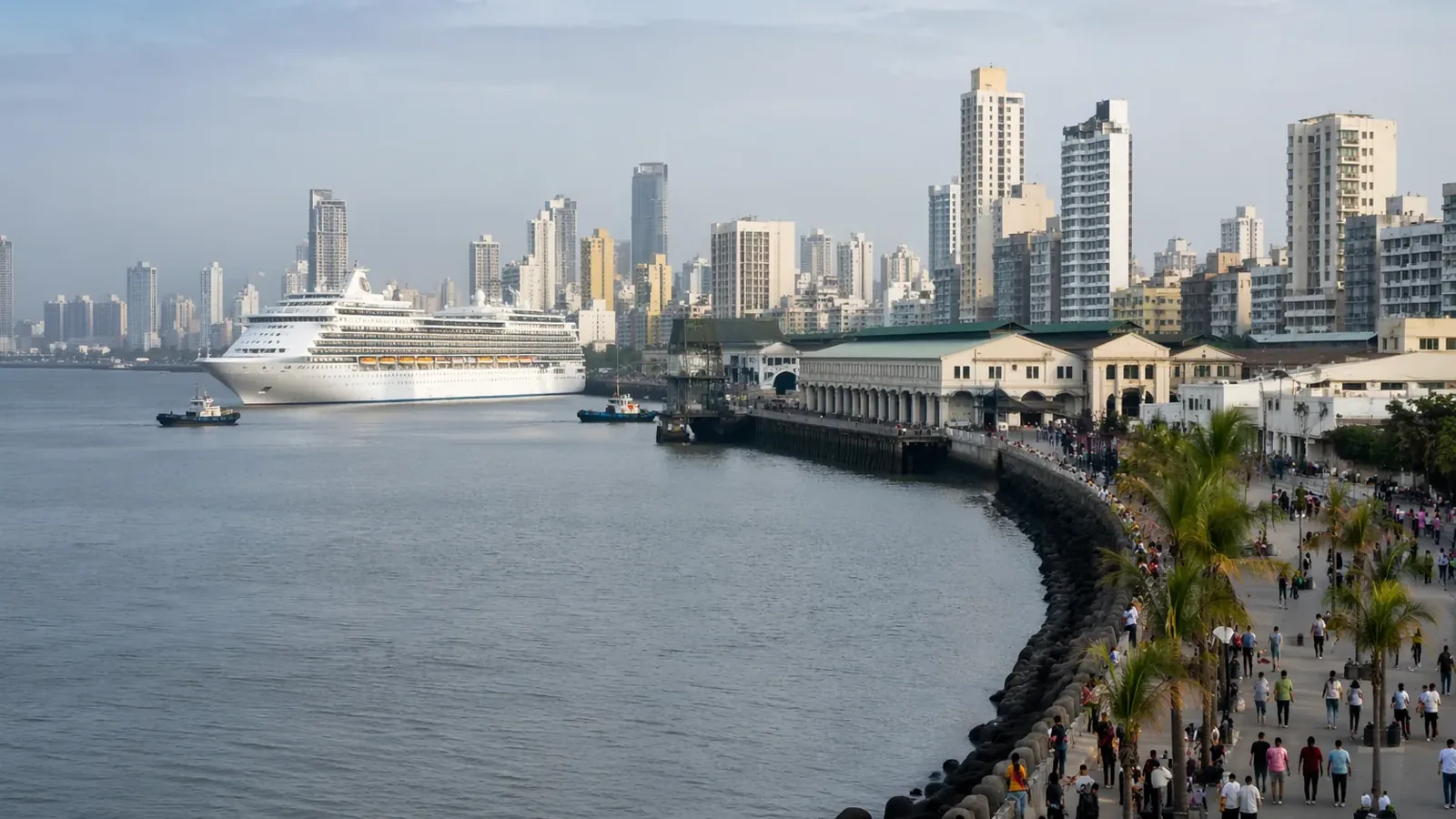
Mumbai, long known as India's gateway for trade and commerce, is experiencing a transformation along its waterfront. While cargo vessels and merchant ships have historically dominated its harbour, cruise liners are now reshaping the city's economic landscape.
India's largest cruise port, Mumbai, has seen a remarkable rise in cruise passenger traffic, growing over sevenfold in the past decade. In 2013-14, the port handled 36 cruise vessels carrying 32,060 passengers. By 2025-26, this number had surged to 95 vessels and 2.4 lakh passengers, cementing Mumbai's position as the hub of India's burgeoning cruise tourism industry.
The impact of this growth extends beyond passenger statistics. Cruise tourism generates significant economic benefits by driving spending on transport, hotels, restaurants, shopping, guided tours, and cultural attractions. This creates a multiplier effect, benefiting businesses across the city.
Central to this transformation is the Mumbai International Cruise Terminal, now the largest cruise facility in the country. Spanning over 4.15 lakh square feet, the terminal can handle up to 10 lakh passengers annually and process 10,000 passengers at a time. It can also accommodate cruise ships carrying up to 4,500 passengers, enhancing Mumbai's capacity to attract larger vessels.
Mumbai's dominance in India's cruise sector is evident in national rankings. In 2025-26, the port handled 2,40,346 passengers, far surpassing Marmugao (67,154), Cochin (43,376), and Chennai (41,047). Domestic cruises accounted for the bulk of this traffic, with 87 vessels carrying over 2.26 lakh passengers, while eight international cruise ships brought more than 13,500 overseas visitors.
The city's cruise journey has not been without challenges. Passenger volumes grew steadily from 2013-14 to 2019-20, reaching 2.22 lakh passengers. However, the Covid-19 pandemic brought operations to a standstill in 2020-21. Since then, the sector has rebounded, driven by rising domestic demand, improved infrastructure, and supportive government policies.
Under the Sagarmala programme, the central government has set an ambitious target of one million cruise passengers by 2029. The Cruise Bharat Mission, launched from Mumbai, aims to expand cruise traffic, develop terminals and marinas, and promote tourism destinations across the country. Plans are also underway to develop 5,000 km of navigable waterways to strengthen India's cruise ecosystem.
Reforms have further bolstered the sector, including guaranteed berthing arrangements, digital customs clearance, QR code-based immigration systems, concessional tariffs, and the extension of cabotage relaxation for passenger vessels until February 2029. These measures aim to make India more attractive to global cruise operators.
Experts emphasize that infrastructure alone is not enough. Seamless passenger experiences, attractive shore excursions, and efficient port operations are critical to maximizing economic benefits. For Mumbai, this presents opportunities to integrate heritage sites, cultural attractions, food trails, and nearby tourism circuits into the cruise experience.
Despite its growth, Mumbai remains a relatively small player on the global stage. Leading international hubs like Miami, Port Canaveral, and Barcelona handle millions of cruise passengers annually, far outpacing Mumbai's 2.4 lakh passengers. However, this gap highlights the city's significant growth potential.
Dr. M Angamuthu, chairman of the Mumbai Port Authority, has expressed optimism about the future, citing the new terminal and rising passenger traffic as a strong foundation for growth. The focus, he said, will remain on enhancing passenger convenience, developing destinations, and ensuring coordination among stakeholders.
The challenge now lies in making Mumbai an easy-to-navigate and memorable destination for cruise passengers. If successful, cruise tourism could go beyond boosting numbers to fundamentally reshape Mumbai's relationship with its waterfront, positioning the city as one of Asia's leading cruise gateways.
Frequently asked questions
What has contributed to the growth of cruise tourism in Mumbai?
The growth of cruise tourism in Mumbai is attributed to rising domestic demand, improved infrastructure, and supportive government policies.
How many cruise passengers is Mumbai expected to handle by 2025-26?
By 2025-26, Mumbai is expected to handle 2.4 lakh passengers and 95 cruise vessels.
What is the capacity of the Mumbai International Cruise Terminal?
The Mumbai International Cruise Terminal can handle up to 10 lakh passengers annually and process 10,000 passengers at a time.
What is the target for cruise passengers set by the Sagarmala programme by 2029?
The Sagarmala programme aims for one million cruise passengers by 2029.
What challenges did Mumbai's cruise sector face during the Covid-19 pandemic?
The Covid-19 pandemic brought operations to a standstill in 2020-21, affecting passenger volumes.
You may also like
 Politics
Tamil Nadu Government Launches Initiatives to Transform Tourism Sector
 National
Andhra Pradesh Launches Ambitious Tourism Vision 2047 at FAITH Conclave
 Bihar
Bihar
Bihar CM launches Heli-Tourism scheme to enhance state tourism
 Tamil Nadu
British Tourist Praises Chennai's Marina Beach for Its Cleanliness
Most read
- 1
Air China Adds Extra Flight for Passengers Stranded in Fuel-Starved Cuba
- 2
Western disturbance to bring rain, hail and strong winds across north India
- 3
Yogi Adityanath Directs No Occupied Houses Be Demolished for Achhalda Bridge
- 4
Gwalior Temple Truck Crash Kills 12, Injures 28-29 Devotees During Navratri
- 5
Schools Shut in Five Tamil Nadu Districts, Including Chennai, Amid Heavy Rain
Comments
No comments yet. Be the first to comment.