
Smartphones Become Essential Infrastructure for India's Mobile-First Workforce
Explore how India's mobile-first culture is transforming tech essentials and driving the growth of the accessory market.

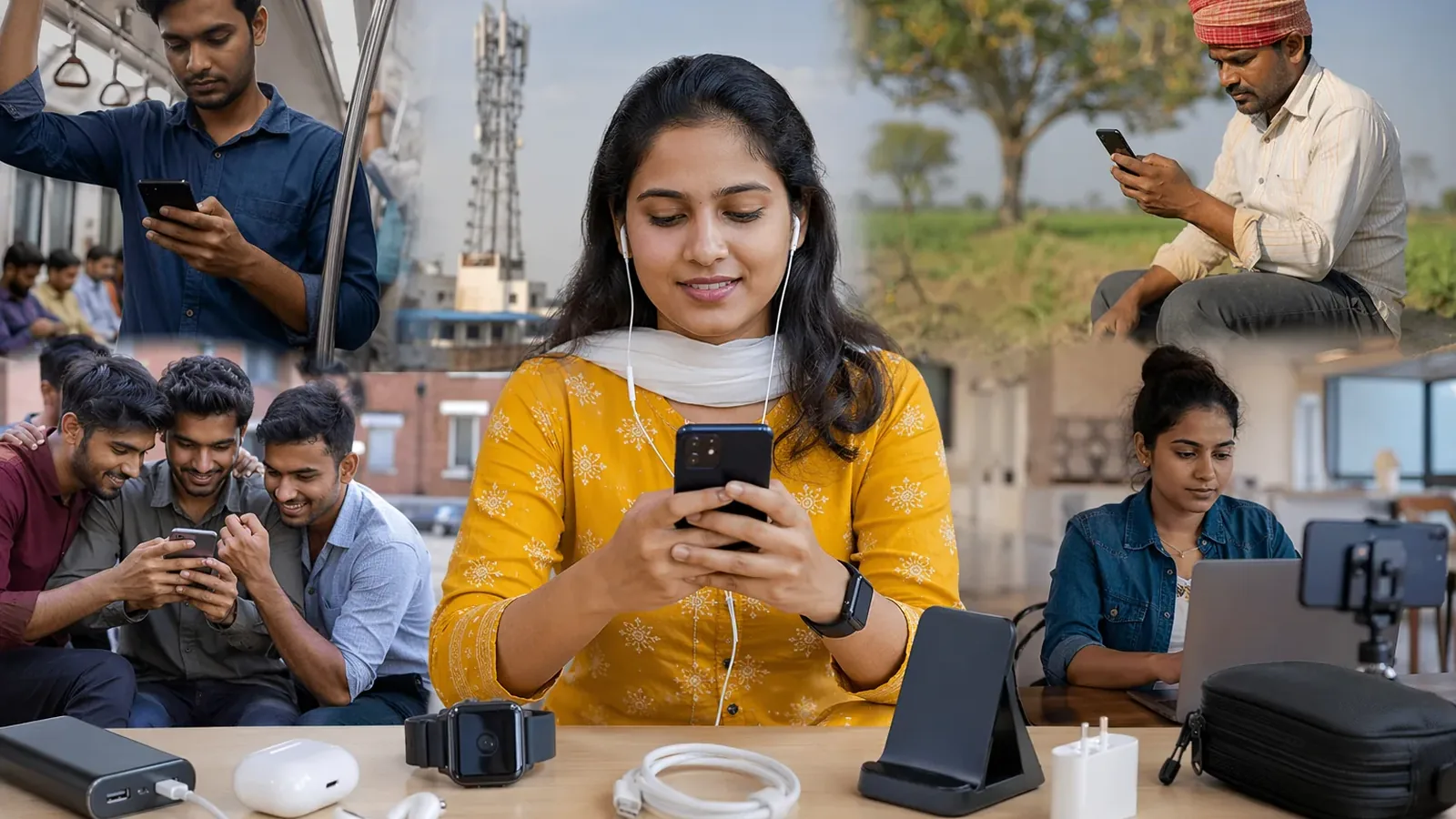
How Mobile-First Behaviour Across India is Redefining the Role of Tech Essentials
Imagine this: you’re mid-commute or in the middle of a busy workday, and your phone battery dips below 20%. A wave of panic sets in, not because you might miss a call, but because the device that powers your payments, meetings, business, and even your identity is about to go dark. This moment of anxiety reflects a deeper truth about how smartphones have become integral to modern life in India.
Smartphones: From Gadgets to Essential Infrastructure
Since 2020, smartphones have evolved from being mere gadgets to becoming India’s primary operating system. They now drive commerce, work, education, entertainment, and financial identity. This shift has spurred the rapid growth of India’s mobile accessories market, which is projected to exceed USD 9 billion by 2033. However, the products designed to support this transformation have not kept pace with the all-day functional dependence people now have on their devices. Accessories can no longer be treated as leisure add-ons; they must be robust tools that support this new reality.
The Mobile-First Workforce
India’s mobile-first behaviour is no longer a trend, it’s a structural shift. Across professions and demographics, smartphones have become the primary workspace. Delivery partners, gig workers, freelancers, small business owners, sales professionals, and students rely entirely on their phones to manage their work. For instance, a first-generation entrepreneur in Indore handles inventory, payments, and customer service from a single screen, while a creator in Lucknow edits, uploads, and monetises content without ever touching a laptop. This touchscreen-driven professional life has reshaped expectations from the accessory market.
The Accessory Market’s Lagging Evolution
Despite this transformation, India’s accessory market still lacks a well-defined category for what could be termed "digital mobility products." Most accessories today are designed for protection and aesthetics, operating on the outdated assumption that phones are merely tools to carry, rather than essential devices people live and work through.
Modern consumers face challenges like battery anxiety, cable dependency, and the constant fear of device damage, issues that are far from trivial. These pain points are driving demand for innovative solutions such as modular carry systems, integrated charging setups, smart organisation products, and functional sleeves or bags. Accessories are no longer just tech-adjacent; they are becoming central to how people manage the cognitive and logistical demands of a mobile-first lifestyle.
The Rise of Functional Carry Infrastructure
This shift mirrors the role briefcases once played in the corporate era. A briefcase symbolised organisation, mobility, and professionalism. Today, the mobile-first economy is developing its equivalent, a new generation of accessories that carry cultural and functional significance. These products must cater to a diverse range of users, from a 24-year-old content creator in Nagpur to a corporate executive in a metro city. The next wave of accessory innovation will focus on behavioural design, aligning with how people move, work, and stay connected.
Small Cities and the Creator Economy Lead the Shift
An often-overlooked aspect of this transformation is where it’s happening. Mobile-first behaviour is no longer confined to metropolitan areas. In fact, nearly 45% of UPI transactions, which account for 85% of India’s digital payment volume, now occur in smaller cities like Coimbatore, Jodhpur, and Guwahati. These regions are leapfrogging traditional tech adoption patterns, building mobile-first lives without ever relying on desktop technology.
For Gen Z, particularly in Tier 2 and Tier 3 cities, smartphones serve as production studios for content, commerce, and community. Premiumisation in these regions is already underway, driven by a mobile-native mindset. Accessories in this context are no longer peripheral, they are core enablers of seamless digital participation.
The Future of India’s Accessory Market
Looking ahead, the next iconic Indian consumer brands may not emerge from smartphones themselves, but from the infrastructure built around them. The real opportunity lies in creating a thoughtful, behaviour-driven layer of products that help people navigate their mobile-first lives. The accessory market must shift its focus from fashion-led designs to infrastructure-led solutions that complement not just the devices, but the people using them.
This reimagining of tech essentials is set to define the next decade, as India continues to lead the way in mobile-first innovation.
Frequently asked questions
How have smartphones changed in India since 2020?
Smartphones have evolved from being mere gadgets to becoming India's primary operating system, driving commerce, work, education, entertainment, and financial identity.
What is the projected growth of India's mobile accessories market?
The mobile accessories market in India is projected to exceed USD 9 billion by 2033.
Who relies on smartphones as their primary workspace in India?
Delivery partners, gig workers, freelancers, small business owners, sales professionals, and students rely entirely on their smartphones to manage their work.
What challenges do modern consumers face with smartphone accessories?
Modern consumers face challenges like battery anxiety, cable dependency, and the fear of device damage.
What type of products are in demand to support a mobile-first lifestyle?
There is a demand for innovative solutions such as modular carry systems, integrated charging setups, smart organisation products, and functional sleeves or bags.
You may also like
 Politics
Modi at VivaTech: Technology Progress Requires Democratization for All
 Politics
Modi: AI Must Be 'All Inclusive' for India's Progress
 Politics
PM Modi promotes India as a global tech and AI leader at VivaTech 2026
 Tamil Nadu
Telangana Plans 200-Acre Drone Park, New Policy to Deepen Tamil Nadu Ties
Most read
- 1
Air China Adds Extra Flight for Passengers Stranded in Fuel-Starved Cuba
- 2
Western disturbance to bring rain, hail and strong winds across north India
- 3
Yogi Adityanath Directs No Occupied Houses Be Demolished for Achhalda Bridge
- 4
Gwalior Temple Truck Crash Kills 12, Injures 28-29 Devotees During Navratri
- 5
Schools Shut in Five Tamil Nadu Districts, Including Chennai, Amid Heavy Rain
Comments
No comments yet. Be the first to comment.