
Ancient evidence suggests early humans carried fire 1.7 million years ago
Study reveals 1.7 million-year-old evidence of early human ancestors interacting with fire in Wonderwerk Cave, South Africa.

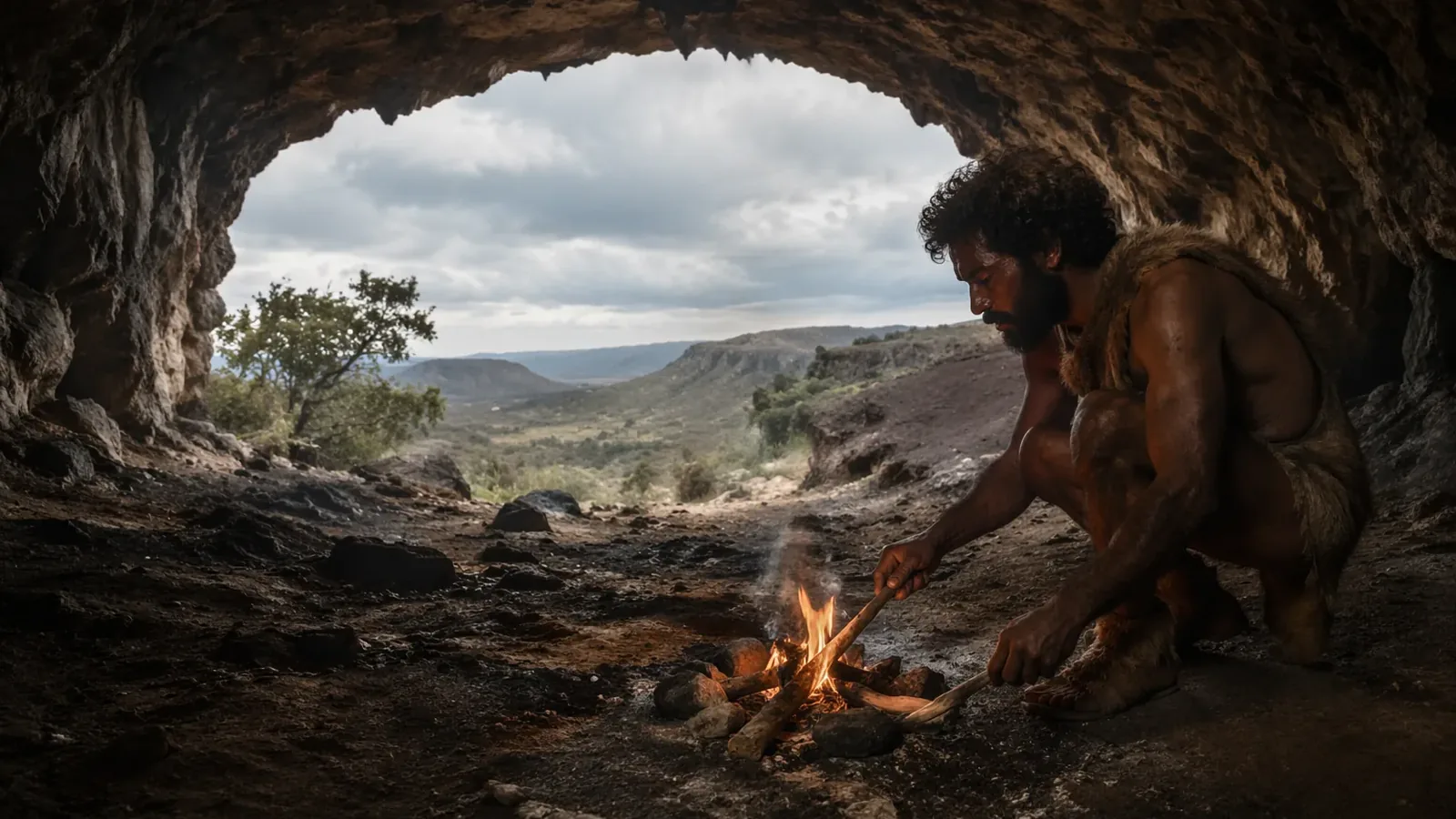
Before Humans Learned to Make Fire, They May Have Carried It: Study Reveals 1.7 Million-Year-Old Evidence
Deep within South Africa's Wonderwerk Cave, researchers have uncovered evidence suggesting that early human ancestors may have interacted with fire as far back as 1.7 million years ago. This discovery, based on the analysis of burnt bone fragments, offers a glimpse into how fire may have been used long before it was fully mastered.
The study, published in PLOS ONE, builds on earlier findings that had already placed Wonderwerk Cave at the center of discussions about the origins of fire use. Previous research had dated fire evidence at the site to around one million years ago, making it one of the oldest known examples of fire use by hominins. The new analysis, however, pushes the timeline even further back, to between 1.07 and 1.79 million years ago.
The burnt material was found in layers associated with early Acheulean tools, typically linked to Homo erectus or its close relatives. Significantly, the evidence was located about 30 meters inside the cave, far from the entrance where natural bushfires or sunlight could have reached. This suggests that the fire was not a result of external wildfires but was instead brought into the cave.
To determine the age and nature of the burnt fragments, researchers employed a novel luminescence technique. When exposed to specific wavelengths of light, bones that have been subjected to high temperatures emit a faint glow, revealing their history of exposure to heat. This non-destructive method allowed scientists to analyze tiny fragments without altering them, providing a more precise understanding of their thermal history.
Interestingly, many of the burnt bones were found within owl pellets, compacted remains of small prey regurgitated by owls that naturally roosted in the cave. Since these pellets accumulate independently of human activity, the presence of burnt fragments within them suggests that fire was an environmental factor in the cave, rather than a result of later human disturbance.
The evidence points to repeated burning events, rather than a single occurrence, deep within the cave. The absence of guano layers, which could indicate spontaneous combustion, further supports the idea that fire was brought into the cave rather than occurring naturally inside. Researchers propose that early humans may have opportunistically collected embers or smoldering material from natural sources like wildfires or lightning strikes and carried them into the cave.
This behavior does not imply that early humans had mastered fire-making. Instead, it suggests a more rudimentary interaction with fire, one of transporting and maintaining it intermittently, shaped by the circumstances of their environment.
The findings align with the Acheulean period, a phase of human evolution marked by advancements in tool-making and gradual shifts in diet and mobility. While fire use during this time remains a topic of debate, the evidence from Wonderwerk Cave indicates that early humans were beginning to explore its potential. Fire in a sheltered space could have influenced various aspects of their lives, from food preparation to nighttime activities, while also introducing challenges in maintaining it.
This discovery adds a new layer to our understanding of early human behavior, suggesting that the journey toward mastering fire began with cautious and opportunistic interactions rather than deliberate control.
Frequently asked questions
How old is the evidence suggesting early humans interacted with fire?
The evidence suggests early humans may have interacted with fire as far back as 1.7 million years ago.
Where was the evidence of early fire use found?
The evidence was found deep within South Africa's Wonderwerk Cave.
What technique did researchers use to analyze the burnt bone fragments?
Researchers employed a novel luminescence technique to analyze the burnt bone fragments.
What does the presence of burnt bones in owl pellets indicate?
The presence of burnt bones in owl pellets suggests that fire was an environmental factor in the cave, rather than a result of later human disturbance.
Did early humans have the ability to make fire according to the study?
The study suggests that early humans did not have mastered fire-making but may have transported and maintained fire intermittently.
You may also like
 Accident
Raebareli Crash: Elderly Man Dies, Two Sons Injured As Vehicles Catch Fire
 Education
Pattanam Proposes Heritage Authority, Global Research Centre After Decade-Long Disruption
 Accident
Two Dumpers Collide, Catch Fire on Agra-Aligarh Highway in Hathras
 National
Kasaragod Archaeological Survey 2026 Launched to Document District’s Heritage
Most read
- 1
Air China Adds Extra Flight for Passengers Stranded in Fuel-Starved Cuba
- 2
Western disturbance to bring rain, hail and strong winds across north India
- 3
Yogi Adityanath Directs No Occupied Houses Be Demolished for Achhalda Bridge
- 4
Gwalior Temple Truck Crash Kills 12, Injures 28-29 Devotees During Navratri
- 5
Schools Shut in Five Tamil Nadu Districts, Including Chennai, Amid Heavy Rain
Comments
No comments yet. Be the first to comment.