
Cockroach DNA reveals 150 million years of bacterial partnership
Discover how cockroach DNA contains traces of a 150-million-year-old bacterial partner, revealing a unique evolutionary relationship.

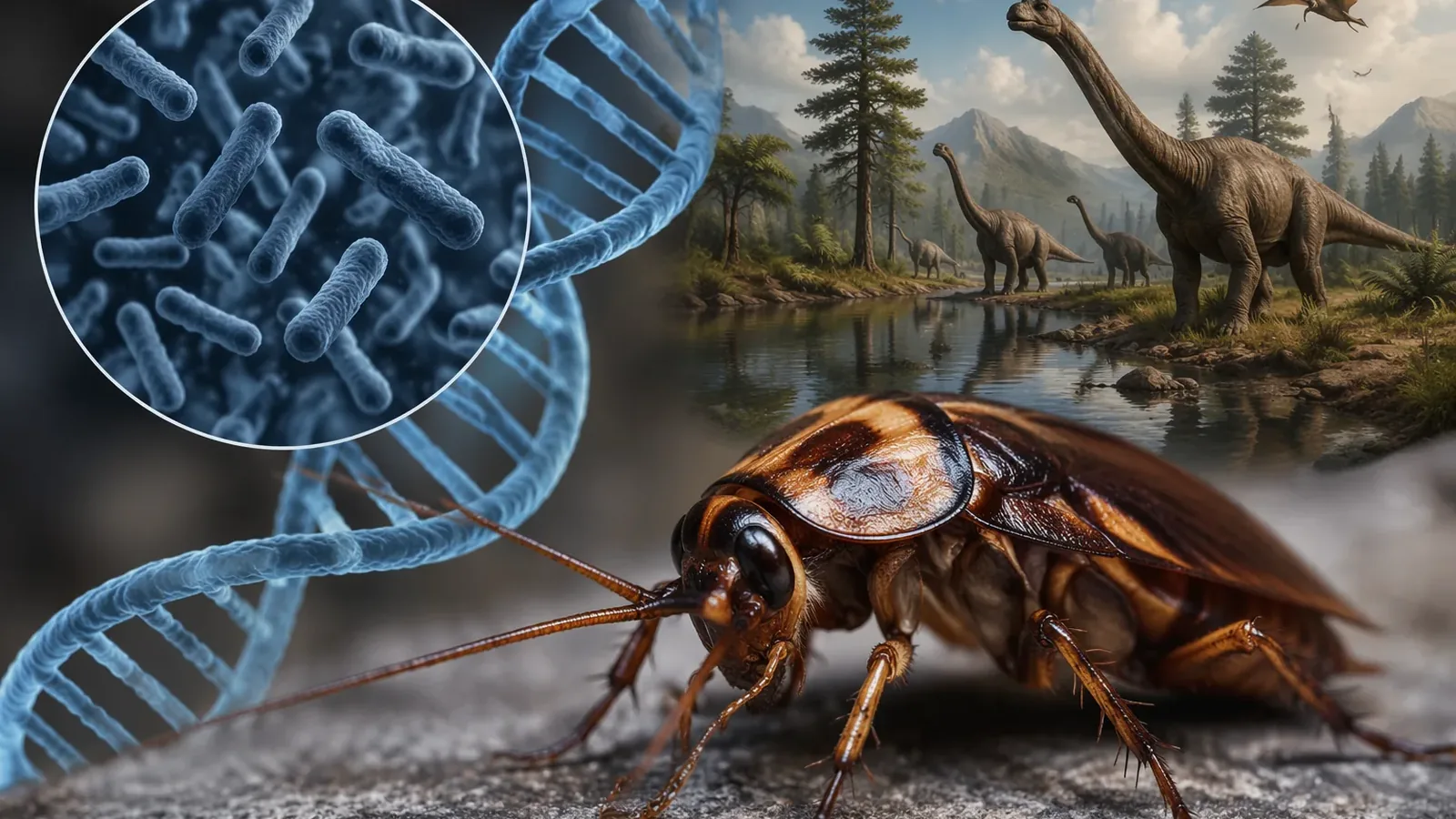
Cockroach genomes hold a surprising secret: traces of DNA from a bacterial partner that has coexisted with these insects for over 150 million years. This discovery sheds light on how long-term relationships between species can leave lasting genetic imprints.
A Bacterial Partner Embedded in Cockroach DNA
Unlike most animals that inherit DNA exclusively from their ancestors, cockroaches have incorporated genetic material from a bacterium called Blattabacterium cuenoti. This bacterium, which lives exclusively within specialized cells of its cockroach hosts, is passed directly from one generation to the next through the egg. Over millions of years, its close association with cockroaches has allowed fragments of its DNA to integrate into the insects' genomes.
Thousands of Bacterial DNA Inserts
The scale of this genetic exchange is extraordinary. Researchers identified over 40,000 fragments of bacterial DNA embedded within cockroach genomes. While some cockroach species carried only a few dozen fragments, others harbored several thousand. Particularly noteworthy were Australian burrowing cockroaches, which contained exceptionally high levels of bacterial DNA, far surpassing what has been observed in most other complex organisms.
These bacterial DNA fragments are scattered across various regions of the cockroach genome, indicating that the transfers occurred repeatedly over evolutionary history rather than during a single ancient event.
The Mystery of DNA Persistence
While many of these bacterial fragments appear to serve no active purpose, some have survived for tens of millions of years. For example, researchers traced certain DNA inserts back to cockroach ancestors that lived approximately 29 million years ago. This persistence raises intriguing questions about whether these fragments might have acquired new roles or simply escaped removal due to their minimal impact on the host.
Signs of Activity in Bacterial DNA
Although most of the transferred DNA appears inactive, a small fraction shows signs of activity. Some fragments are located near genes, and a few even contribute to the genetic instructions used by cockroach cells. Additionally, researchers found unusual hybrid DNA sequences, combining pieces from different parts of the bacterial genome, hinting at complex processes of DNA repair and integration.
A New Perspective on Genomes
This study challenges traditional views of genomes as mere records of ancestry. Instead, it highlights how genomes can also accumulate traces of long-term biological relationships. In the case of cockroaches, their ancient partnership with Blattabacterium cuenoti has left thousands of genetic signatures behind. While the study does not claim that bacterial DNA dramatically transformed cockroach evolution, it underscores how gradual genetic exchanges over millions of years can reshape genomes.
As more high-quality genome sequences become available, scientists may uncover similar hidden histories in other animals that have coexisted with microbial partners over evolutionary timescales.
Frequently asked questions
What type of bacteria is associated with cockroach DNA?
The bacteria associated with cockroach DNA is called *Blattabacterium cuenoti*.
How long have cockroaches and their bacterial partner coexisted?
Cockroaches and their bacterial partner have coexisted for over 150 million years.
How many fragments of bacterial DNA were found in cockroach genomes?
Researchers identified over 40,000 fragments of bacterial DNA embedded within cockroach genomes.
Do the bacterial DNA fragments in cockroaches serve any purpose?
While many bacterial fragments appear inactive, some show signs of activity and may contribute to genetic instructions in cockroach cells.
What does this study reveal about the nature of genomes?
This study reveals that genomes can accumulate traces of long-term biological relationships, challenging the traditional view of genomes as mere records of ancestry.
You may also like
 International
China’s R&D spending crosses 3.9 trillion yuan, rises 8.2% in 2025
 Education
Expert Highlights Diverse Career Paths Through Engineering, Management Courses
 National
HKU Seeks Northern Metropolis Lab Space to Expand Research, Attract Talent
 International
More Chinese Scientists, Students Head to Malaysia for Research and Collaboration
Most read
- 1
Air China Adds Extra Flight for Passengers Stranded in Fuel-Starved Cuba
- 2
Western disturbance to bring rain, hail and strong winds across north India
- 3
Yogi Adityanath Directs No Occupied Houses Be Demolished for Achhalda Bridge
- 4
Schools Shut in Five Tamil Nadu Districts, Including Chennai, Amid Heavy Rain
- 5
Gwalior Temple Truck Crash Kills 12, Injures 28-29 Devotees During Navratri
Comments
No comments yet. Be the first to comment.