
Scientists discover 15-foot crocodile that coexisted with early humans in Ethiopia
A new species, Crocodylus lucivenator, reveals insights into early humans' environment, coexisting with Lucy's kind in ancient Ethiopia.

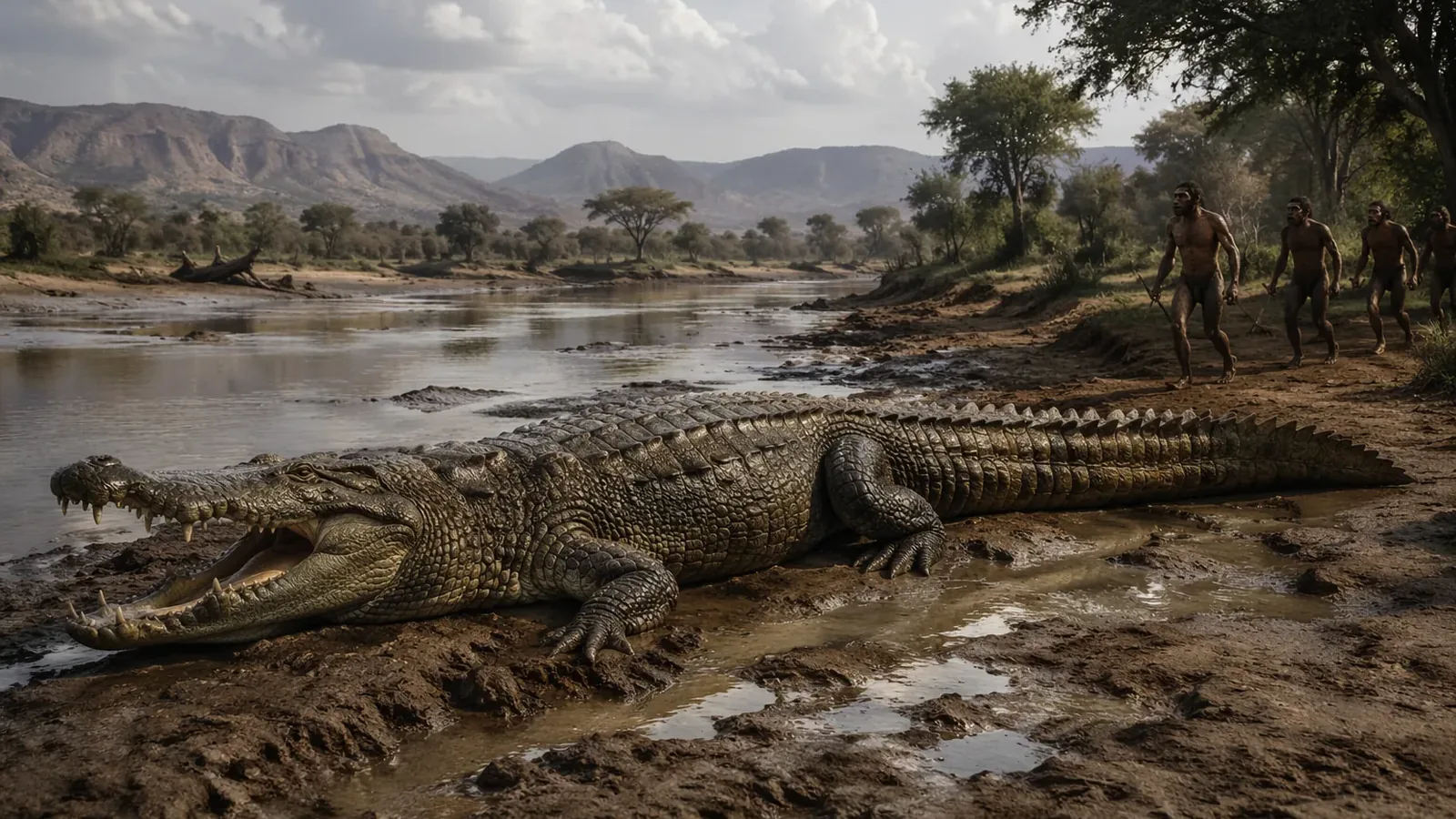
A new discovery in Ethiopia’s Afar region has unveiled a prehistoric predator that coexisted with early human ancestors, reshaping our understanding of their shared environment. Fossils of a massive crocodile, now classified as a new species named Crocodylus lucivenator, meaning "Lucy’s hunter", offer a glimpse into a perilous world where early hominins, including the famous Australopithecus afarensis skeleton known as Lucy, navigated a landscape teeming with danger.
Dating back approximately 3.4 to 3 million years, this crocodile roamed the rivers, floodplains, and lake margins of what is now northern Ethiopia. During this period, Lucy and her kind inhabited a dynamic environment of woodlands, wet grasslands, and river channels. While these water sources were vital for sustenance, they also concealed lurking predators like C. lucivenator, which occupied a dominant position in the ancient food chain.
Measuring an estimated 12 to 15 feet in length and weighing over half a ton, this crocodile was a formidable ambush predator. Its anatomy suggests it was built for stealth and sudden attacks, lying motionless beneath the water’s surface or hidden among reeds until prey ventured too close. The Hadar region, where the fossils were discovered, is often reconstructed as a mosaic of lakes, rivers, and vegetation, making it an ideal hunting ground for such a predator.
The fossils, comprising over 100 fragments, including skulls, jaws, and teeth, were unearthed over years of fieldwork in the Hadar Formation. While no single piece was initially conclusive, the collection revealed a distinct pattern that set this species apart from known African crocodiles of the same era. Notably, its skull featured a raised midline structure along the snout, a trait not observed in modern Nile crocodiles but reminiscent of features seen in other crocodilian species worldwide.
This distinctive bulge along the snout may have played a role in courtship or territorial displays, similar to behaviours observed in modern crocodiles. Additionally, its elongated snout suggests a unique feeding profile, further highlighting its specialization within its ecosystem.
Evidence from the fossils also hints at the crocodile's aggressive behaviour. One jaw fragment showed signs of a healed injury, likely from face-to-face combat over territory or mating rights, a behaviour still observed in living crocodiles. These findings underscore the crocodile’s ability to thrive in its environment, adapting to the shifting landscapes of the Pliocene epoch.
The dominance of C. lucivenator in the Hadar region would have significantly influenced the behaviour of other species, including early hominins. Approaching water sources for drinking or foraging would have been fraught with danger, as the crocodile’s presence transformed riverbanks into zones of ambush. Despite climatic fluctuations and changing landscapes, this apex predator appears to have maintained its hold on the region without being replaced by competing species.
This discovery not only adds a new chapter to the story of prehistoric life but also reframes the challenges faced by early humans. The environment Lucy inhabited was far from idyllic, it was a world where survival meant navigating a landscape shared with one of nature’s most efficient predators.
Frequently asked questions
What is Crocodylus lucivenator and when did it live?
Crocodylus lucivenator, meaning 'Lucy's hunter,' is a newly discovered prehistoric crocodile species that lived 3.4 to 3 million years ago in Ethiopia's Afar region alongside early human ancestors like Australopithecus afarensis (Lucy).
How large was this crocodile?
The crocodile measured an estimated 12 to 15 feet in length and weighed over half a ton, making it a formidable ambush predator.
What made this crocodile species distinctive?
Crocodylus lucivenator featured a distinctive raised midline structure (bulge) along its snout, which was not observed in modern Nile crocodiles. This feature may have served courtship or territorial display purposes, similar to modern crocodiles. Its elongated snout also suggests a specialized feeding profile.
Where were the fossils discovered and what did they include?
Over 100 fossil fragments were unearthed from the Hadar Formation in northern Ethiopia over years of fieldwork. The collection included skulls, jaws, and teeth, with one jaw fragment showing signs of a healed injury from likely combat over territory or mating rights.
You may also like
 National
Large crocodile blocks road near Morena dam, halts traffic for 30 minutes
 National
Huge Crocodile Sparks Panic In Raebareli Village, Taken To Safety
 Weather
Crocodile spotted in flooded village drain triggers panic in Hamirpur
 Religious
Crocodile sighting in Rapti River raises alarm for Kanwar pilgrims
Most read
- 1
Air China Adds Extra Flight for Passengers Stranded in Fuel-Starved Cuba
- 2
Western disturbance to bring rain, hail and strong winds across north India
- 3
Yogi Adityanath Directs No Occupied Houses Be Demolished for Achhalda Bridge
- 4
Gwalior Temple Truck Crash Kills 12, Injures 28-29 Devotees During Navratri
- 5
Schools Shut in Five Tamil Nadu Districts, Including Chennai, Amid Heavy Rain
Comments
No comments yet. Be the first to comment.