
Supreme Court upholds CBSE's three-language policy, next hearing on July 14
SC refuses interim stay on CBSE's three-language policy; next hearing on July 14. Key features and implications discussed.

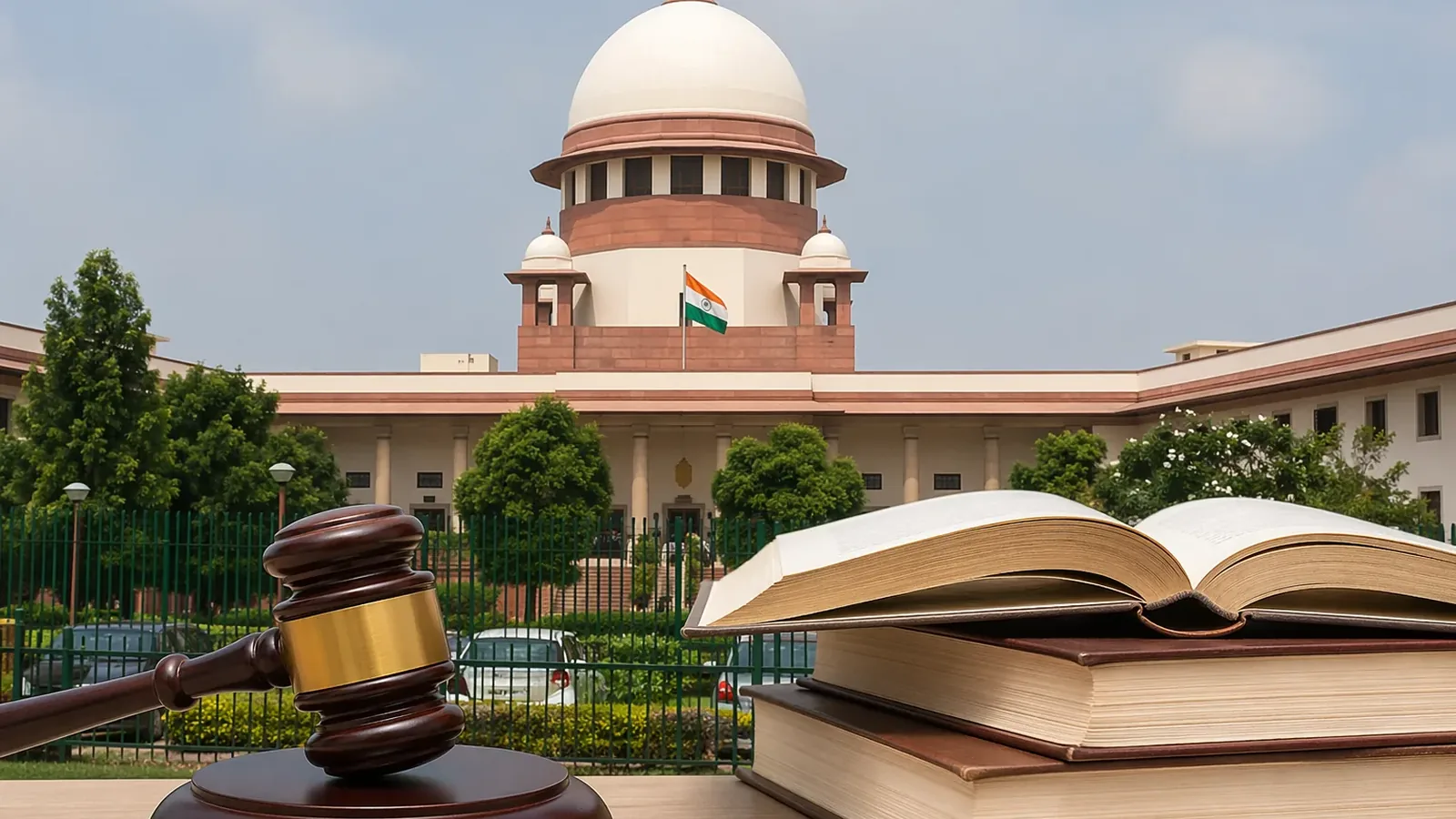
The Supreme Court has refused to grant an interim stay on the Central Board of Secondary Education's (CBSE) new three-language policy, which is set to be implemented for Class 9 students starting from the academic session 2026-27. The case has been tagged with other pending petitions on similar issues, and the next hearing is scheduled for July 14.
A bench comprising Chief Justice of India (CJI) Surya Kant and Justice V. Ramasubramanian noted that the matter had already been extensively debated in the past and declined to provide any interim relief at this stage. The petition challenging the policy's implementation was filed by a non-governmental organization (NGO), Friends of People for Active Democracy. The NGO clarified that it does not oppose the policy itself but is questioning the manner of its implementation.
During the hearing, the bench made a light-hearted remark about the NGO's name, asking whether it was designed to instill fear in the court or the public. In response, the NGO's counsel explained that it is an old trust established in 2013.
The Supreme Court had earlier agreed to hear the petition on May 27 and had issued notices to the central government, CBSE, and NCERT, seeking detailed responses within two weeks. The court had also asked Additional Solicitor General Aishwarya Bhati to provide a report on CBSE's preparedness for implementing the policy.
Key Features of the Three-Language Policy
According to a recent CBSE circular, the policy mandates the study of three languages for Class 9 students starting July 1, 2026. At least two of these languages must be of Indian origin. This initiative aligns with the National Education Policy (NEP) 2020 and the National Curriculum Framework for School Education (NCF-SE) 2023, aiming to enhance linguistic proficiency and cultural understanding at the secondary level.
Students wishing to study a foreign language can do so only as a third language after studying two Indian languages. Additionally, foreign languages may be taken as an optional fourth language. To reduce academic pressure, CBSE has decided not to conduct board examinations for the third language (R3) in Class 10. Instead, its evaluation will be conducted at the school level, and the results will be recorded on the CBSE certificate. Importantly, students will not be barred from appearing for Class 10 board exams due to their performance in R3.
Provisions for Teachers and Special Cases
In instances where qualified teachers for specific Indian languages are unavailable, schools may temporarily engage teachers from other subjects with functional knowledge of the language. Schools are also permitted to share resources with other institutions, utilize virtual or hybrid teaching methods, hire retired language teachers, or employ qualified postgraduate candidates.
For children with special needs, CBSE will provide exemptions in accordance with the Rights of Persons with Disabilities Act, 2016. Similarly, students returning to India from abroad may be exempted from the requirement to study two Indian languages on a case-by-case basis.
Upcoming Changes in Mathematics and Science
CBSE has also announced a two-tier system for Mathematics and Science starting in the 2026-27 academic session for Class 9 students. This system will include a mandatory standard level and an optional advanced level for both subjects. All students will take an 80-mark standard exam, while those seeking to demonstrate higher proficiency can opt for an additional advanced paper.
The Supreme Court's decision to defer the matter to July 14 ensures further deliberation on the policy's implementation, while CBSE continues its preparations for these significant curriculum changes.
Frequently asked questions
What is CBSE's three-language policy and when will it be implemented?
The three-language policy mandates that Class 9 students study three languages starting July 1, 2026, for the academic session 2026-27. At least two of these languages must be of Indian origin. Students can study a foreign language only as a third language after studying two Indian languages.
Why did the Supreme Court refuse to grant an interim stay on the policy?
The Supreme Court bench noted that the matter had already been extensively debated in the past and declined to provide interim relief at this stage. The next hearing is scheduled for July 14 to further examine the case.
Who filed the petition challenging the three-language policy?
The petition was filed by Friends of People for Active Democracy, an NGO established in 2013. The NGO clarified that it does not oppose the policy itself but is questioning the manner of its implementation.
How will the third language be evaluated under this policy?
To reduce academic pressure, CBSE has decided not to conduct board examinations for the third language (R3) in Class 10. Instead, evaluation will be conducted at the school level, with results recorded on the CBSE certificate. Students will not be barred from appearing for Class 10 board exams based on their R3 performance.
You may also like
 National
Supreme Court questions if English should still count as foreign language in India
 National
Supreme Court: RTI Activism Has Become a Business, Rejects Bail Plea
 Politics
Supreme Court agrees to hear petition on uniform election manifesto format
 National
J&K clears kayaking coach Bilquis Mir to lead Indian team at Asian Games 2026
Most read
- 1
Air China Adds Extra Flight for Passengers Stranded in Fuel-Starved Cuba
- 2
Western disturbance to bring rain, hail and strong winds across north India
- 3
Yogi Adityanath Directs No Occupied Houses Be Demolished for Achhalda Bridge
- 4
Gwalior Temple Truck Crash Kills 12, Injures 28-29 Devotees During Navratri
- 5
Schools Shut in Five Tamil Nadu Districts, Including Chennai, Amid Heavy Rain
Comments
No comments yet. Be the first to comment.