
Supreme Court: RTI Activism Has Become a Business, Rejects Bail Plea
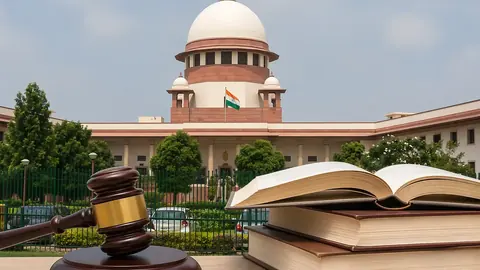
The Supreme Court stated that RTI activism has turned into a business, while rejecting the bail plea of RTI activist Rakesh Behl and his associate. The duo faces allegations of obstructing road construction in Gurdaspur and intimidating workers.


The business Supreme Court on Monday remarked that RTI activism has now become a business. This observation was made during the hearing of a bail plea filed by RTI activist Rakesh Behl and his associate Rajeev Kumar. The court rejected their anticipatory bail plea, citing allegations against them of obstructing road construction work in Gurdaspur and intimidating workers and supervisors at the site.
A bench comprising Justice Sandeep Mehta and Justice Vijay Bishnoi questioned the authority of the activists, stating, "Who are you to monitor the construction of these roads? What authority do you have? Who gave you these rights?" The Punjab-Haryana High Court had earlier denied bail to the duo on May 14.
RTI activism involves using the Right to Information Act to promote transparency in government operations, expose corruption, and ensure accountability. However, the court noted that some individuals have misused the law for intimidation or blackmail.
Separately, the Supreme Court had earlier commented on the misuse of Public Interest Litigation (PIL), stating on May 5 that PILs have increasingly become tools for private, political, or financial interests rather than public welfare.
Key Points
- Supreme Court remarked that RTI activism has become a business.
- Bail plea of RTI activist Rakesh Behl and Rajeev Kumar rejected.
- Allegations include obstructing road construction and intimidating workers in Gurdaspur.
- Court questioned their authority to monitor construction work.
- Earlier, Punjab-Haryana High Court denied their bail on May 14.
Frequently asked questions
What did the Supreme Court say about RTI activism?
The Supreme Court remarked that RTI activism has now become a business, making this observation during the hearing of a bail plea by RTI activists Rakesh Behl and Rajeev Kumar.
Why did the Supreme Court reject the bail plea of Rakesh Behl and Rajeev Kumar?
The court rejected their anticipatory bail plea citing allegations of obstructing road construction work in Gurdaspur and intimidating workers and supervisors at the site.
What is RTI activism?
RTI activism involves using the Right to Information Act to promote transparency in government operations, expose corruption, and ensure accountability.
What concerns did the court raise about RTI and PIL?
The court noted that some individuals have misused RTI law for intimidation or blackmail. The Supreme Court also commented that Public Interest Litigations have increasingly become tools for private, political, or financial interests rather than public welfare.
You may also like
 National
Supreme Court upholds CBSE's three-language policy, next hearing on July 14
 Politics
Supreme Court agrees to hear petition on uniform election manifesto format
 National
J&K clears kayaking coach Bilquis Mir to lead Indian team at Asian Games 2026
 National
Supreme Court questions if English should still count as foreign language in India
Most read
- 1
Air China Adds Extra Flight for Passengers Stranded in Fuel-Starved Cuba
- 2
Western disturbance to bring rain, hail and strong winds across north India
- 3
Yogi Adityanath Directs No Occupied Houses Be Demolished for Achhalda Bridge
- 4
Schools Shut in Five Tamil Nadu Districts, Including Chennai, Amid Heavy Rain
- 5
Gwalior Temple Truck Crash Kills 12, Injures 28-29 Devotees During Navratri
Comments
No comments yet. Be the first to comment.