
Mumbai Police Shut Shivaji Park Gates As CJP Supporters Gather For Protest
Mumbai Police barricaded Shivaji Park and deployed heavy security as CJP supporters gathered for a protest held without permission.

अभिजीत दीपके
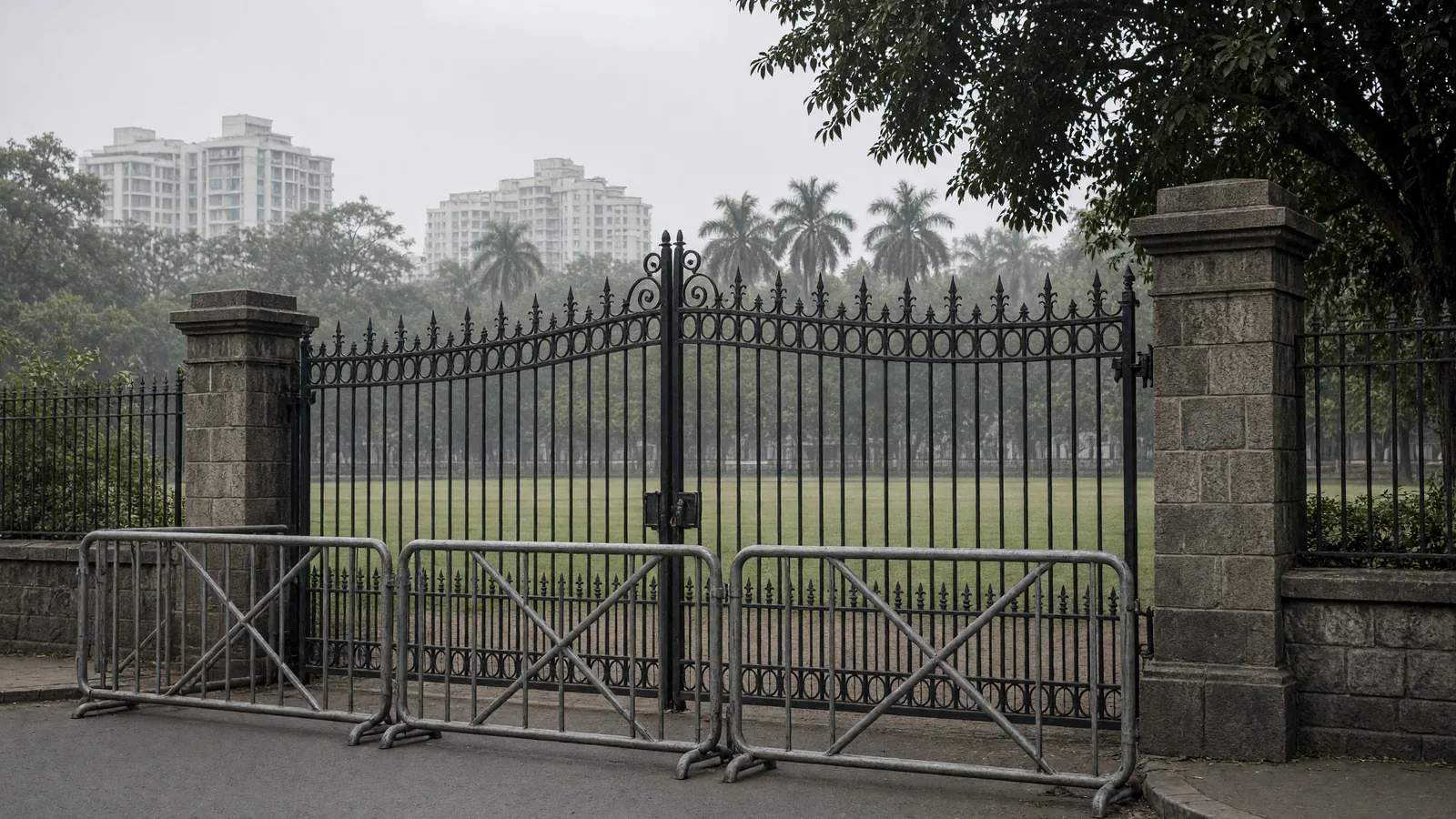
Mumbai Police have shut all entry points to Shivaji Park and installed barricades as supporters of the Cockroach Janata Party began gathering ahead of its planned protest. Heavy security has also been deployed near gate number 6, while additional police personnel have been brought to the area.
The party, also referred to as CJP, has announced that it will begin its “Jail Bharo Andolan” from Shivaji Park on 2 October. The proposed protest has been scheduled for 4 pm at gate number 6, although police have not granted permission for the event at the site.
The dispute has brought together several issues: CJP’s demands concerning the Election Commission, objections from residents over noise and traffic, restrictions on the use of Shivaji Park, and a public argument involving senior writer Javed Akhtar.
Police close gates as CJP supporters gather
Police have positioned personnel around Shivaji Park and have taken steps to prevent protesters from entering the ground. All entry points to the park have been closed and barricades have been placed around the ground.
The deployment includes thousands of police personnel around Shivaji Park, with additional forces called to the location. Security arrangements have also been tightened at Dadar railway station.
Police have made preparations for emergencies and have deployed a heavy security presence at gate number 6. The police action is linked to the absence of permission for a gathering at Shivaji Park and the party’s stated decision to continue with the event at the same location.
The reports said that people had started gathering at several places before the scheduled 4 pm protest. Because the gathering was not permitted, the possibility of a large number of people being taken into custody after the protest began was also reported.
The police have advised the organisers to apply for a protest at another location. Despite that refusal, CJP has made clear that it intends to hold the movement at Shivaji Park.
What CJP is demanding
According to CJP founder Abhijit Dipke, the central demand of the protest is the resignation of Chief Election Commissioner Gyanesh Kumar. The organisation has also raised questions about matters connected with the electoral process and the Special Intensive Revision, or SIR, of the voter list.
CJP has listed three main demands for the movement. The first is the immediate resignation of Gyanesh Kumar and criminal proceedings against him.
The second demand is an immediate halt to the Special Intensive Revision process and the restoration of the January 2025 voter list. The third is the repeal of the 2023 law concerning the appointment of election commissioners.
The organisation has called for a transparent system for appointments, with the participation of civil society. These demands place the planned Mumbai protest within a wider argument over the Election Commission, the preparation of voter lists and the process used to appoint election commissioners.
The account of the protest in the available reports does not establish that the demonstration took place at Shivaji Park. It establishes that the event was announced for the location, that permission was refused, and that supporters began moving towards the area before the scheduled start.
Why Shivaji Park has become the focus
Mumbai Police cited the character of the area, the likely noise, traffic disruption and the movement of emergency vehicles while refusing permission for the protest. Residents around Shivaji Park also opposed the proposed gathering, saying that a large assembly could disturb the area’s peace and affect traffic and everyday life.
Residents have submitted a memorandum to the authorities seeking action to stop the protest. They have argued that large gatherings create inconvenience for people living in and moving through the area.
A local resident said people come to the park for walks and that protests there have recently become more frequent. The resident said such activity should not take place because it disturbs the peace and causes inconvenience.
The local association wrote to Mumbai Police asking that no one be allowed to hold a protest at the site. Residents also pointed to the presence of schools and hospitals in the surrounding area and said that protests make it difficult for people to travel.
The residents’ position is that organisers should use Azad Maidan for the protest instead. That suggestion came from local residents, while the police separately advised the organisers to apply for another location.
The objections are not limited to the expected size of the gathering. Residents have also raised questions about rules governing the use of Shivaji Park for non-sporting activities.
Court order and restrictions cited in the dispute
Local residents have said that rules limit the use of Shivaji Park for non-sporting activities and permit such activities only on a limited number of days in a year. They have referred to a 2013 Bombay High Court order and a 2016 decision of the Maharashtra government while making that argument.
Mumbai Police have also referred to the 2013 Bombay High Court order while denying permission for the event. The police described the area as a “quiet zone” in connection with the refusal.
The restrictions have therefore become part of the dispute alongside the political demands raised by CJP. For the organisers, the site is the announced starting point of their movement against the Election Commission and the electoral process.
For the police and residents, the objections concern the use of the park, the impact of noise and traffic, and the possible effect on emergency movement and nearby institutions. The disagreement over whether the protest can be held at Shivaji Park has led to increased security in both Shivaji Park and the Dadar area.
Abhijit Dipke’s mobilisation campaign
Abhijit Dipke has been campaigning to bring supporters together for the protest. On the eve of the movement, Mumbai Police briefly detained him from Marine Drive.
Dipke was released after questioning. He also visited students at the Ambedkar hostel in Chembur and appealed for their support for the movement.
Dipke was seen travelling in an auto-rickshaw while calling on people to take part in the protest. His campaign continued even after the police refused permission for the proposed gathering at Shivaji Park.
CJP has maintained that the movement will be held at Shivaji Park despite the refusal. The party’s stated location is gate number 6, the same area where police have placed a heavy security deployment.
The reports also refer to a second phase of the party’s action, describing it as “protest 2.0”. That action is scheduled to begin from Chhatrapati Shivaji Park in Mumbai.
Vishal Dadlani announces support
Musician and singer Vishal Dadlani has expressed support for the movement and announced that he would take part in the protest. He shared a video on social media appealing to people in Mumbai to gather at gate number 6 of Shivaji Park.
His appeal added a public voice from outside the organisation to a protest already drawing attention because of the police refusal and the local opposition. The available reports identify Dadlani’s support and his appeal, but do not provide a separate account of any speech or action by him at the site.
The gathering of supporters, the police barricades and the closure of the park’s entry points have made the planned event a security issue even before the scheduled start. Police have also been monitoring access around Dadar railway station and preparing for emergency situations.
Javed Akhtar enters the debate
The controversy moved beyond the question of noise and local inconvenience after Javed Akhtar commented on the proposed protest on X. Akhtar wrote that he was pleased that some residents of Shivaji Park were becoming sensitive to noise pollution and were asking the authorities to cancel the CJP protest.
He also expressed the expectation that the same residents would object with the same strength when a political party from Maharashtra held a rally at Shivaji Park. His post thus supported the residents’ concern about noise while questioning whether the same standard would be applied to political gatherings.
A user responding to Akhtar referred to an earlier post in which he had sought the Maha Vir Chakra for a brave pilot. The user used that reference to criticise Akhtar and suggested that he would otherwise have been worried about the criticism that followed his post on the CJP protest.
The user also accused Akhtar of knowing how to play a “balancing game” and said there was much to learn from him. Akhtar replied to the user, Shahid Khalid, that he certainly needed to learn a lot and offered his good wishes.
Another user responded to Akhtar with an abusive comment and called him an “idiot”. Akhtar answered that the message showed what kind of values the user had been given in childhood.
The exchange did not remain limited to the conduct of residents or the issue of noise. It also turned into a discussion about the purpose of CJP’s protest and whether opposition to the Election Commission should be described as opposition to the government.
Argument over the Election Commission
User Kripal Makwana claimed that Akhtar might not know what the protest was about. Makwana alleged that, for Akhtar, any protest against the government was sufficient reason to seek its cancellation.
Akhtar questioned that interpretation. He wrote that he had understood the protest to be against the Election Commission, which, in his view, should be a completely independent institution and was not part of the government.
Akhtar then asked why opposition to the Election Commission should be treated as opposition to the government. His response shifted the online debate from the residents’ objections over noise and traffic to the institutional issue at the centre of CJP’s demands.
CJP’s stated demands concern the resignation and possible criminal proceedings against the Chief Election Commissioner, the Special Intensive Revision of the voter list, the January 2025 voter list and the 2023 appointment law. Akhtar’s comments addressed the distinction between the Election Commission and the government, while the organisation’s protest is directed at the Election Commission and electoral procedures.
The exchange also showed how the local dispute over a protest venue became part of a broader social media argument. Users debated whether the event should be cancelled because of noise and public inconvenience, whether political rallies should face the same objections, and what the protest’s institutional target meant.
What happens next
The announced protest remains tied to gate number 6 of Shivaji Park, where police have placed heavy security and prevented access to the ground. CJP has said it will proceed at the site despite the denial of permission.
Residents continue to oppose the gathering on grounds including noise, traffic, disruption to daily life and the presence of schools and hospitals nearby. They have also relied on restrictions relating to non-sporting use of the park and cited the 2013 Bombay High Court order and the 2016 Maharashtra government decision.
Police have closed the gates, installed barricades, strengthened security around Dadar and prepared for possible emergencies. The situation has also created the possibility of detentions if the gathering proceeds despite the refusal of permission.
The protest has been announced as a campaign against Chief Election Commissioner Gyanesh Kumar and aspects of the electoral process. Its immediate setting, however, is a disagreement over whether Shivaji Park can be used for the event and how much disruption a large gathering could cause in the surrounding area.
The local objections, police restrictions, Dipke’s mobilisation campaign, Dadlani’s support and Akhtar’s online comments have together made the planned CJP action a major point of discussion in Mumbai. The next development depends on whether the organisers are able to proceed at the announced location despite the police refusal and the security measures now in place.
Frequently asked questions
Why did Mumbai Police shut the entry points to Shivaji Park?
Police shut the gates and installed barricades because CJP planned to hold a protest at the site without permission.
When and where was CJP’s protest scheduled to take place?
The protest was scheduled for 4 pm on 2 October at gate number 6 of Shivaji Park.
What is CJP’s central demand?
CJP is demanding the resignation of Chief Election Commissioner Gyanesh Kumar.
What other demands has CJP raised?
CJP has demanded a halt to the Special Intensive Revision of the voter list, restoration of the January 2025 voter list, and repeal of the 2023 law on appointing election commissioners.
You may also like
 Entertainment
Bombay High Court to hear Imran Khan’s India-exit notice challenge on October 26
 Politics
CJP Protest Delhi: Abhijeet Dipke, 2 Others Released on One-Year Peace Bond
 Bollywood
Imran Khan Actor Detained With Lekha Washington at Mumbai CJP Protest
 Crime
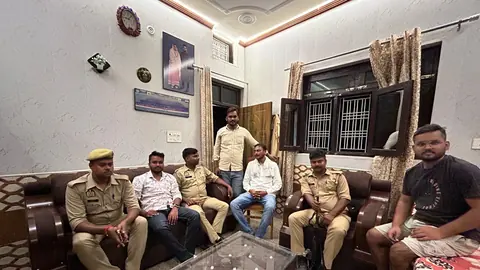
Amethi Police Put Singer Pradeep Maurya Under House Arrest Ahead of CJP Protest
Most read
- 1
Air China Adds Extra Flight for Passengers Stranded in Fuel-Starved Cuba
- 2
Western disturbance to bring rain, hail and strong winds across north India
- 3
Yogi Adityanath Directs No Occupied Houses Be Demolished for Achhalda Bridge
- 4
Gwalior Temple Truck Crash Kills 12, Injures 28-29 Devotees During Navratri
- 5
Heavy Rain Waterlogs Bengaluru, Snarls Traffic; Ride-Hailing Fares Surge
Comments
No comments yet. Be the first to comment.