
Uttar Pradesh launches Panchamrit Yojana to boost sugarcane farming
Discover the Panchamrit Yojana's five pillars aimed at transforming sugarcane farming in Uttar Pradesh, enhancing farmer incomes and productivity.

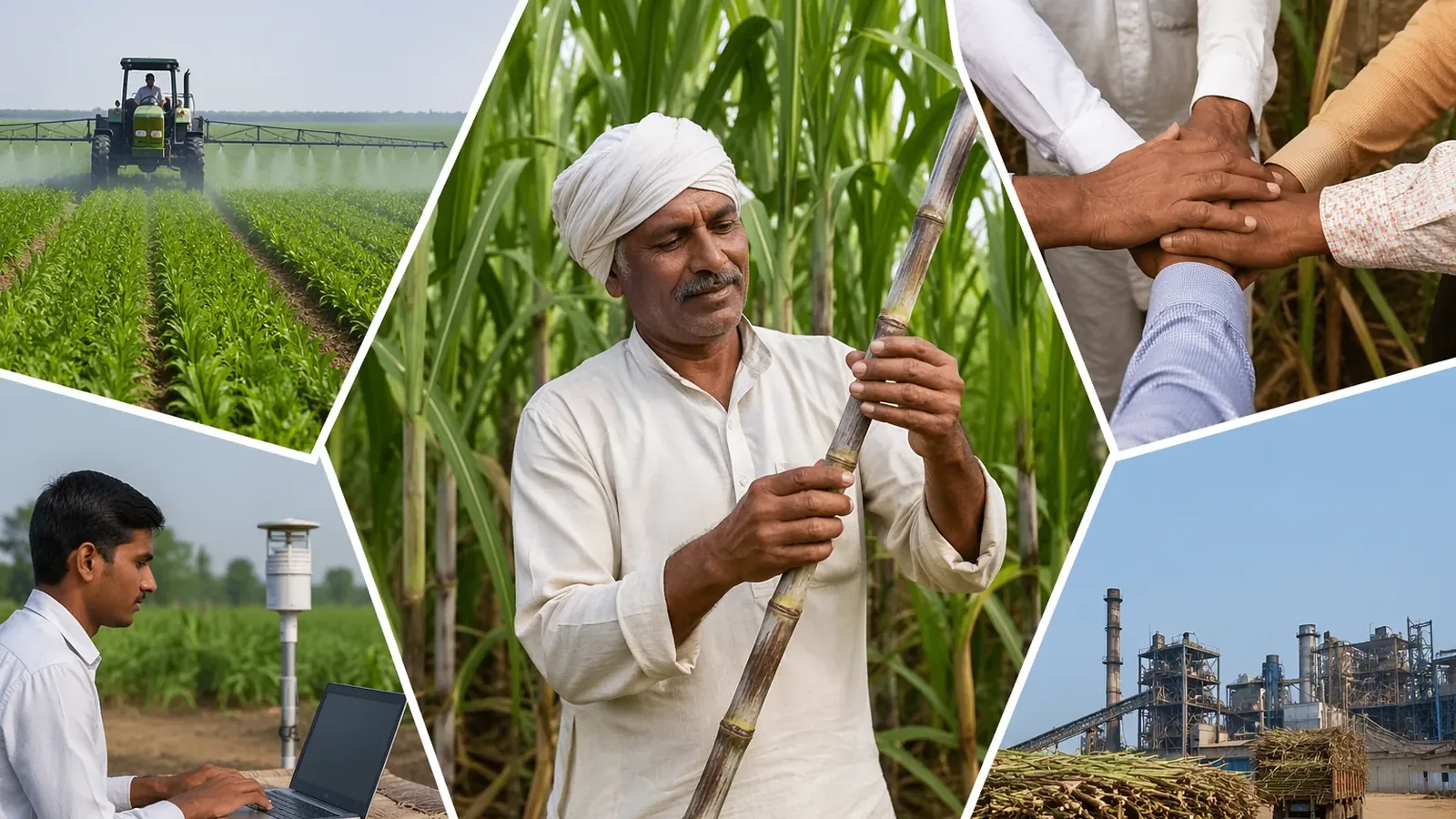
Panchamrit Yojana: The Five Pillars of Uttar Pradesh’s Sugarcane Farming Push
The Uttar Pradesh government, under Chief Minister Yogi Adityanath, has launched an innovative agricultural initiative called the Panchamrit Yojana. This scheme aims to transform sugarcane farming in the state by leveraging scientific techniques to boost farmer incomes, reduce production costs, improve soil health, and enhance crop productivity. It aligns with the broader goal of doubling farmers' income.
Uttar Pradesh, India's largest sugarcane-producing state, has millions of farmers relying on sugarcane cultivation for their livelihoods. However, the sector faces persistent challenges, including rising input costs, declining soil fertility, water scarcity, and inconsistent productivity. Panchamrit Yojana seeks to address these issues through five modern and cost-effective farming practices.
As its name suggests, "Panchamrit" revolves around five key interventions designed to improve yield while minimizing cultivation expenses. These components include:
- Trench Method of Sugarcane Planting: Sugarcane is planted in trenches rather than on flat land to promote better root development, enhance water retention, and increase crop productivity.
- Scientific Management of Ratoon Crops: This involves managing subsequent crops grown from the stubble of harvested sugarcane. It reduces replanting costs, improves yields, and incorporates sugarcane leaves and residues to conserve soil moisture, suppress weeds, and enhance soil fertility.
- Trash Mulching: Sugarcane crop residues are spread over the field to conserve soil moisture, suppress weed growth, and improve organic matter and fertility.
- Efficient Water-Use Technology: Techniques such as drip irrigation deliver water directly to plant roots, saving water and fertilizer, especially in water-stressed areas.
- Intercropping: Cultivating additional crops between sugarcane rows generates supplementary income, improves land-use efficiency, and reduces risks associated with dependence on a single crop.
The objectives of Panchamrit Yojana are multifaceted, aiming to increase sugarcane productivity, reduce cultivation costs, improve profitability, enhance soil fertility, promote water conservation, and encourage the adoption of modern agricultural technologies. It also seeks to generate additional income through intercropping, contributing to the goal of doubling farmers' income.
To implement the scheme effectively, the sugarcane development department has identified progressive farmers and established demonstration plots to showcase the benefits of Panchamrit techniques. Initially, over 2,000 farmers were selected to create model farms that serve as learning centers for other cultivators. The government supports these efforts by providing technical guidance, training programs, field demonstrations, and extension services through sugarcane development agencies.
The Panchamrit Yojana is expected to yield multiple benefits, including higher sugarcane yields, lower irrigation and input costs, additional earnings through intercrops, improved resilience against climate variability, better soil health, reduced crop residue burning, and greater water-use efficiency. These outcomes are aimed at fostering sustainable farming practices, strengthening the sugar industry, boosting rural incomes, and driving agricultural growth in Uttar Pradesh.
As the leading sugarcane-producing state in India, Uttar Pradesh's rural economy is deeply intertwined with sugarcane cultivation. Panchamrit Yojana represents a significant step toward agricultural modernization by combining productivity enhancement with environmental conservation. By focusing on scientific sugarcane cultivation through integrated techniques, trench planting, ratoon management, trash mulching, drip irrigation, and intercropping, the scheme seeks to make farming more profitable, technology-driven, and sustainable.
Ultimately, Panchamrit Yojana aims to transform sugarcane farming in Uttar Pradesh by reducing costs, improving productivity, conserving resources, and promoting sustainable agriculture. This farmer-centric initiative is poised to substantially enhance the income and livelihoods of sugarcane farmers across the state.
Frequently asked questions
What is Panchamrit Yojana?
Panchamrit Yojana is an agricultural initiative launched by the Uttar Pradesh government to transform sugarcane farming through five modern and cost-effective farming practices. It aims to boost farmer incomes, reduce production costs, improve soil health, and enhance crop productivity while aligning with the goal of doubling farmers' income.
What are the five key components of Panchamrit Yojana?
The five components are: (1) Trench Method of Sugarcane Planting for better root development and water retention, (2) Scientific Management of Ratoon Crops to reduce replanting costs and improve yields, (3) Trash Mulching to conserve soil moisture and improve fertility, (4) Efficient Water-Use Technology such as drip irrigation to save water and fertilizer, and (5) Intercropping to generate supplementary income and reduce crop dependency risks.
How is Panchamrit Yojana being implemented?
The sugarcane development department identified progressive farmers and established demonstration plots to showcase the benefits of Panchamrit techniques. Over 2,000 farmers were initially selected to create model farms that serve as learning centers for other cultivators.
What challenges in sugarcane farming does Panchamrit Yojana address?
The scheme addresses persistent challenges in Uttar Pradesh's sugarcane sector, including rising input costs, declining soil fertility, water scarcity, and inconsistent productivity.
You may also like
 Agriculture
India Bioenergy Expo 2026 Highlights Green Energy and Farmer Empowerment
 Politics
Thousands protest in Uttar Pradesh against labor and agricultural policies
 Uttar Pradesh
Yogi Adityanath Honors Farmers for Contributions to Natural Farming
 Politics
Telangana Agriculture Minister Seeks Drought Relief From Centre For 315 Mandals
Most read
- 1
Air China Adds Extra Flight for Passengers Stranded in Fuel-Starved Cuba
- 2
Western disturbance to bring rain, hail and strong winds across north India
- 3
Yogi Adityanath Directs No Occupied Houses Be Demolished for Achhalda Bridge
- 4
Gwalior Temple Truck Crash Kills 12, Injures 28-29 Devotees During Navratri
- 5
Schools Shut in Five Tamil Nadu Districts, Including Chennai, Amid Heavy Rain
Comments
No comments yet. Be the first to comment.