
Telangana Again Reshapes Hyderabad Police Jurisdictions, Creates New Law And Order Zone
Telangana has revised police boundaries, zones and specialised wings across Hyderabad, Cyberabad and Malkajgiri after the four-commissionerate

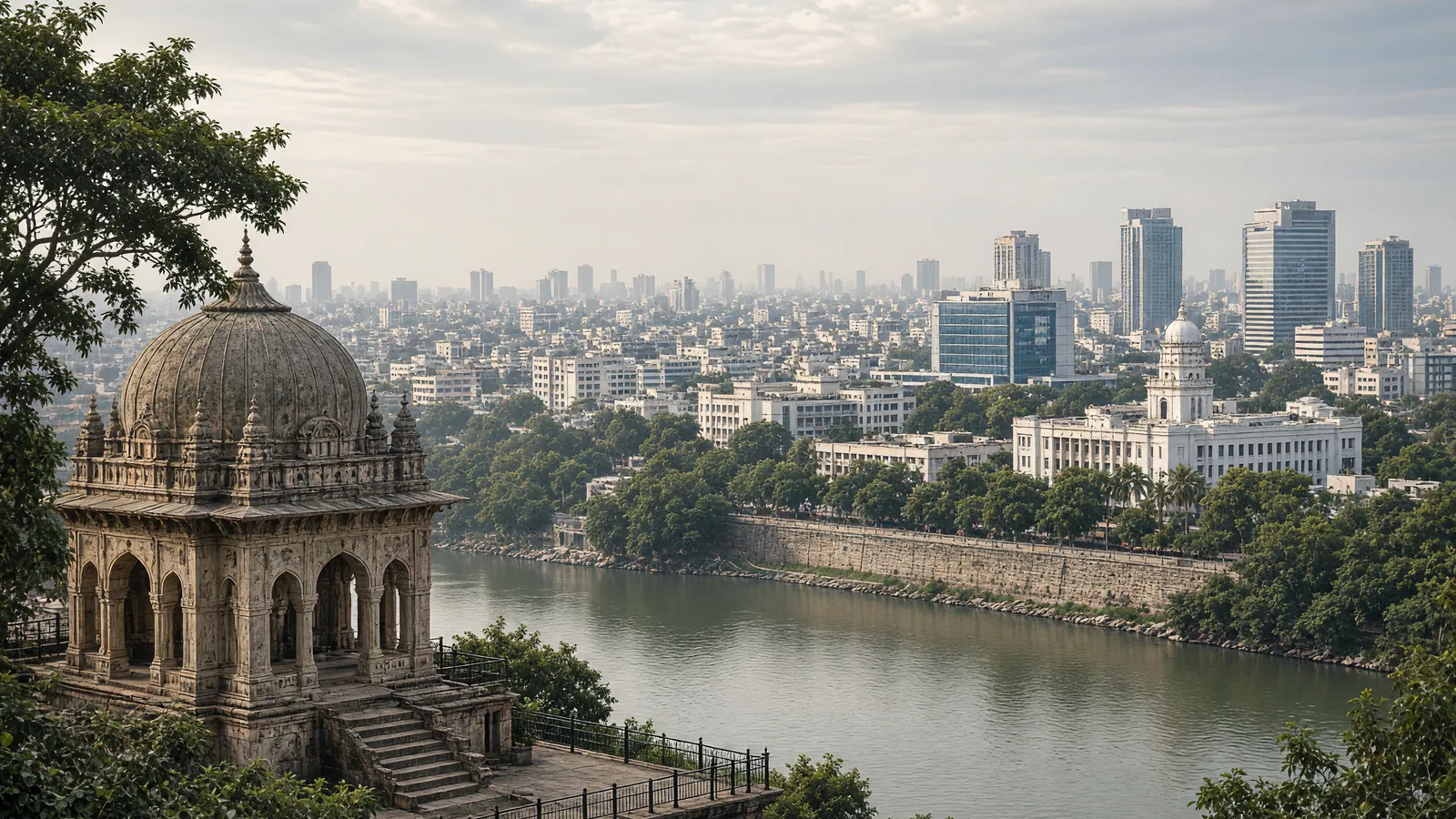
Hyderabad and its four police commissionerates: what has changed, and why? Explained
Nine months after Telangana redrew the policing map of Hyderabad and its suburbs, Government Orders issued on September 30 have introduced another round of changes to police jurisdictions. The orders modify boundaries across the Hyderabad, Cyberabad and Malkajgiri commissionerates, while creating a new Law and Order zone and new divisions.
The latest exercise also realigns traffic and other specialised wings and corrects boundaries at the police station level. It is intended to address operational issues that became visible after the State moved from a three-commissionerate system to four commissionerates.
From three commissionerates to four
The December 29, 2025 reorganisation replaced the familiar arrangement of Hyderabad, Cyberabad and Rachakonda with four commissionerates. The earlier three-commissionerate structure had itself emerged from a 2016 restructuring, when the geographically vast Cyberabad Commissionerate was split and Cyberabad East subsequently became Rachakonda.
Under the December reorganisation, major State institutions and sensitive locations were placed under Hyderabad. These included the Assembly, Secretariat, Begumpet and Shamshabad airport.
Cyberabad retained the western IT and industrial corridors, including Gachibowli, Financial District, Nanakramguda, Madhapur, Raidurg, Patancheru, Genome Valley, Ramachandrapuram and Ameenpur. Malkajgiri emerged from the erstwhile Rachakonda structure.
Chevella, Moinabad, Shankarpally, Maheshwaram and Ibrahimpatnam were among the areas brought under the newly created Future City Commissionerate. However, by July 2026, some aspects of the December orders had still not been fully implemented, resulting in confusion over territorial jurisdictions.
That incomplete implementation is the immediate background to the latest orders. The September 30 changes are therefore not a return to the earlier three-commissionerate model, but a second-stage rationalisation of the four-commissionerate structure created in December.
Why was another review needed?
A review was undertaken to settle police station limits while taking account of municipal boundaries, revenue divisions and court jurisdictions. The review also considered future urban expansion, population growth and administrative requirements.
According to a senior official involved in the exercise, the objective was to bring the geographical limits of the police commissionerates and their constituent units more closely in line with the corresponding municipal areas. The intention is to reduce situations in which civic and police jurisdictions cut across one another.
When those boundaries do not match, administration and coordination can become more cumbersome. The review consequently looked not only at which commissionerate should cover an area, but also at how police stations, divisions and zones should be arranged within the wider structure.
Territorial contiguity, the crime profile of different areas and policing requirements on the ground were among the factors considered while deciding where the boundaries should fall. The requirement for greater traffic policing and the presence of Women Police in certain areas was also assessed.
The result is a broader rationalisation of police jurisdictions. Some new units have been created, while existing jurisdictions have been merged or reorganised.
The orders go beyond simply transferring neighbourhoods from one commissionerate to another. They also seek to make the Law and Order, Traffic and Women Safety structures correspond more closely with the revised territorial arrangement.
Malkajgiri gets the biggest structural change
The most substantial structural changes under the latest orders are in Malkajgiri Commissionerate. A new Uppal Law and Order Zone has been created.
Alwal, Uppal and Medipally have been constituted as new Law and Order divisions. A new Uppal Traffic Division has also been created, bringing the Uppal, Kushaiguda and Ghatkesar Traffic Police Stations under it.
The orders also address boundaries that did not fit neatly after the first reorganisation. Secunderabad Railway Station will remain under Gopalapuram police station.
Addagutta ward will remain with Tukaramgate police station. Parts of Hastinapuram and B.N. Reddy Nagar that earlier fell under Meerpet police station have been brought under Vanasthalipuram.
The Malkajgiri arrangement also includes a realignment of its Traffic Wing. Begumpet, Tirumalagiri and Gopalapuram Traffic Police Stations will shift from Hyderabad City Police to Malkajgiri.
The remaining traffic jurisdictions in Malkajgiri will be reorganised among its divisions. This means that the changes affect both the local Law and Order chain and the traffic structure that operates across the same broad urban region.
Hyderabad’s internal structure is being redrawn
Hyderabad has seen more of an internal administrative reorganisation than another major territorial expansion under the latest order. The Khairatabad side has been restructured into Khairatabad-I and Khairatabad-II zones.
Police stations and divisions have been redistributed under the revised arrangement. The changes cover jurisdictions across Banjara Hills, Jubilee Hills, Film Nagar, S.R. Nagar, Borabanda, Nampally, Abids, Khairatabad, Lake, Saifabad, Narayanguda and Sultan Bazar.
The reorganisation does not stop with Law and Order units. Hyderabad’s Traffic Wing has also been brought into alignment with the revised police structure.
The Women Safety Wing and zonal cyber units have been aligned with the revised arrangement as well. This matters because policing in a metropolitan area is not handled only through the local police station.
Traffic enforcement, crimes against women and cybercrime have their own territorial supervisory structures. A change in the Law and Order map can therefore require corresponding adjustments in these other wings so that their supervisory arrangements follow the revised boundaries.
Cyberabad gets boundary corrections
Cyberabad’s changes are more granular than Malkajgiri’s. Instead of creating a major new zone, the latest order corrects police station boundaries in rapidly developing western and north-western areas.
Parts of Ameenpur jurisdiction, including areas around Bollaram, have been brought under IDA Bollaram police station. Edulanagulapally has moved from Patancheru police station to Kollur police station.
Jurisdictions have also been redrawn around Kollur, Osmannagar, Tellapur, Ramachandrapuram and the BHEL belt. These changes address areas where development and changing urban patterns have made the earlier police station boundaries less suitable to the revised structure.
The Narsingi side has also been clarified. Hydershakote, Gandamguda, Bayragiguda and Pirancheru now fall on the Rajendranagar side of the new policing arrangement rather than Narsingi.
These are police station-level corrections rather than a separate large-scale territorial expansion for Cyberabad. Their practical importance lies in identifying which police station and supervisory chain will handle an area after the boundary is changed.
Where does Future City fit in?
There is no separate reorganisation order for Future City among the three September 30 Government Orders. Even so, Future City remains part of the wider boundary exercise because commissionerate limits cannot be altered in isolation.
Adjustments made to Hyderabad and Cyberabad necessarily determine where Future City’s adjoining jurisdiction begins. This is particularly relevant along the rapidly developing Narsingi-Mokila-Chevella side.
Future City’s position in the overall arrangement is therefore shaped partly by changes made in neighbouring commissionerates. The absence of a separate reorganisation order does not remove it from the territorial equation created by the latest corrections.
What does this mean for residents?
For residents, a change on a police jurisdiction map can appear bureaucratic. In practice, it determines the police station responsible for a neighbourhood, the division and zone supervising it, and the commissionerate that will handle major incidents.
In some cases, it also determines which traffic or specialised police unit exercises jurisdiction. This is why the latest changes matter beyond administrative labels and office-level arrangements.
The transition after the December restructuring had already shown how confusion could arise. Police stations themselves largely remained where they were even as the administrative structure above them changed.
Older commissionerate names, station boundaries, signage and institutional familiarity did not disappear overnight. Residents may therefore encounter a continuing gap between the police station they know locally and the zone, division or commissionerate now supervising it.
Those unsure of which police station or commissionerate covers their neighbourhood can refer to the police websites. The revised jurisdictions have been made available online so that residents can identify the police unit responsible for their area.
The larger challenge is coordination
The September 30 orders are best understood as an effort to iron out overlaps and operational problems that became apparent when the four-commissionerate model was put into practice. The exercise seeks to make the boundaries of commissionerates, police stations, zones and divisions clearer and more contiguous.
That clarity is expected to make the system easier to administer and, over time, easier for residents to navigate. It also attempts to align Law and Order, Traffic, Women Safety and cyber structures with the revised territorial map.
But clearer boundaries will not eliminate the need for coordination. Hyderabad now has four commissionerates policing an urban region where roads, workplaces, residential corridors and daily commuter movements routinely cross commissionerate limits.
Traffic regulation, emergency response and investigations may therefore still require multiple commissionerates to work together. The latest orders make the lines on the map clearer, but the effectiveness of the arrangement will also depend on coordination across those lines.
Source: The Hindu
Frequently asked questions
What changes did Telangana introduce to Hyderabad's police jurisdictions?
The September 30 Government Orders modified boundaries across the Hyderabad, Cyberabad and Malkajgiri commissionerates, created a new Law and Order zone and new divisions, and realigned traffic and specialised wings.
Why was another review of Hyderabad's police jurisdictions needed?
The review aimed to settle police station limits and align commissionerate boundaries more closely with municipal areas, revenue divisions and court jurisdictions.
Did the latest changes restore Hyderabad's earlier three-commissionerate system?
No. The September 30 changes were described as a second-stage rationalisation of the four-commissionerate structure created in December.
What was the four-commissionerate structure created in December?
It comprised Hyderabad, Cyberabad, Malkajgiri and the newly created Future City Commissionerate.
You may also like
 National
Telangana liquor sales cross ₹2,000 crore as beer volumes jump 41%
 National
Telangana Urban Areas Record 6.85-Metre Groundwater Drop In One Year
 National
Tirupati NCC Cadet K. Thirumal Wins Gold at Telangana Equestrian Championship
 National
Telangana to Host Gunturu Seshendra Sharma Birth Centenary Celebrations in Hyderabad
Most read
- 1
Air China Adds Extra Flight for Passengers Stranded in Fuel-Starved Cuba
- 2
Western disturbance to bring rain, hail and strong winds across north India
- 3
Yogi Adityanath Directs No Occupied Houses Be Demolished for Achhalda Bridge
- 4
Gwalior Temple Truck Crash Kills 12, Injures 28-29 Devotees During Navratri
- 5
Heavy Rain Waterlogs Bengaluru, Snarls Traffic; Ride-Hailing Fares Surge
Comments
No comments yet. Be the first to comment.