
Researchers Discover New Begonia Species in Western Ghats Forests
Researchers in Keralam have discovered a new Begonia species, named Begonia rajvikramanii, in the Western Ghats region of Kollam district.

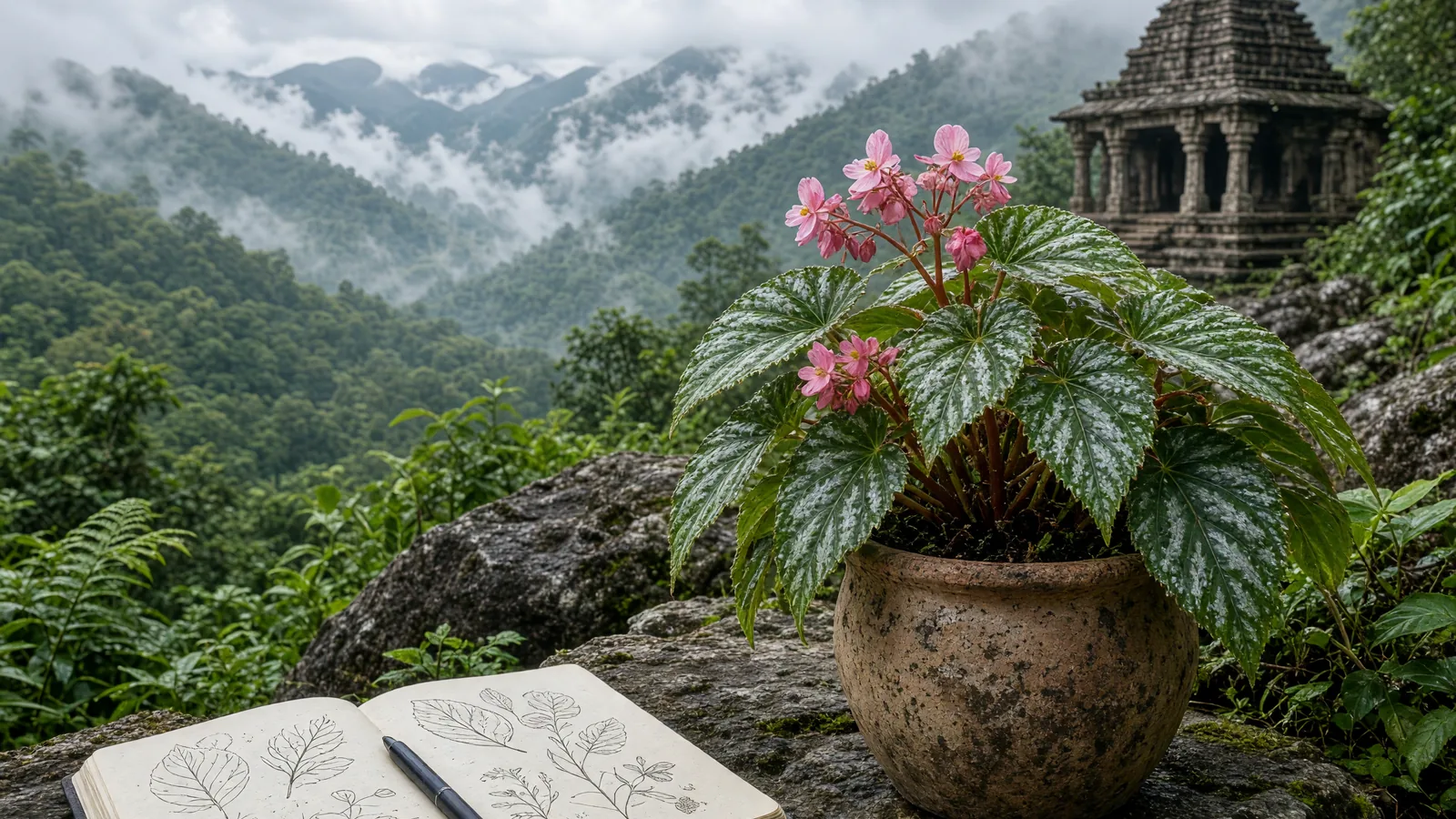
Researchers from the Jawaharlal Nehru Tropical Botanic Garden and Research Institute in Thiruvananthapuram have identified a new Begonia species from Rosemala in Keralam’s Kollam district, adding a fresh botanical record from the Western Ghats.
The plant was spotted during an exploration to collect wild ornamental plants from the evergreen forests of Rosemala, according to the source material.
Found during a wild ornamental plant survey
The species belongs to the genus Begonia and was identified from the Western Ghats region in Kollam district.
The research team was from the Jawaharlal Nehru Tropical Botanic Garden and Research Institute, known as JNTBGRI, in Thiruvananthapuram.
The discovery has been reported at a time when the Western Ghats region is again in the news in connection with the Keralam government’s recommendations regarding Ecologically Sensitive Areas.
After identifying the plant as a distinct species, the researchers named it Begonia rajvikramanii after R. Raj Vikraman.
R. Raj Vikraman is the former Head of the Garden Management Division at JNTBGRI.
The naming recognises his contributions to the development of the JNTBGRI garden and to the management of ex situ plant conservation programmes at the institute.
JNTBGRI functions under the Kerala State Council for Science, Technology and Environment, or KSCSTE.
Paper published in Phytotaxa
A paper on the discovery and on the plant’s identification as a new species has been published in the latest issue of Phytotaxa.
The authors of the paper are E.S. Santhosh Kumar, S.M. Shareef, P.P. Anusha and Rejitha Joseph of JNTBGRI.
The source material states that the plant was found growing on wet rocky cliffs.
“This new species is currently known only from its type locality at Rosemala. It grows in wet habitats, particularly on rocky cliffs and road-cut walls, at elevations of approximately 200 metres-350 metres,” the paper said.
Flowering and fruiting of Begonia rajvikramanii occurs between August and April.
Why researchers treated it as distinct
The authors said detailed comparison with available literature, type specimens and authenticated herbarium materials showed the plant to be morphologically most similar to Begonia tenera Dryander.
Begonia tenera Dryander is a species distributed in India and Sri Lanka, according to the authors.
The authors said the Rosemala plant differed from Begonia tenera Dryander in several physical characteristics, warranting its recognition as a distinct species.
Population and conservation assessment
According to the JNTBGRI team, the observed population of Begonia rajvikramanii comprises approximately 200 mature individuals.
The team said the species occupies an area of less than 5 km².
Using the IUCN Red List Categories and Criteria (IUCN, 2024), Begonia rajvikramanii has been assessed as ‘Data Deficient’ (DD).
That assessment is pending comprehensive assessment in the future, according to the JNTBGRI team.
Begonia in the Western Ghats
The genus Begonia is one of the largest flowering plant genera, with 2,200 accepted species.
The genus is mainly distributed across the tropical and sub-tropical regions of Africa, Asia and America.
In the Western Ghats, the genus is represented by 23 species.
The report was published on September 27, 2026, at 04:30 pm IST.
Source: The Hindu
Frequently asked questions
Where was the new Begonia species discovered?
The new Begonia species was discovered in the evergreen forests of Rosemala in Keralam's Kollam district within the Western Ghats.
Who discovered the new plant species?
Researchers from the Jawaharlal Nehru Tropical Botanic Garden and Research Institute (JNTBGRI) in Thiruvananthapuram discovered the species.
What is the name of the newly discovered Begonia species?
The new species was named Begonia rajvikramanii after R. Raj Vikraman, the former Head of the Garden Management Division at JNTBGRI.
Where was the research paper on the discovery published?
The paper on the discovery was published in the latest issue of Phytotaxa.
You may also like
 Religious
KSRTC to Deploy Over 1,000 Buses for Sabarimala Pilgrimage
 Kerala
 Government Raises DA, DR For Employees And Pensioners To 37%
 Kerala
Nearly 7,000 unlicensed homestays reportedly operate across Keralam’s tourist destinations
 Health
17 Captive Elephants Screened in Kerala Amid Concerns Over Sudden Deaths
Most read
- 1
Air China Adds Extra Flight for Passengers Stranded in Fuel-Starved Cuba
- 2
Western disturbance to bring rain, hail and strong winds across north India
- 3
Yogi Adityanath Directs No Occupied Houses Be Demolished for Achhalda Bridge
- 4
Gwalior Temple Truck Crash Kills 12, Injures 28-29 Devotees During Navratri
- 5
Schools Shut in Five Tamil Nadu Districts, Including Chennai, Amid Heavy Rain
Comments
No comments yet. Be the first to comment.