
17 Captive Elephants Screened in Kerala Amid Concerns Over Sudden Deaths
Seventeen captive elephants in Thrissur underwent tests for blood sugar, cholesterol, kidney and liver health as part of a preventive-care programme.

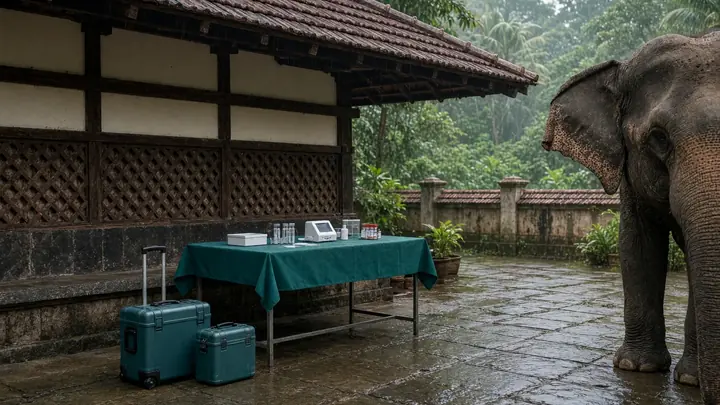
Seventeen captive elephants from different parts of Keralam have undergone screening for blood sugar, cholesterol, kidney and liver-related indicators in the first round of a preventive-care programme. The initiative is being undertaken amid concerns over an increasing number of elephants collapsing and dying suddenly.
First screening at Thrissur temple
The Kerala Elephant Owners Federation organised the medical camp with technical support from the Kerala Veterinary and Animal Sciences University (KVASU). The camp was held at the Sree Vadakkunnathan temple in Thrissur on Friday.
The examinations were led by T.S. Rajeev, Professor in the Department of Veterinary and Animal Husbandry Extension and Director of Entrepreneurship at KVASU. Veterinarians examined the elephants for blood sugar, cholesterol and creatinine levels, along with the functioning of their liver and kidneys.
Blood, urine and faecal samples were collected from the elephants and sent to the KVASU laboratory for detailed analysis. The test results are expected in four to five days.
Health examinations of captive elephants have been conducted earlier, but the organisers described this camp as an unusually comprehensive exercise because of the scale and range of investigations undertaken. The screening is intended to identify underlying ailments that could otherwise go unnoticed.
Health cards to record follow-up care
The findings from the examinations will be entered in individual health cards issued to every elephant. These cards will create a medical history for each animal and can be used during follow-up examinations and treatment.
Dr. Rajeev said, “If we find any health issue, we will investigate it further. There could be cases of renal compromise or other health problems that need specific attention. The blood test results and other examinations have been recorded, and any abnormality will be addressed separately.”
The reference to possible renal compromise comes as the programme examines kidney function and creatinine levels, while the laboratory analysis is also expected to assess the blood, urine and faecal samples collected at the camp. Any further investigation or treatment will depend on the findings of the tests and other examinations.
The organisers said the immediate concern behind the initiative was the increasing number of elephants collapsing and dying suddenly. They hope that more detailed and regular screening will help bring such health problems to attention before they remain undetected.
Plan to cover all captive elephants
The programme has brought together veterinary expertise from several sources. The wider panel includes doctors from the Animal Husbandry department, veterinarians from the Guruvayur Devaswom and other specialists in the field.
KVASU’s laboratory will conduct the tests, including those specifically required for elephants. Dr. Rajeev said the organisers planned to cover all captive elephants in the State.
“We are planning to cover all captive elephants in the State. We have told elephant owners that if they arrange a vehicle, we can travel to the location and examine their elephants,” Dr. Rajeev said.
The federation plans to extend the medical camps to Kottayam and Kollam. It eventually wants to turn the initiative into a regular health-monitoring system, with comprehensive examinations every six months.
A response to a shrinking population
The need for preventive care is underscored by the decline in Kerala’s captive elephant population. According to figures cited by the organisers, the number fell from more than 1,000 elephants in 2008 to around 366.
With every elephant loss further reducing an already dwindling population, the health-card initiative is being seen as a move towards more systematic and preventive healthcare for Kerala’s remaining captive elephants. The first round of screening at Thrissur is therefore intended not only to assess the health of the 17 elephants examined, but also to establish a system for continued monitoring across the State.
Source: The Hindu
Frequently asked questions
How many captive elephants were screened in the first round of the preventive-care programme?
Seventeen captive elephants from different parts of Kerala were screened.
Where was the first screening camp held?
The camp was held at the Sree Vadakkunnathan temple in Thrissur.
What health checks were performed on the elephants?
Veterinarians checked blood sugar, cholesterol, creatinine, and liver and kidney function.
When are the laboratory test results expected?
The results are expected in four to five days.
What is the broader plan for the programme?
The organisers plan to cover all captive elephants in the State.
You may also like
 Religious
KSRTC to Deploy Over 1,000 Buses for Sabarimala Pilgrimage
 Kerala
 Government Raises DA, DR For Employees And Pensioners To 37%
 Kerala
Nearly 7,000 unlicensed homestays reportedly operate across Keralam’s tourist destinations
 Education
Kerala Examines Deemed University Status for Aided Colleges, Decision Pending
Most read
- 1
Air China Adds Extra Flight for Passengers Stranded in Fuel-Starved Cuba
- 2
Western disturbance to bring rain, hail and strong winds across north India
- 3
Yogi Adityanath Directs No Occupied Houses Be Demolished for Achhalda Bridge
- 4
Gwalior Temple Truck Crash Kills 12, Injures 28-29 Devotees During Navratri
- 5
Schools Shut in Five Tamil Nadu Districts, Including Chennai, Amid Heavy Rain
Comments
No comments yet. Be the first to comment.