
Nearly 7,000 unlicensed homestays reportedly operate across Keralam’s tourist destinations
Keralam has 1,415 recognised homestays and villas, while nearly 7,000 unlicensed units operate in tourist destinations, raising safety concerns.

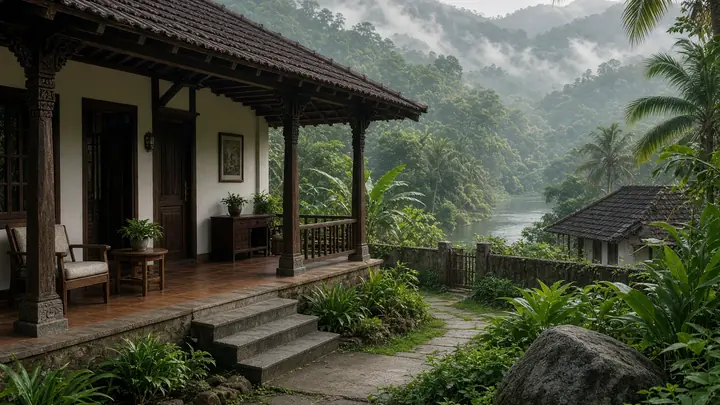
Unlicensed homestays thrive amid regulatory hurdles in Keralam
Official data as of September 12, 2026, showed that Keralam had 1,172 recognised homestays and 243 serviced villas, taking the total number of recognised units to 1,415. However, the wider sector remains marked by a large gap between officially classified properties and unlicensed establishments operating in major tourist destinations.
Around 1,200 homestays have official recognition, while nearly 7,000 unlicensed units are reportedly operating in major tourist destinations and offering services through various online platforms. The proliferation of such units has raised concerns about the quality of services and the safety of accommodation offered to visitors.
Gap between classification and demand
The homestay concept envisages guests staying with hosts and experiencing their food, culture, traditions and lifestyle. Many establishments operating under the label, however, do not follow this model.
The State government has introduced a classification system intended to ensure quality standards, but unlicensed units have mushroomed across Keralam’s hospitality sector. The growth has been particularly visible in Idukki and Wayanad, two major hill destinations located in the ecologically fragile Western Ghats.
Shine K.S., Managing Director and CEO of the Muziris Heritage Project, said Idukki accounted for only 23% of the State’s classified homestays. He said the hill district faces huge demand for accommodation during peak tourist seasons, even as restrictions on development apply across large parts of the ecologically fragile region.
That mismatch between demand and the limited supply of classified accommodation has helped create space for operators outside the regulatory system. “This vacuum creates an opportunity for unlicensed operators,” Mr. Shine said, adding that such operators often provide services without meeting the standards and conditions prescribed under the government’s classification system.
Calls for a simpler licensing process
Mr. Shine said a simplified regulatory framework, along with greater awareness among investors and government officials, could help bring more establishments into the regulated system. He specifically included local body secretaries and police personnel among those who need greater awareness of the framework.
He also said such changes could expand accommodation capacity at tourist destinations. The sector’s regulatory difficulties are compounded by separate licensing procedures followed by local self-government institutions and the Tourism department, according to M.P. Sivadathan, director of the Kerala Homestay and Tourism Society, Kerala HATS.
Mr. Sivadathan said the government should introduce a unified licensing system. Under the proposed system, local body licences would be issued to homestays classified by the Tourism department after physical inspections.
He said a unified process would make the sector more investor-friendly and bring more establishments under regulatory oversight. It would also address the duplication created when operators have to navigate separate procedures involving local institutions and the Tourism department.
Serviced villas face separate hurdles
Prashanth Vasudev, former Deputy Director of Kerala Tourism and chief tourism consultant with the North Malabar Tourism Organisation, said the recognised figures included 243 serviced villas. These are properties managed by caretakers, unlike the homestay model envisaged around guests staying with hosts and experiencing their lifestyle.
The serviced villa segment has significant untapped potential because more than 15 lakh houses are lying vacant across the State, including in prime tourist destinations. Yet the segment continues to face regulatory hurdles, including the requirement for a local body accommodation licence.
It also faces a minimum bathroom-area requirement of 40 sq. ft., compared with the 20 sq. ft. permitted for homestays. Serviced villas are currently treated as commercial establishments and are subjected to commercial tariffs and additional requirements.
Mr. Vasudev said the government should remove unnecessary regulatory barriers while retaining essential safety, hygiene and quality standards. He called for a clear and uniform framework to determine whether a property meets prescribed tourism standards, while avoiding duplication of licences.
Source: The Hindu
Frequently asked questions
How many recognised homestays and serviced villas did Keralam have as of September 12, 2026?
Keralam had 1,172 recognised homestays and 243 serviced villas, for a total of 1,415 recognised units.
How many unlicensed homestays reportedly operate in Keralam’s major tourist destinations?
Nearly 7,000 unlicensed units reportedly operate in major tourist destinations across Keralam.
Which Keralam districts have seen particularly visible growth in unlicensed homestays?
The growth has been particularly visible in Idukki and Wayanad.
What licensing reform has been proposed for homestays?
A unified licensing system has been proposed, with local body licences issued to homestays classified by the Tourism department after physical inspections.
You may also like
 Religious
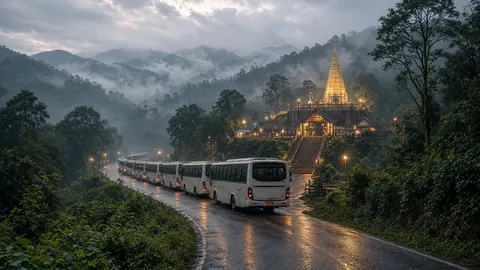
KSRTC to Deploy Over 1,000 Buses for Sabarimala Pilgrimage
 Kerala
 Government Raises DA, DR For Employees And Pensioners To 37%
 Health
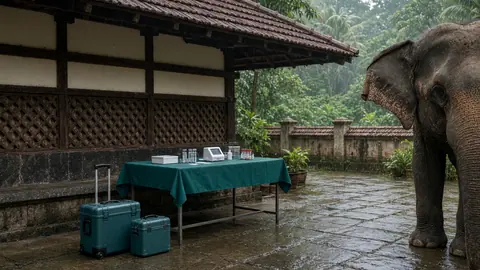
17 Captive Elephants Screened in Kerala Amid Concerns Over Sudden Deaths
 Education
Kerala Examines Deemed University Status for Aided Colleges, Decision Pending
Most read
- 1
Air China Adds Extra Flight for Passengers Stranded in Fuel-Starved Cuba
- 2
Western disturbance to bring rain, hail and strong winds across north India
- 3
Yogi Adityanath Directs No Occupied Houses Be Demolished for Achhalda Bridge
- 4
Gwalior Temple Truck Crash Kills 12, Injures 28-29 Devotees During Navratri
- 5
Schools Shut in Five Tamil Nadu Districts, Including Chennai, Amid Heavy Rain
Comments
No comments yet. Be the first to comment.