
Raja Mahendra Pratap Singh University Holds Discussion Meeting To Honour APJ Abdul Kalam
A discussion meeting was organised by the Free Thinkers Club of the Department of Political Science at Raja Mahendra Pratap Singh University, Aligarh, to mark the birth anniversary of former

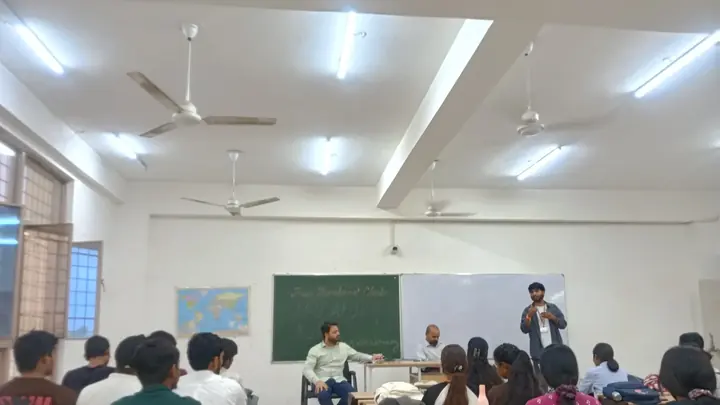
A discussion meeting was organised by the Free Thinkers Club of the Department of Political Science at Raja Mahendra Pratap Singh University, Aligarh, to mark the birth anniversary of former President of India, eminent scientist and educationist Dr. A.P.J. Abdul Kalam. The programme was held under the guidance of the university’s Vice-Chancellor, Prof. Narendra Bahadur Singh.
The discussion focused on Dr. Kalam’s contribution to science and nation-building, along with his educational philosophy, scientific outlook, curiosity, simplicity, moral values and ability to inspire young people. Students presented serious and reflective views on different aspects of his personality, ideas and public life.
The programme began with an opening address by Rashi Verma. She said Dr. Kalam should not be viewed only as a scientist or former President. Instead, she described him as a symbol of the combination of knowledge, action, humility and nation-building. She encouraged students to draw inspiration from his life and values.
Kanishk Varshney spoke about Dr. Kalam’s scientific and national contributions. He highlighted the Scientific Temperament and rational thinking reflected in Dr. Kalam’s ideas. He said that for Dr. Kalam, scientific progress was not limited to technological achievement. It was also a means of developing a culture of reason, curiosity and innovation in society.
Dr. Kalam’s ideas and outlook on life were also discussed with reference to his major books. The discussion underlined the connection between his scientific thinking and his wider vision for education, society and national development.
Divya made an emotional presentation titled “Kalam Tujhe Salaam”. Through the presentation, she expressed respect for Dr. Kalam and highlighted the inspiring legacy associated with him.
The meeting also included a critical discussion of Dr. Kalam’s personality and public life. Meghshyam reviewed criticisms related to Dr. Kalam as well as different aspects of his public life. He stressed that the academic assessment of a great personality should not be limited to praise. It should also be based on a critical study of the person’s different dimensions.
Pankaj Pathak spoke about the lessons that students could draw from Dr. Kalam’s life values. He discussed Dr. Kalam’s difficult life, the economic and social challenges he faced, and the inspiration he provided about moving forward through education.
He underlined that a person’s circumstances do not determine the person’s possibilities. According to the points presented during the discussion, determination, education and continuous effort shape a person’s future. Dr. Kalam’s life was discussed in this context as an example of the importance of these values for students.
Prashant Sharma placed the question “What will I be remembered for?” at the centre of his presentation on Dr. Kalam’s philosophy of life. He spoke about Dr. Kalam’s simplicity, his commitment to public life, and his preference for giving greater importance to knowledge and service to the nation than to personal property.
He also highlighted Dr. Kalam’s dedication to teaching. The presentation focused on how his public conduct, personal choices and connection with education were linked to his larger vision of a meaningful life.
Abhishek Gautam explained Dr. Kalam’s educational philosophy. He said curiosity, creativity, moral values and the freedom to ask questions should form the foundation of education. He highlighted Dr. Kalam’s view that a classroom should not be merely a place where information is provided.
Instead, the classroom should be a democratic platform where students can ask questions, think, create and develop their personalities. He stressed the need to ensure that the education system does not become only like a ‘factory’. According to his presentation, education should help develop students’ curiosity and independent thinking.
Lakshmi tried to understand Dr. Kalam’s personality through accounts connected with Rameswaram in Tamil Nadu and memories from his school life. She referred to episodes involving the observation of birds and learning from nature.
Through these examples, she explained that the process of learning is not limited to books. Nature, experience and curiosity are also important teachers in life. She also spoke about the relevance of Dr. Kalam’s simple lifestyle and philosophy of life through personal experiences.
Towards the conclusion of the programme, Rashi Verma discussed Dr. Kalam’s personality, outlook on life and inspiring conversations with reference to Guiding Souls: Dialogues of Life and references related to Dr. Kalam and Arun Tiwari.
She presented Dr. Kalam not only as an ideal personality for students, but also as a source of inspiration for continuously learning, asking questions, creating and remaining responsible towards society.
During the programme, students paid tribute to Dr. Kalam while also evaluating his ideas in critical, academic and contemporary contexts. The discussion did not remain limited to recalling his positions and achievements. It also examined the values and ideas that shaped his contribution and continued to make his life relevant for students.
The central conclusion of the discussion was that Dr. Kalam’s real legacy lies much beyond the positions he held and the achievements associated with him. It lies in his scientific outlook, simplicity, commitment to knowledge, emphasis on curiosity in education, confidence among young people and sense of responsibility towards the nation.
Frequently asked questions
Why was the discussion meeting held at Raja Mahendra Pratap Singh University?
It was held to mark the birth anniversary of former President of India, scientist and educationist Dr. A.P.J. Abdul Kalam.
Who organised the discussion meeting?
The Free Thinkers Club of the Department of Political Science organised the meeting.
Who guided the programme?
The programme was held under the guidance of the university’s Vice-Chancellor, Prof. Narendra Bahadur Singh.
What topics were discussed at the meeting?
The discussion covered Dr. Kalam’s contributions to science and nation-building, educational philosophy, scientific outlook, simplicity, moral values and ability to inspire young people.
You may also like
 National
11-Year-Old Girl Goes Missing While Playing Outside Home in Aligarh
 National
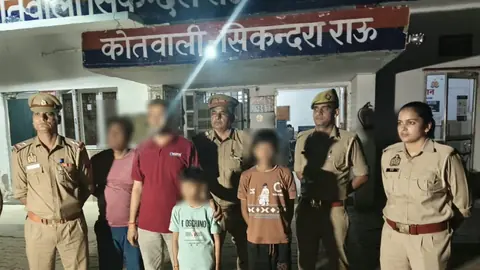
Aligarh Brothers, Aged 13 and 7, Rescued While Cycling to Jaunpur
 National
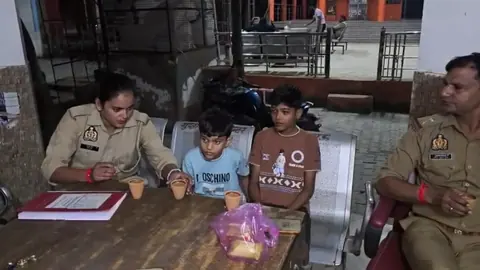
Two Aligarh Brothers Set Out 700 Km By Bicycle, Rescued By Police
 Politics
UP Minister Jaiveer Singh Offers Prayers at Newly Built Hathras Temple
Most read
- 1
Air China Adds Extra Flight for Passengers Stranded in Fuel-Starved Cuba
- 2
Western disturbance to bring rain, hail and strong winds across north India
- 3
Yogi Adityanath Directs No Occupied Houses Be Demolished for Achhalda Bridge
- 4
Gwalior Temple Truck Crash Kills 12, Injures 28-29 Devotees During Navratri
- 5
Heavy Rain Waterlogs Bengaluru, Snarls Traffic; Ride-Hailing Fares Surge
Comments
No comments yet. Be the first to comment.