
Pune's Elevated Roads to Use Malaysian Technology, Cut Pillars and Costs
Nitin Gadkari announces Malaysian UHPFRC tech for Pune's elevated roads, reducing pillars and costs while tackling traffic issues.

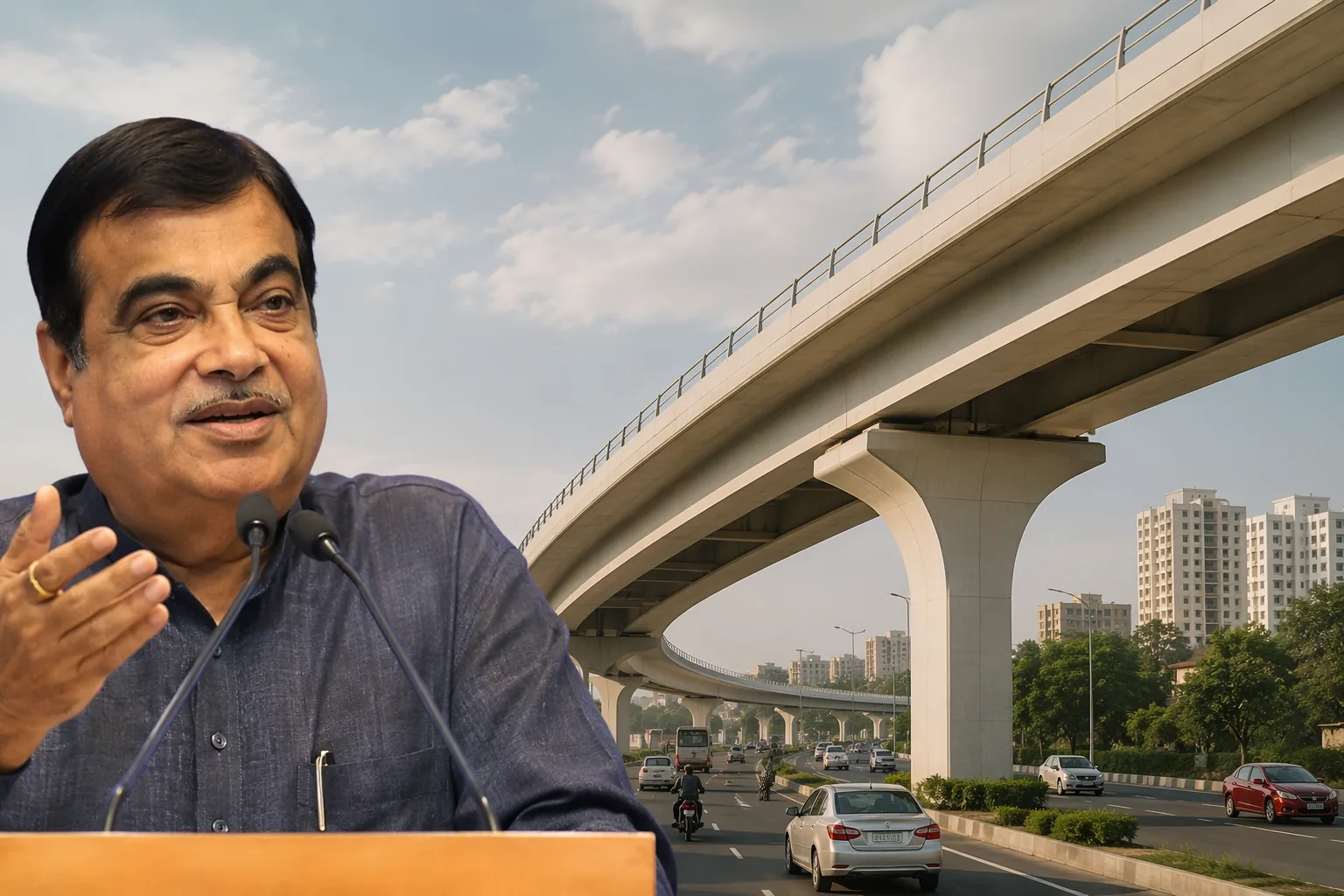
Union Minister for Road Transport and Highways Nitin Gadkari has announced the adoption of Malaysian Ultra High Performance Fibre Reinforced Concrete (UHPFRC) technology for Pune’s upcoming elevated road corridors. The innovative construction method will allow pillars to be spaced up to 120 metres apart, significantly reducing the number of pillars required and cutting project costs. Gadkari made the announcement during the foundation stone-laying ceremony for three major elevated road projects in Pune district on Saturday.
Tackling Pune’s Traffic and Pollution Challenges
Addressing the event, Gadkari highlighted Pune’s struggle with severe traffic congestion, ranking among the most choked cities in India. He noted that highways connecting Pune to neighbouring cities, including Pune-Mumbai, Pune-Nashik, and Pune-Solapur, have reached their capacity, leaving little scope for expansion. The new elevated corridors, Pune-Shirur, Hadapsar-Yavat, and Talegaon-Chakan-Shikrapur, are expected to alleviate this issue and reduce pollution levels caused by vehicular emissions.
Projects and Costs
The three corridors, managed by the Maharashtra State Road Development Corporation (MSRDC), will cover highly congested routes in Pune district. The Pune-Shirur corridor spans 53.40 km and is sanctioned at Rs 7,515 crore, while the Hadapsar-Yavat corridor covers 31.65 km with an allocation of Rs 5,265 crore. The Talegaon-Chakan-Shikrapur corridor, measuring 53.20 km, has been sanctioned Rs 4,000 crore. Construction began immediately following the ceremony.
Why UHPFRC Technology Matters
Gadkari explained that UHPFRC, already tested on 40 points of a bridge in Nagpur, uses steel fibre-reinforced beams instead of conventional steel. This allows for longer spans between pillars, up to 120 metres compared to the current Indian Road Congress (IRC) standard of 30 metres. The reduced pillar count is expected to lower costs and improve the efficiency of construction.
Ensuring Quality and Addressing Past Issues
The minister also emphasized the importance of quality control, citing issues with rubber bearings and expansion joints on the Delhi-Dehradun elevated road, where cracks were discovered. Companies responsible for supplying faulty materials have been blacklisted, and Gadkari directed officials to ensure high-quality bearings for the Pune projects. He credited L&T technical expert Venkatram for designing the new corridors, ensuring superior construction standards.
Broader Infrastructure Push in Pune District
Gadkari announced additional road projects worth Rs 50,000 crore for Pune district this year, including a Rs 15,000-crore Shirur-Chhatrapati Sambhajinagar corridor, which will cut travel time between Pune and Nagpur to under five hours. Other upcoming projects include the Nashik Phata-Khed corridor, Ravet-Narhe elevated road, and a new Rs 10,000-crore expressway to reduce Mumbai-Bengaluru travel time to five hours. These initiatives aim to transform Pune’s road infrastructure and ease chronic congestion.
The adoption of UHPFRC technology marks a significant step in modernizing Pune’s road network, addressing both traffic and environmental concerns.
Source: Indian Express
Frequently asked questions
What is UHPFRC technology and how does it benefit Pune's elevated roads?
UHPFRC (Ultra High Performance Fibre Reinforced Concrete) is a Malaysian technology being adopted for Pune's elevated road corridors. It uses steel fibre-reinforced beams instead of conventional steel, allowing pillars to be spaced up to 120 metres apart compared to the current Indian standard of 30 metres. This reduces the number of pillars needed, lowering project costs and improving construction efficiency.
What are the three elevated road corridors being developed in Pune?
The three corridors are: Pune-Shirur (53.40 km, Rs 7,515 crore), Hadapsar-Yavat (31.65 km, Rs 5,265 crore), and Talegaon-Chakan-Shikrapur (53.20 km, Rs 4,000 crore). These projects are managed by the Maharashtra State Road Development Corporation and aim to alleviate traffic congestion on routes connecting Pune to neighbouring cities.
Why does Pune need these new elevated road corridors?
Pune ranks among the most traffic-congested cities in India. Highways connecting Pune to Mumbai, Nashik, and Solapur have reached capacity with little scope for expansion. The new corridors are expected to reduce traffic congestion and lower pollution levels caused by vehicular emissions.
What quality measures are being taken for these projects?
Following issues with rubber bearings and expansion joints on the Delhi-Dehradun elevated road, Union Minister Nitin Gadkari has emphasized stringent quality control. Companies responsible for supplying faulty materials have been blacklisted, and officials have been directed to ensure high-quality bearings for the Pune projects.
You may also like
 Maharashtra
Pune to Cut Traffic Congestion by 30% with New Infrastructure Projects
 Karnataka
Whitefield gridlock spurs traffic police and residents to repair roads together
 Education
Bengaluru Authority orders water board to fill lakes, fix sewage leaks
 Kerala
NHAI sets May 2027 deadline for Edappally-Kodungalloor six-laning project
Most read
- 1
Air China Adds Extra Flight for Passengers Stranded in Fuel-Starved Cuba
- 2
Western disturbance to bring rain, hail and strong winds across north India
- 3
Yogi Adityanath Directs No Occupied Houses Be Demolished for Achhalda Bridge
- 4
Gwalior Temple Truck Crash Kills 12, Injures 28-29 Devotees During Navratri
- 5
Schools Shut in Five Tamil Nadu Districts, Including Chennai, Amid Heavy Rain
Comments
No comments yet. Be the first to comment.