
Parliamentary Panel Raises Red Flags on Higher Education Bill's Centralized Power
House panel warns Higher Education Bill may centralize power, risking autonomy of institutions. Key issues include regulatory overreach and penalty systems

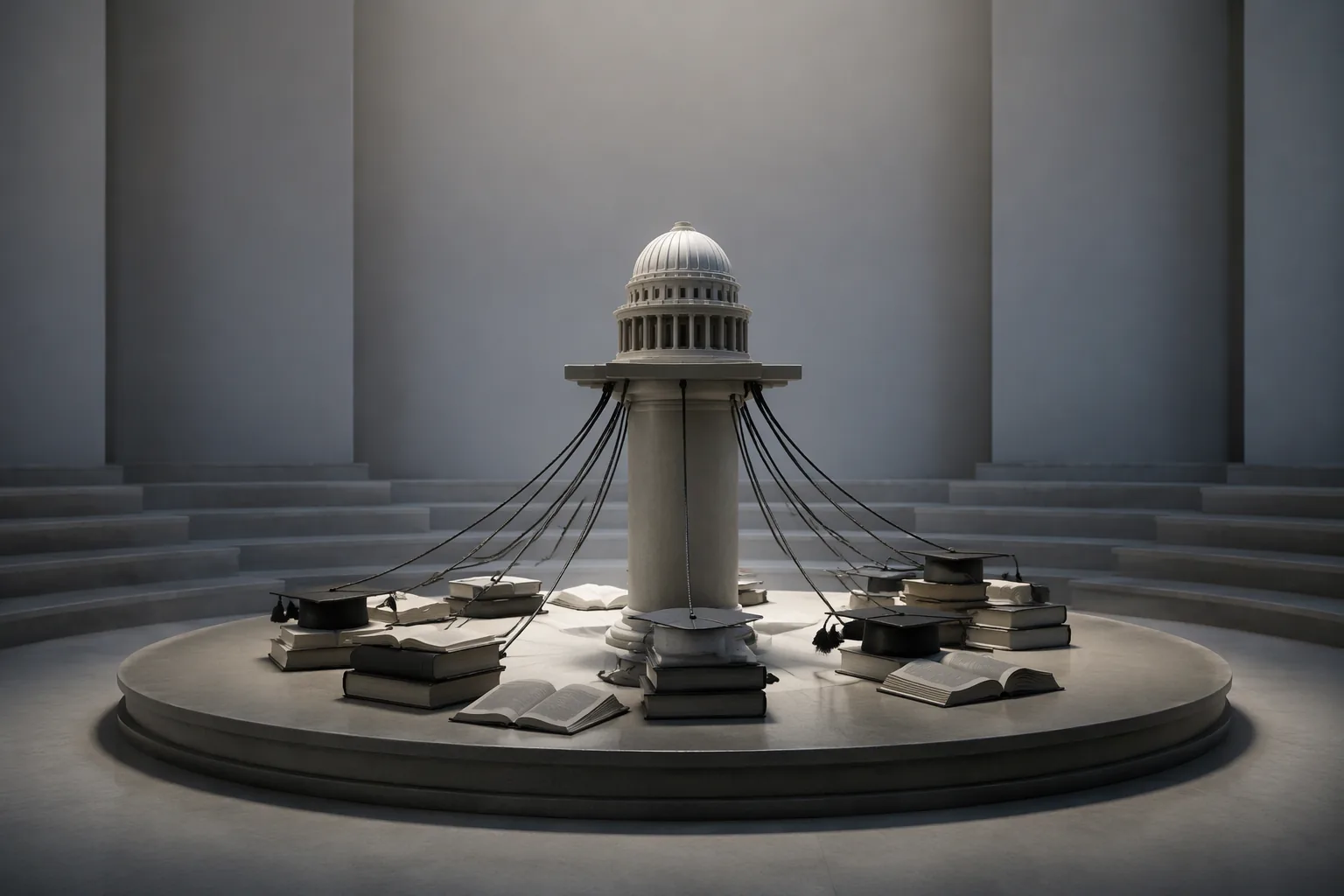
Higher Education Bill Sparks Concerns Over Centralised Regulatory Power: Parliamentary Panel
A joint parliamentary committee has raised concerns that the Viksit Bharat Shiksha Adhishthan (VBSA) Bill, 2025, could concentrate extensive regulatory powers in a single central authority, potentially undermining the autonomy of higher education institutions. The committee's draft report, circulated to members, warned of possible "bureaucratic or ideological overreach" under the proposed framework.
Overhaul of Higher Education Governance
Introduced in the Lok Sabha in December 2025, the VBSA Bill seeks to dissolve existing regulatory bodies such as the University Grants Commission (UGC), the All India Council for Technical Education (AICTE), and the National Council for Teacher Education (NCTE). These would be replaced by a unified regulatory commission tasked with overseeing higher education in India. The legislation is part of the government’s efforts to implement the National Education Policy (NEP), 2020, and proposes dividing oversight into three specialised councils for regulation, accreditation, and standards.
The government has listed the Bill for consideration and passage following the adoption of the committee's report.
Graded Penalty System Under Scrutiny
The draft report also flagged issues with the Bill’s proposed "graded penalty architecture," cautioning against arbitrary imposition of penalties by the new Regulatory Council. While the committee acknowledged the need for penalties to deter habitual violations, it emphasised that these must be linked to "proven violations of norms." It further recommended that the Ministry establish clear rules to ensure timely appointments to regulatory positions, suggesting that processes for filling predictable vacancies should begin six months in advance and conclude within 90 days of the vacancy.
The committee also highlighted provisions aimed at increasing accountability within higher education institutions (HEIs). Repeat violations could lead to the removal of specific personnel responsible for non-compliance, shifting the burden of accountability onto individual leaders and trustees. This measure, the report noted, would help dismantle the "corporate veil" often used by promoters of fraudulent institutions.
Appointment Mechanisms Raise Debate
Regarding appointments to the proposed regulatory commission, the committee endorsed the provision that presidents and full-time members be appointed by the President of India on the recommendation of a search-cum-selection committee. However, it suggested that other members, excluding ex-officio members and the member-secretary, be appointed directly by the Central government to avoid delays caused by the current process. The report noted that many central institutions are currently facing challenges due to prolonged vacancies.
Implications for Higher Education
The VBSA Bill represents a significant shift in the governance of India's higher education sector. While it aims to streamline oversight and align with the NEP's vision, concerns about centralised power and potential risks to institutional autonomy have sparked debate. The parliamentary panel's recommendations underscore the need for safeguards to ensure transparency, accountability, and efficiency in the proposed regulatory framework.
Source: The Hindu
Frequently asked questions
What is the VBSA Bill 2025 and what does it aim to do?
The Viksit Bharat Shiksha Adhishthan (VBSA) Bill 2025, introduced in December 2025, seeks to overhaul higher education governance by dissolving existing regulatory bodies like the UGC, AICTE, and NCTE. It replaces them with a unified regulatory commission divided into three specialized councils for regulation, accreditation, and standards as part of implementing the National Education Policy 2020.
What are the main concerns raised by the parliamentary committee?
The joint parliamentary committee warned that the Bill could concentrate extensive regulatory powers in a single central authority, potentially causing "bureaucratic or ideological overreach" and undermining institutional autonomy. The committee also flagged concerns about arbitrary penalty imposition and the need for clearer appointment mechanisms for regulatory positions.
What does the committee recommend regarding penalties under the Bill?
The committee acknowledged the need for penalties to deter violations but emphasized they must be linked to "proven violations of norms" rather than imposed arbitrarily. It recommended the Ministry establish clear rules to prevent arbitrary enforcement by the Regulatory Council.
How does the Bill address accountability in higher education institutions?
The Bill includes provisions to increase accountability by allowing repeat violations to lead to removal of specific personnel responsible for non-compliance. This shifts accountability onto individual leaders and trustees and helps dismantle the "corporate veil" often used by promoters of fraudulent institutions.
You may also like
 Maharashtra
Maharashtra tables sweeping bill to regulate private coaching centres nationwide first attempt
 Politics
Parliament panel moots higher education spending, says NEP’s 6% GDP target unmet
 National
The Hindu and VIT to host biotechnology conclave in September with industry leaders
 Politics
India's High Commissioner pitches parliamentary cooperation with Bangladesh leadership
Most read
- 1
Air China Adds Extra Flight for Passengers Stranded in Fuel-Starved Cuba
- 2
Western disturbance to bring rain, hail and strong winds across north India
- 3
Yogi Adityanath Directs No Occupied Houses Be Demolished for Achhalda Bridge
- 4
Gwalior Temple Truck Crash Kills 12, Injures 28-29 Devotees During Navratri
- 5
Schools Shut in Five Tamil Nadu Districts, Including Chennai, Amid Heavy Rain
Comments
No comments yet. Be the first to comment.