
MP officer Savita Pradhan’s post sparks debate on respect and equality in relationships
Madhya Pradesh officer and Singrauli Municipal Corporation Commissioner Savita Pradhan has drawn attention with a social media poem on women’s self-respect, equality and dignity in relationships.

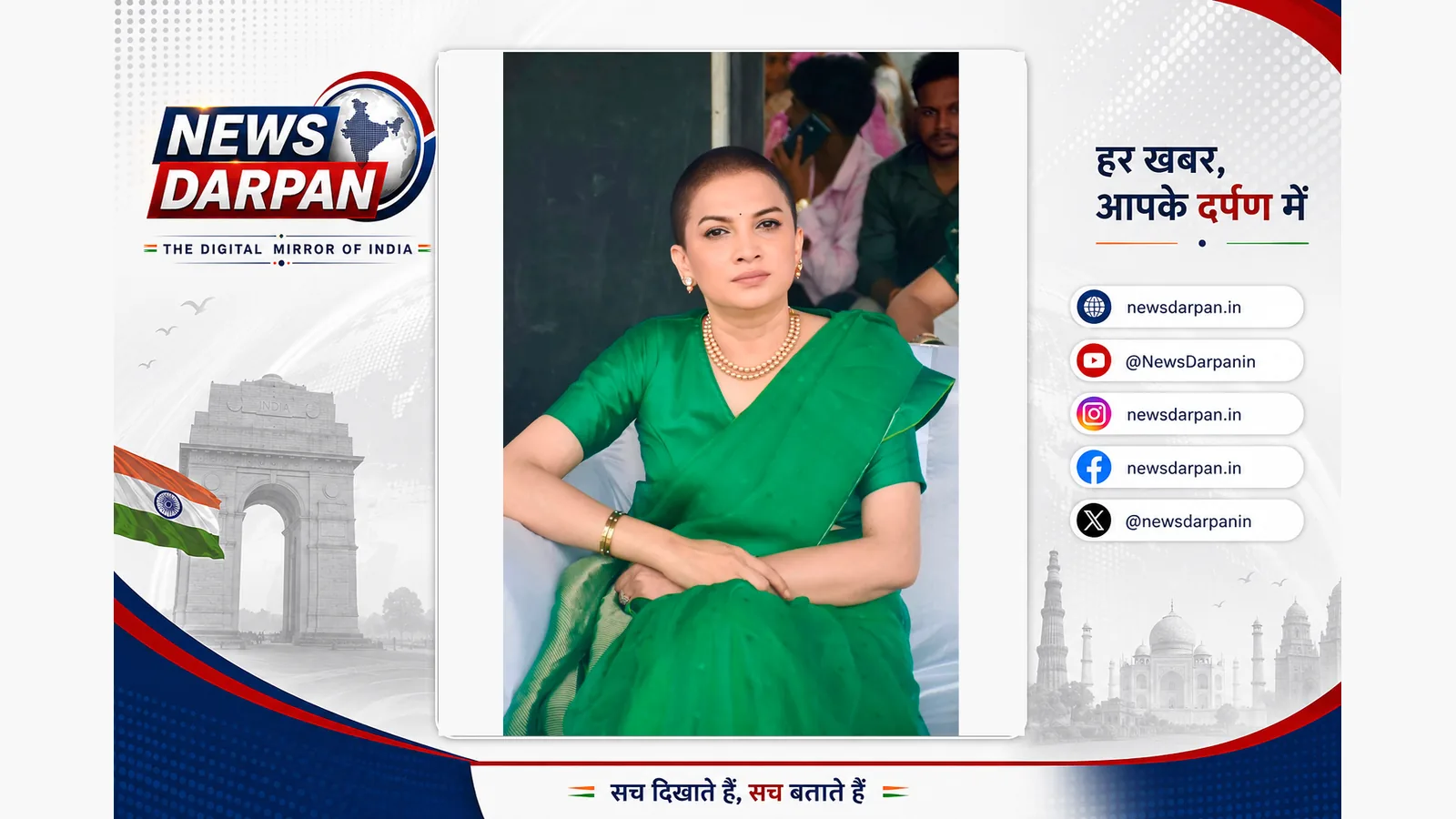
Madhya Pradesh State Service officer and Singrauli Municipal Corporation Commissioner Savita Pradhan is in the spotlight after a social media post shared by her went viral. In the post, shared on Instagram with two photographs, she posted a poem that uses references to mythological women such as Radha, Rukmini, Sita, Urmila, Draupadi, Ahilya and Yashodhara to raise questions about sacrifice, waiting, humiliation, tests of character and self-respect in relationships.
The post has drawn attention because Savita Pradhan uses the poem to say that she does not want a relationship in which only the woman is expected to sacrifice. Through the poem, she argues that love cannot mean that a woman alone must keep compromising, waiting, facing insult or proving herself. The central message of the post is that respect and equality are as important as love in any relationship.
After the post surfaced, social media users began reacting to it. Many people are also looking at the post in the context of Savita Pradhan’s personal struggles and life experiences. The discussion around the poem has gone beyond a single post, with users reading it as a wider statement on women’s dignity and expectations in relationships.
Savita Pradhan begins the poem with a reference to Radha. She writes that she will not accept merely being a lover without respect. She then invokes Rukmini and questions the idea of being called a wife in a relationship where there is no love.
The poem then moves to Sita, referring to the idea of having to undergo an agnipariksha to prove one’s character before the world. Through Urmila, it brings up long separation, loneliness and waiting.
With references to Draupadi and Ahilya, the poem questions humiliation, injustice and long years of waiting. The reference to Draupadi points to a woman’s humiliation in front of her partner, while the reference to Ahilya raises the issue of a woman being punished and left waiting for someone else to redeem her.
Savita Pradhan also refers to Yashodhara, writing that she does not want a life in which a partner leaves without telling her and the woman left behind continues to shoulder responsibilities alone. In the poem, Yashodhara becomes an example of abandonment, sacrifice and motherhood carried in silence.
In the final part of the poem, Savita Pradhan links her own example to Sati. She writes of imagining a relationship in which the partner too shows equal dedication and effort to be with her. The conclusion of the poem is centred on mutual love and respect rather than one-sided sacrifice by a woman.
The post is being discussed also because Savita Pradhan has earlier been in the news for her social media posts and social initiatives. In August 2026, she had shaved her head and donated her hair to make a wig for a child battling cancer. After that initiative, her photographs had gone viral on social media. At that time, she had given the message that beauty is not only in hair or external appearance, but in confidence.
Savita Pradhan’s own life has also been marked by struggle. According to media reports, she was born in a tribal family in Madhya Pradesh. Despite financial difficulties, she continued her education. In her village, she made her identity not merely as one of the first girls, but as the first woman to pass Class 10.
She was married at a young age and later faced domestic violence and difficult family circumstances. According to reports, while taking responsibility for her children, she worked through a beauty parlour and tuitions. Alongside this, she continued preparing for competitive examinations.
She later cleared the Madhya Pradesh Public Service Commission examination. Her administrative journey has included responsibilities from DSP to the State Administrative Service and Municipal Corporation Commissioner. She is currently identified as an officer of the Madhya Pradesh State Service and Commissioner of the Singrauli Municipal Corporation.
The central idea of Savita Pradhan’s poem is that a woman should not always be expected to sacrifice, wait and prove herself in a relationship. By using mythological women as examples, she has placed before readers the need for self-respect, mutual love and equality in modern relationships.
The reactions to her post also show that the poem is not being seen only as a personal story about one relationship. It has become a subject of a broader social debate on women’s roles, their dignity, and what they should be expected to bear in relationships.
This is the poem written by Savita Pradhan, as shared from her wall:
मैं नहीं हूँ राधा जैसी , जो बिन सम्मान प्रेमिका बस बन जाऊँगी ! मैं रुक्मणी जैसी भी नहीं जो बिन प्रेम , बस पत्नी कहलाऊँगी ! मैं सीता जैसी भी नहीं हूँ जो , अपना चरित्र बताने संसार को , अग्नि में चढ़ जाऊँगी ! मैं उर्मिला जैसी भी नहीं की तुम मुझे छोड़ , कर्तव्य निभाने जाओ , तो मैं वर्षों विरह में जल जाऊँगी ! मैं द्रौपदी जैसी भी नहीं की , हरले कोई चीर मेरा तुम्हारे आगे ! और फिर भी चरणों में मस्तक झुकाऊँगी ! मैं अहिल्या जैसी भी नहीं जो मुझे , अनजाने हुए अपराध के लिए पाषाण कर दे ! तो वर्षों किसी राम की प्रतीक्षा में , पाषाण ही रह जाऊँगी ! मैं नहीं यशोधरा जैसी भी की तुम, आधी रात मुझे छोड़ ज्ञान की खोज में जाओ ! तो बस एक त्यागी हुई , अबोध शिशु की माँ ही रह जाऊँगी !
मैं सती जैसी हूँ प्रिय ! मुझे पाने तुमने तांडव किया ! तब ही “शिव” की “शक्ति” कहलाऊँगी । “सविता”
The poem, credited to Savita Pradhan’s wall, is the reason her post is being widely shared and discussed. Its references to Radha, Rukmini, Sita, Urmila, Draupadi, Ahilya, Yashodhara and Sati have made the post stand out, because each reference is used to underline a different form of burden placed on women in relationships.
Through Radha, the poem rejects love without respect. Through Rukmini, it questions marriage without love. Through Sita, it rejects the demand that a woman must prove her character to society. Through Urmila, it questions years of silent waiting. Through Draupadi, it raises the issue of humiliation. Through Ahilya, it speaks of punishment and long waiting for redemption. Through Yashodhara, it questions abandonment and being left behind with responsibilities.
The final reference to Sati changes the tone from rejection to assertion. Savita Pradhan writes that she is like Sati, and that only when the partner makes the same kind of intense effort and dedication to win her, will she be called the “Shakti” of “Shiv”. This ending is what gives the poem its larger message: a relationship cannot be built on one person’s sacrifice alone; it needs love, respect and equal commitment from both sides.
Frequently asked questions
Who is Savita Pradhan?
Savita Pradhan is a Madhya Pradesh State Service officer and the Commissioner of Singrauli Municipal Corporation.
Why did Savita Pradhan’s social media post go viral?
Her Instagram post featuring a poem about respect, equality and women’s sacrifice in relationships drew wide attention and debate.
What is the main message of Savita Pradhan’s poem?
The poem argues that love should not require only a woman to sacrifice, compromise, wait, face insult or prove herself, and that respect and equality are essential in relationships.
Which mythological women are referenced in the poem?
The poem refers to Radha, Rukmini, Sita, Urmila, Draupadi, Ahilya, Yashodhara and Sati.
How are social media users interpreting the post?
Many users are reading it not just as a personal post but as a broader statement on women’s dignity and expectations in relationships.
You may also like
 Politics
Congress Leader Claims Jitu Patwari Will Fly MP’s New ₹250-Crore Jet
 Viral
MP reports fever patients; concerns over antibiotic self-medication
 Madhya Pradesh
 TET Gets Just 34,200 Applications From 1.5 Lakh Eligible Teachers
 Madhya Pradesh
 Government's New Bombardier Challenger 3500 Jet Reaches Bhopal
Most read
- 1
Air China Adds Extra Flight for Passengers Stranded in Fuel-Starved Cuba
- 2
Western disturbance to bring rain, hail and strong winds across north India
- 3
Yogi Adityanath Directs No Occupied Houses Be Demolished for Achhalda Bridge
- 4
Gwalior Temple Truck Crash Kills 12, Injures 28-29 Devotees During Navratri
- 5
Schools Shut in Five Tamil Nadu Districts, Including Chennai, Amid Heavy Rain
Comments
No comments yet. Be the first to comment.