
Monsoon progress stalls in India as rainfall remains 38% below average
Discover why the monsoon has stalled in India and when rainfall is expected to resume. Key factors affecting the weather patterns explained.

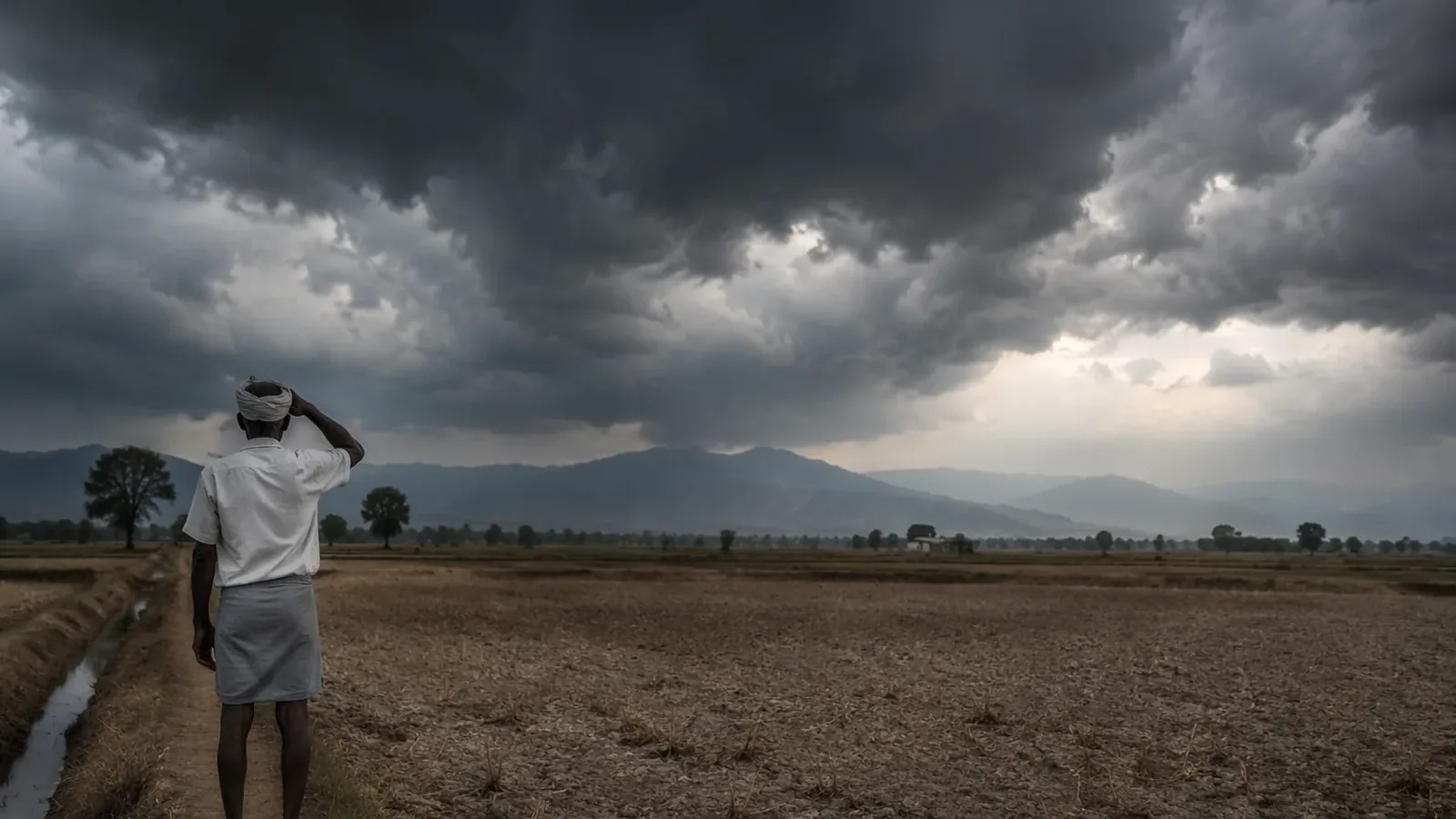
Why has monsoon progress stalled, and when can rains be expected next?
The southwest monsoon, which typically brings over 70% of India’s annual rainfall, has had a sluggish start this year. Since its official onset on June 1, rainfall across India has been 38% below average as of June 17. While the monsoon usually arrives over the Andaman Sea in late May and progresses into mainland India through Kerala by June 1, this year’s onset over Kerala was delayed to June 4.
After its initial arrival, the monsoon advanced steadily for four days, covering parts of the west coast, including Karnataka and Goa. However, its progress has since slowed significantly, with a delayed onset in much of northeast India. While regions such as Kerala, southern Karnataka, Tamil Nadu, Lakshadweep, and the northeast experienced a brief surge in rainfall in early June, this momentum did not last. By June 10, southwest India recorded an 8% rain surplus, but the monsoon's advance has since stalled, particularly in Maharashtra, where the rains are yet to arrive.
The last significant monsoonal advance occurred on June 8, when it reached parts of south Konkan and south Madhya Maharashtra. Since then, the Arabian Sea branch of the monsoon has made little progress, in contrast to the Bay of Bengal branch, which has advanced into areas like Koraput, Phulbani, Ranchi, Jamui, and Muzaffarpur as of June 17. By June 15, the monsoon had reached the remaining parts of Andhra Pradesh, West Bengal, Telangana, Odisha, Jharkhand, and Bihar. However, Maharashtra continues to experience a significant rainfall deficit, with some regions reporting deficits of 60% to 99% or even higher.
Several factors are contributing to this delay. First, the monsoonal winds from the Arabian Sea have weakened, reducing the moisture flow toward Maharashtra and adjacent regions. Instead, stronger dry winds from the north and northwest are dominating, acting as barriers to the monsoon. Second, the cross-equatorial wind flow over the western Indian Ocean and Arabian Sea, which typically aids the monsoon by driving moisture, has also weakened.
Additionally, the absence of supporting weather systems, such as low-pressure areas, cyclonic circulations, or offshore troughs, has further hindered the monsoon’s advance. These systems are crucial for sustaining rainfall and aiding the monsoon’s progress. Lastly, global weather patterns, such as the Madden, Julian Oscillation (MJO), are currently unfavorable. The MJO, an eastward-moving system of winds and clouds, can enhance rainfall over India when in a favorable phase, but this is not the case at present.
The India Meteorological Department (IMD) has not provided updates on the monsoon’s progress over Maharashtra since June 16, reflecting the uncertainty surrounding its arrival in the state. However, IMD Mumbai has indicated the possibility of some rainfall over Konkan around June 24 and 25. Meanwhile, the monsoon is expected to advance next into parts of Telangana, Odisha, Jharkhand, Bihar, and Chhattisgarh within the next four to five days, according to a June 18 update.
Frequently asked questions
Why has the monsoon progress stalled in India?
The monsoon progress has stalled due to weakened monsoonal winds from the Arabian Sea, stronger dry winds from the north and northwest, and the absence of supporting weather systems.
When did the southwest monsoon officially start this year?
The southwest monsoon officially started on June 1, but its onset over Kerala was delayed to June 4.
What regions in India experienced a rainfall deficit?
Maharashtra is experiencing a significant rainfall deficit, with some regions reporting deficits of 60% to 99% or higher.
When can rainfall be expected in Konkan?
The India Meteorological Department has indicated the possibility of some rainfall over Konkan around June 24 and 25.
What factors are affecting the monsoon's advance?
Factors affecting the monsoon's advance include weakened monsoonal winds, absence of low-pressure systems, and unfavorable global weather patterns like the Madden, Julian Oscillation.
You may also like
 Weather
Wayanad's Monsoon Deficit Stands at 50% Despite Recent Rains
 Weather
India Braces for Below-Normal Rainfall; Telangana Set for Above-Average Precipitation
 Weather
Evening downpour brings relief to Shravasti after oppressive heat and humidity
 Weather
India's Southwest Monsoon Ends 12.6% Below Normal, Driest Since 2015
Most read
- 1
Air China Adds Extra Flight for Passengers Stranded in Fuel-Starved Cuba
- 2
Western disturbance to bring rain, hail and strong winds across north India
- 3
Yogi Adityanath Directs No Occupied Houses Be Demolished for Achhalda Bridge
- 4
Gwalior Temple Truck Crash Kills 12, Injures 28-29 Devotees During Navratri
- 5
Schools Shut in Five Tamil Nadu Districts, Including Chennai, Amid Heavy Rain
Comments
No comments yet. Be the first to comment.