
Wayanad's Monsoon Deficit Stands at 50% Despite Recent Rains
Wayanad faces a 50% monsoon deficit despite recent heavy rainfall. Climate factors and uneven distribution impact agriculture and water supply.

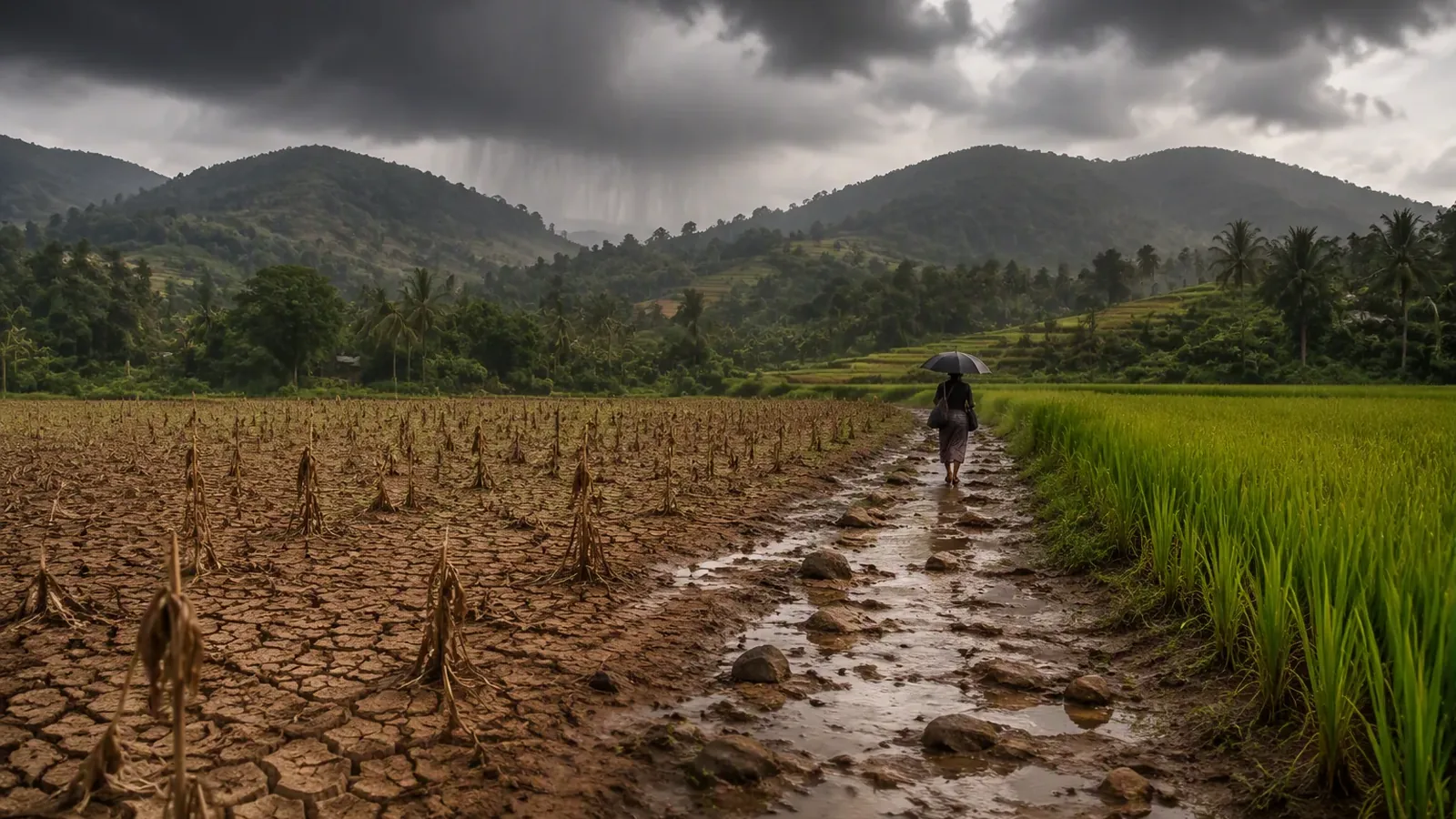
Wayanad, August 2: Despite a late surge in rainfall, Wayanad district continues to grapple with a significant monsoon deficit, with cumulative rainfall still 50% below the normal level for the season. Between June 1 and July 31, the hill district received only 802 mm of rain, far short of the India Meteorological Department's (IMD) normal of 1,600 mm for the period, according to data from the Hume Weather Lab of the Hume Centre for Ecology and Wildlife Biology.
Uneven Rainfall and Climate Factors
The delayed onset of the southwest monsoon, attributed to global climate change and the El Niño phenomenon, has been a key factor behind the shortfall. However, a recent five-day wet spell from July 27 to 31 brought some respite, with 199 mm of rain recorded during this period, accounting for nearly 25% of the total rainfall received over the past two months. The wet conditions are expected to persist until August 4, according to C.K. Vishnudas, executive director of the Hume Centre.
Rainfall distribution across Wayanad has been highly uneven. While Lakkidi recorded a substantial 2,548 mm of rainfall, Muthanga received a mere 228 mm. Among local administrative areas, Thondernad grama panchayat registered the highest average rainfall at 1,990 mm, whereas Noolpuzha grama panchayat recorded the lowest average at just 277 mm.
Cooler Temperatures Bring Temporary Relief
The late July rains have also led to a noticeable drop in daytime temperatures, which had been unusually high earlier in the monsoon season due to scarce rainfall. Over the past five days, the average daytime temperature in Wayanad has fallen to around 25°C, providing some relief to residents.
Why This Matters
The ongoing monsoon deficit poses significant challenges for Wayanad, a district heavily reliant on agriculture and known for its biodiversity. The uneven rainfall distribution could exacerbate water scarcity and impact crop yields, while the delayed monsoon highlights the growing influence of global climate patterns like El Niño on regional weather systems.
As the district awaits further rainfall in the coming days, the long-term implications of this year’s erratic monsoon remain a concern for both local communities and environmental experts.
Source: The Hindu
Frequently asked questions
What is the current monsoon deficit in Wayanad?
The monsoon deficit in Wayanad stands at 50%.
How much rainfall did Wayanad receive between June 1 and July 31?
Wayanad received only 802 mm of rain during that period.
What factors contributed to the monsoon deficit in Wayanad?
The delayed onset of the southwest monsoon, global climate change, and the El Niño phenomenon contributed to the deficit.
What was the average daytime temperature in Wayanad after the late July rains?
The average daytime temperature in Wayanad fell to around 25°C.
How does the uneven rainfall distribution affect Wayanad?
The uneven rainfall distribution could exacerbate water scarcity and impact crop yields.
You may also like
 Weather
Monsoon progress stalls in India as rainfall remains 38% below average
 Weather
India Braces for Below-Normal Rainfall; Telangana Set for Above-Average Precipitation
 Weather
India's Southwest Monsoon Ends 12.6% Below Normal, Driest Since 2015
 National
Heavy rainfall brings relief to Amethi farmers as wet spell returns to district
Most read
- 1
Air China Adds Extra Flight for Passengers Stranded in Fuel-Starved Cuba
- 2
Western disturbance to bring rain, hail and strong winds across north India
- 3
Yogi Adityanath Directs No Occupied Houses Be Demolished for Achhalda Bridge
- 4
Gwalior Temple Truck Crash Kills 12, Injures 28-29 Devotees During Navratri
- 5
Schools Shut in Five Tamil Nadu Districts, Including Chennai, Amid Heavy Rain
Comments
No comments yet. Be the first to comment.