
Maa Vijayasan Devi Shrine in Sehore Draws Devotees During Navratri
The Salaknpur shrine of Maa Vijayasan Devi, located on a hill in the Vindhya mountain range in Madhya Pradesh’s Sehore district, is among the state’s prominent religious destinations.

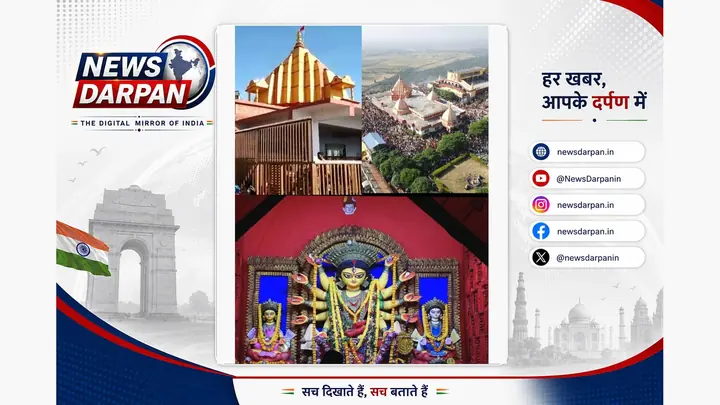
The Salaknpur shrine of Maa Vijayasan Devi, located on a hill in the Vindhya mountain range in Madhya Pradesh’s Sehore district, is among the state’s prominent religious destinations. Known as Maa Vindhyavasini Beejasan Devi, the temple attracts devotees throughout the year. However, during Chaitra and Sharadiya Navratri, the shrine takes on a particularly vibrant atmosphere of devotion, faith and worship of Shakti.
The shrine is associated with the belief that wishes made with a true heart before the goddess are fulfilled. Devotees also believe that Maa Vijayasan gives them the strength to face difficulties in life. According to the Sehore district administration, the temple stands on a hill that is approximately 800 feet high and is about 70 kilometres from Bhopal.
The identity of this sacred place is not limited to that of an ancient temple. Religious traditions connected with the shrine also speak of Goddess Durga’s victory over the demon Raktabeej, the goddess’s victorious form and a popular story involving a banjara, his animals and a divine girl. These traditions have shaped the religious importance of the Salaknpur dham over generations.
One of the main religious beliefs associated with Maa Vijayasan is linked to the mythological battle between Goddess Durga and the demon Raktabeej. In Hindu mythological tradition, Raktabeej is described as a powerful asura. It was believed that whenever a drop of his blood fell on the ground, another demon identical to him would emerge from it. Because of this power, killing him became extremely difficult for the gods.
According to the story, the gods, troubled by the atrocities of Raktabeej, prayed to Adi Shakti. Hearing their call, the goddess took an intense form and went to war against the demon. To stop new demons from emerging from Raktabeej’s blood, the goddess adopted a way to prevent his blood from falling on the earth. In the end, she killed Raktabeej and freed the gods from his terror.
The local religious belief in Salaknpur connects this victory with the hill on which the shrine stands. It is said that after defeating the demon, the goddess took her seat here in a victorious posture. Because of this victorious form, she became known as Maa Vijayasan Devi, and the shrine came to be called Vijayasan Dham.
The connection between the killing of Raktabeej and Salaknpur is part of local religious tradition and belief. It is therefore presented as a mythological story associated with faith, rather than as a verified historical event. The story remains an important part of the way devotees understand the power and identity of Maa Vijayasan.
Another popular tradition concerns the origin of the Salaknpur temple. This story has been passed down among devotees for generations and includes a banjara, his animals and a divine girl.
According to the popular belief, about 300 years ago, some banjaras were travelling with their animals when they stopped in the forest around this hill. They rested there to recover from the tiredness of their journey. During this time, their animals suddenly went missing. The banjaras searched the forest and the surrounding area extensively, but they could not find them.
The story says that while looking for the animals, an elderly banjara saw a young girl. When he asked her about his animals, the girl indicated that he should go to a particular place and worship the goddess. The banjara reached that place and offered prayers to Maa Bhagwati. According to the folk story, his lost animals returned after this.
The banjaras considered the incident to be the goddess’s blessing and were overwhelmed with emotion. They resolved to build a temple to the goddess at that place. This story is counted among the main folk traditions linked to the establishment of the Salaknpur temple.
For devotees, the message of the folk story is connected with faith, trust and seeking the goddess’s refuge during a crisis. At the same time, the exact date on which the temple was established and the early history of its construction are not supported by extensive solid historical evidence. The story continues to survive as a tradition of belief associated with the shrine.
The name ‘Vijayasan’ is commonly connected with the goddess’s victorious posture. According to the prevailing belief, after defeating Raktabeej, the goddess assumed her victorious form in this area. This is why the goddess worshipped here came to be known as Vijayasan Devi.
The name Vindhyavasini is linked to the goddess’s form associated with the Vindhya region and the tradition of Shakti worship. Beejasan Devi is another popular name for the presiding goddess of the temple.
Religious explanations are associated with all these names. However, it cannot be claimed that there is one single historically proven explanation for the naming of the temple. Local traditions form an important part of the religious identity of this dham.
The temple is situated near Salaknpur village in Sehore district and has been built on a hill approximately 800 feet high. The height of the hill and its natural surroundings make the journey to the shrine distinctive. Devotees who come here consider the experience of climbing the hill, before seeking the goddess’s darshan, an important part of their religious journey.
The temple can be reached by stairs as well as by road. A ropeway is also available for devotees. According to tourism information provided by the district administration, there are more than one thousand stairs leading to the temple.
Many devotees visit the shrine after their wishes have been fulfilled. Some families bring their children here for the mundan ceremony. Other devotees perform worship and religious rituals according to their faith and tradition. During darshan, devotees offer a chunari, coconut and prasad to the goddess.
For visitors, darshan of the goddess’s idol is the principal purpose of the journey. The surrounding natural views can also be seen from the hill. This gives the religious visit an opportunity to connect with nature along with the spiritual experience associated with the temple.
Another belief connected with Salaknpur Dham concerns the sacred lamps that burn at the shrine. An article by Madhya Pradesh Tourism mentions the local belief that two lamps, associated with coconut oil and ghee, have continued to burn for approximately 400 years. The dhuni of the saints and its ash are also regarded by devotees as sacred prasad.
These traditions hold a special place in the lives of worshippers. Devotees see the lamp as a symbol of the goddess’s presence and of continuous worship. However, the claim about the period for which the lamps have been burning is understood as a prevailing religious belief, not as a verified fact established through independent historical records.
Chaitra and Sharadiya Navratri are among the most important religious occasions at Salaknpur Dham. Large numbers of devotees arrive at the temple for darshan during these periods. The temple complex and the route leading up to the hill echo with chants of ‘जय माता दी’, bhajans and worship.
During Navratri, devotees worship different forms of the goddess for nine days. There is particular enthusiasm among worshippers for darshan of Maa Vijayasan. Many devotees arrive with their families and pray for the fulfilment of their wishes.
The Madhya Pradesh Tourism Department has also described the Salaknpur temple as an important religious tourism destination. The fair held here during Navratri supports religious activity and also promotes local trade and tourism. The shrine’s importance during these days is therefore reflected not only in the large gathering of devotees, but also in the wider religious and tourism activity around the area.
Plans for developing facilities around the temple and the religious complex have also kept Salaknpur Dham in discussion. An article published by Madhya Pradesh Tourism in September 2025 mentioned the Devi Lok project. The plan includes the development of a complex depicting different forms of the goddess, along with facilities for devotees.
The stated purpose of such development is to make the journey more convenient for devotees and to strengthen the religious and cultural identity of the area. However, the current status of the project and whether all its works have been completed require separate confirmation.
Salaknpur is about 70 kilometres from Bhopal and can be reached by road from the state capital. Devotees travelling to the hilltop temple can use the stairs or the ropeway. Since the operational status of the ropeway can change, it is appropriate to check the latest information before beginning the journey.
According to the Sehore district administration website, Budni railway station is approximately 15 kilometres from the temple. The remaining journey can be completed by road.
The story of Maa Vijayasan of Salaknpur is not only about the construction of a temple. It also describes a religious tradition in which the goddess is worshipped as a powerful force that protects devotees from difficulties. The belief connected with the destruction of Raktabeej represents the goddess’s power and courage. The folk story of the banjara and the divine girl reflects the faith and gratitude of devotees.
Situated on a hill in the Vindhya region, this dham continues to be a centre of faith for thousands of devotees. Some come with a wish, some arrive to express gratitude and others visit simply to seek darshan of the goddess and find peace of mind. For devotees, the darbar of Maa Vijayasan remains a symbol of faith, courage and Shakti.
जय माता दी। 🙏🙏
Frequently asked questions
Where is the Maa Vijayasan Devi shrine located?
The shrine is located on an approximately 800-foot-high hill in the Vindhya mountain range in Sehore district, Madhya Pradesh, about 70 kilometres from Bhopal.
When does the shrine attract a particularly vibrant atmosphere?
The shrine becomes especially vibrant during Chaitra and Sharadiya Navratri.
What is Maa Vijayasan Devi also known as?
Maa Vijayasan Devi is also known as Maa Vindhyavasini Beejasan Devi.
What religious belief is associated with the shrine?
Devotees believe that sincere wishes made before the goddess are fulfilled and that she gives them strength to face difficulties.
Why is the shrine called Vijayasan Dham?
According to local religious tradition, Goddess Durga took her seat there in a victorious posture after defeating the demon Raktabeej.
You may also like
 Politics
Congress Leader Claims Jitu Patwari Will Fly MP’s New ₹250-Crore Jet
 Viral
MP reports fever patients; concerns over antibiotic self-medication
 Madhya Pradesh
 TET Gets Just 34,200 Applications From 1.5 Lakh Eligible Teachers
 Madhya Pradesh
 Government's New Bombardier Challenger 3500 Jet Reaches Bhopal
Most read
- 1
Air China Adds Extra Flight for Passengers Stranded in Fuel-Starved Cuba
- 2
Western disturbance to bring rain, hail and strong winds across north India
- 3
Yogi Adityanath Directs No Occupied Houses Be Demolished for Achhalda Bridge
- 4
Gwalior Temple Truck Crash Kills 12, Injures 28-29 Devotees During Navratri
- 5
Heavy Rain Waterlogs Bengaluru, Snarls Traffic; Ride-Hailing Fares Surge
Comments
No comments yet. Be the first to comment.