
Kerala High Court Strikes Down Minerals Law, Orders Refunds
Kerala High Court invalidates the Minerals Act, ruling it unconstitutional and violating property rights. State directed to refund royalties.

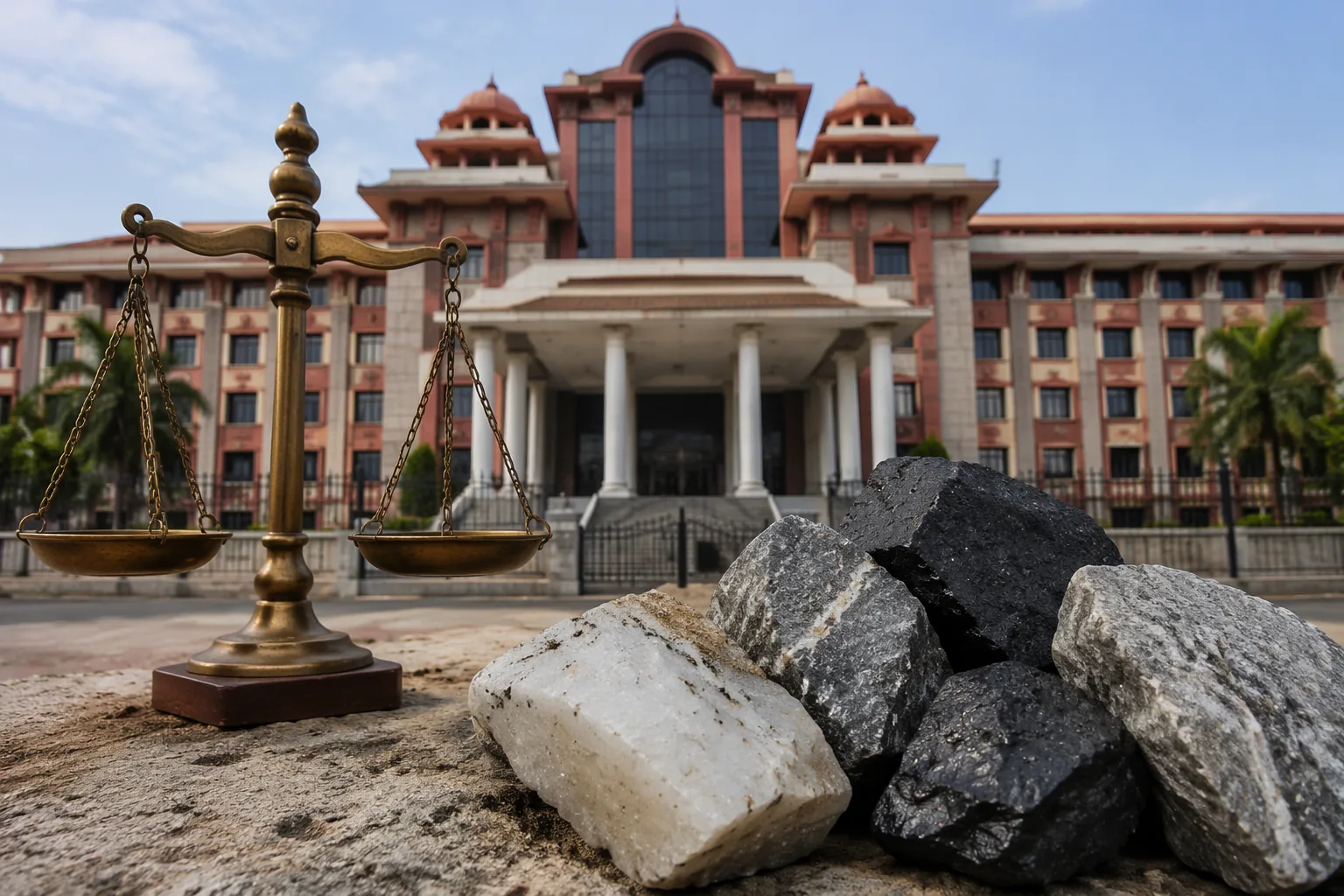
The Kerala High Court has invalidated the Kerala Minerals (Vesting of Rights) Act, 2021, ruling it unconstitutional and beyond the legislative competence of the State. The court found that the Act violated Article 300A of the Constitution, which protects individuals from being deprived of their property without the authority of law. It also directed the State to refund the royalties collected from petitioners under the now-invalidated legislation.
Court Rejects State's Claim Over Malabar Minerals
The 2021 legislation aimed to transfer ownership of mineral rights in Kerala's Malabar region to the State, requiring landowners to pay royalties on granite extracted from their quarries. However, petitioners challenged the law, arguing that the State lacked the authority to claim ownership of minerals without specific legislation to that effect. They also sought refunds for royalties already paid.
The State defended the Act, asserting its authority under existing mining and mineral laws to impose royalties as a condition for permits. It argued that the legislation was designed to secure community ownership of mineral resources and ensure equitable distribution. However, the Division Bench of Justices A.K. Jayasankaran Nambiar and A.K. Preetha rejected this argument, ruling that the State lacked jurisdiction over mineral rights, which fall under the Centre's domain.
Violations of Constitutional Rights
The court further observed that the Act infringed upon fundamental rights, including equality, freedom of profession, and the right to life. It ruled that the legislation failed to uphold these constitutional guarantees, further cementing its decision to strike down the law.
CPI(M) Calls for Appeal in Supreme Court
In response to the verdict, the Communist Party of India (Marxist) has urged the State government to challenge the High Court's decision in the Supreme Court. The party argued that the invalidated legislation was aligned with constitutional principles of ensuring collective control and distribution of natural resources. It maintained that while mineral ownership lies with landowners, the government should retain control over mining and distribution for the greater public good.
This ruling has significant implications for landowners in the Malabar region, who are now entitled to refunds, and raises questions about the State's regulatory authority over natural resources.
Source: The Hindu
Frequently asked questions
Why did the Kerala High Court strike down the Kerala Minerals Act, 2021?
The court ruled the Act was unconstitutional and beyond the State's legislative competence. It violated Article 300A of the Constitution, which protects individuals from being deprived of property without legal authority. The court found that mineral rights fall under the Centre's domain, not the State's jurisdiction.
What was the purpose of the Kerala Minerals Act, 2021?
The Act aimed to transfer ownership of mineral rights in Kerala's Malabar region to the State and required landowners to pay royalties on granite extracted from their quarries. The State argued it was designed to secure community ownership of mineral resources and ensure equitable distribution.
Are landowners entitled to refunds of royalties paid under the invalidated law?
Yes. The Kerala High Court directed the State to refund the royalties that were collected from petitioners under the now-struck-down legislation.
What constitutional rights did the court say the Act violated?
The court found that the Act infringed upon fundamental rights including equality, freedom of profession, and the right to life, ruling that the legislation failed to uphold these constitutional guarantees.
How has the Communist Party of India (Marxist) responded to the ruling?
The CPI(M) urged the State government to challenge the High Court's decision in the Supreme Court, arguing that the legislation was aligned with constitutional principles of ensuring collective control and distribution of natural resources.
You may also like
 Religious
KSRTC to Deploy Over 1,000 Buses for Sabarimala Pilgrimage
 Kerala
 Government Raises DA, DR For Employees And Pensioners To 37%
 Kerala
Nearly 7,000 unlicensed homestays reportedly operate across Keralam’s tourist destinations
 Health
17 Captive Elephants Screened in Kerala Amid Concerns Over Sudden Deaths
Most read
- 1
Air China Adds Extra Flight for Passengers Stranded in Fuel-Starved Cuba
- 2
Western disturbance to bring rain, hail and strong winds across north India
- 3
Yogi Adityanath Directs No Occupied Houses Be Demolished for Achhalda Bridge
- 4
Gwalior Temple Truck Crash Kills 12, Injures 28-29 Devotees During Navratri
- 5
Schools Shut in Five Tamil Nadu Districts, Including Chennai, Amid Heavy Rain
Comments
No comments yet. Be the first to comment.