
Kerala dengue model can predict district-wise trends early, evaluation finds
IAV scientists in Keralam use weather and health data in a machine learning model to forecast district-wise dengue risk for public health planning.

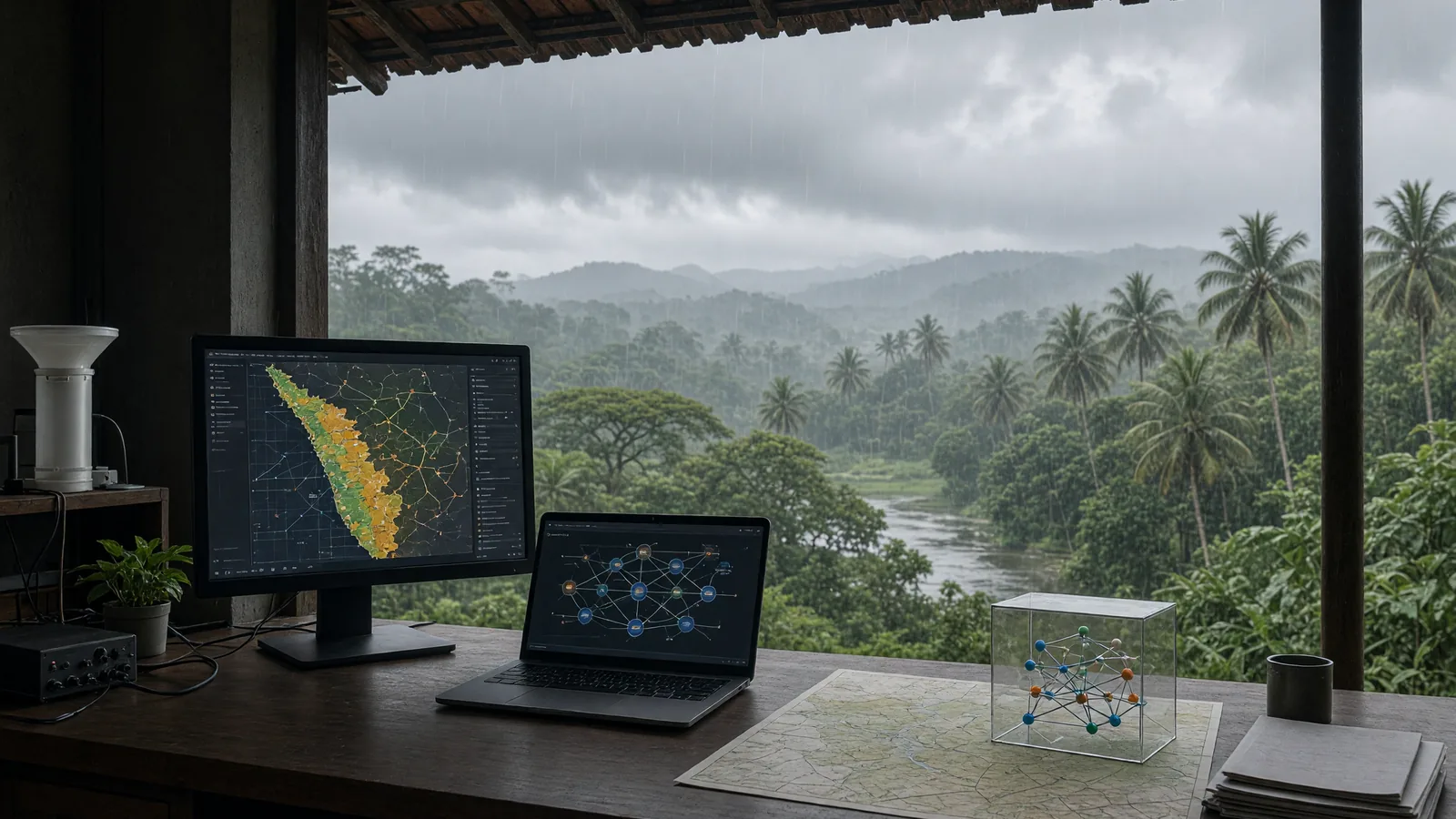
An evaluation using State Surveillance Unit data for March-July 2026 has indicated that the Institute of Advanced Virology’s dengue forecasting model can help predict district-wise dengue trends in advance in Keralam.
Scientists at the Institute of Advanced Virology (IAV) in Keralam are developing the system by integrating epidemiological and weather data on a machine-learning platform to forecast dengue incidence trends before they unfold.
The objective is to help public health managers plan resource allocation and preventive steps proactively, instead of acting only after outbreaks occur.
How the forecasting system works
“Our machine learning model integrates six years of epidemiological data (March 2020 to February 2026) with climatic variables, including rainfall, temperature and average humidity, to generate weekly dengue forecasts,” says Abhinand C.S., scientist in the Department of Virus Genomics, Bioinformatics and Statistics at IAV, who developed the model.
The current version, called the Dengue Early Warning System (DEWS), is accessible at https://dews.iav.res.in.
DEWS uses epidemiological data from the State Surveillance Unit (SSU) of the Directorate of Health Services and meteorological data from the India Meteorological Department.
Dr. Abhinand says the dengue case trends predicted by DEWS showed a positive correlation with actual case data from the Health department.
The model incorporates daily epidemiological and climatic parameters, including temperature, rainfall and humidity, giving it a more granular representation of disease dynamics.
Each district is treated as an independent unit in the system.
The model takes into account district-specific geographical and environmental characteristics, including waterbodies and drainage systems.
This district-level approach enables the model to be trained and optimised for individual districts.
For easier interpretation by public health managers, the predicted disease burden is classified into four risk levels, very high, high, moderate and low, based on predefined prediction ranges.
This provides a district-wise indication of the expected risk.
Why weather matters for dengue
Climate factors are important early warning indicators for dengue because they directly influence the biology of the Aedes mosquito and the replication of the dengue virus.
Warm temperatures accelerate mosquito development and shorten the virus’s extrinsic incubation period, which is the time required for the virus to become transmissible inside the mosquito.
Warm temperatures can also increase transmission efficiency.
Moderate to high humidity can prolong mosquito survival.
Moderate rainfall creates breeding habitats.
Torrential rain, however, can flush out mosquito breeding sites.
Keralam remains warm and wet for much of the year, and therefore has climatic conditions favourable to Aedes proliferation and dengue transmission.
These conditions have prompted considerable interest in developing forecasting models that combine meteorological and epidemiological data.
The purpose of combining those datasets is to enable disease surveillance to stay ahead of outbreaks.
Limits of prediction
Dengue is among the more difficult infectious diseases to predict because its transmission is multidimensional and can vary substantially between locations.
Climate is only one part of the transmission picture.
Beyond climate, urbanisation, human mobility, water-storage practices, population immunity to the four dengue virus serotypes and changes in vector biology can alter transmission dynamics.
Models that rely heavily on climatic variables may therefore struggle to capture sudden changes in these factors.
Under-reporting is another major challenge in dengue forecasting.
A large proportion of dengue infections are asymptomatic or mild and may be mistaken for other viral fevers.
Differences in testing and reporting practices can also create geographical biases.
Thiruvananthapuram, for instance, has long been regarded as Keralam’s dengue hotspot.
Public health experts have argued that Thiruvananthapuram’s high reported burden also reflects stronger surveillance and testing.
The IAV acknowledges these limitations in using a historical-data-driven forecasting model.
Since DEWS is trained on historical data, sudden or substantial changes in climatic parameters could affect its accuracy.
Variations in the reporting of confirmed dengue cases by the Health department could similarly influence observed disease patterns and the reliability of predictions, Dr. Abhinand says.
What it needs to become a routine public health tool
“For the model to evolve from a research model to a routinely functioning public health forecasting system, DEWS will have to undergo yearly updation and further refinement, and perhaps be trained with more variables.
DEWS is the first disease forecasting model of its kind to be developed for use by the State,” says IAV Director E. Sreekumar.
The platform could eventually be extended to other Aedes-borne diseases such as chikungunya and Zika.
Such an extension could potentially strengthen Keralam’s disease surveillance capacity and enable more timely, data-driven public health interventions.
The development matters because it shifts dengue monitoring from a purely reactive approach towards a system that can provide advance, district-wise indications of risk using epidemiological and meteorological inputs.
Its usefulness, however, will depend on continued updation, refinement, the possible inclusion of more variables, and the quality and consistency of confirmed dengue reporting by the Health department.
The report was published on September 28, 2026 07:00 am IST.
Source: The Hindu
Frequently asked questions
What did the evaluation of Kerala's dengue forecasting model find?
An evaluation using State Surveillance Unit data for March-July 2026 indicated that the Institute of Advanced Virology's model can help predict district-wise dengue trends in advance in Keralam.
What is the Dengue Early Warning System?
The Dengue Early Warning System, or DEWS, is the current version of IAV's machine-learning dengue forecasting model, accessible at https://dews.iav.res.in.
What data does the model use to forecast dengue trends?
The model integrates six years of epidemiological data from March 2020 to February 2026 with climatic variables such as rainfall, temperature and average humidity to generate weekly dengue forecasts.
How does DEWS present dengue risk to public health managers?
It classifies the predicted disease burden into four risk levels: very high, high, moderate and low, giving district-wise indications of expected risk.
Why are weather conditions important for dengue forecasting?
Weather affects Aedes mosquito development, mosquito survival, breeding habitats and dengue virus replication, making factors such as temperature, rainfall and humidity useful early warning indicators.
You may also like
 Religious
KSRTC to Deploy Over 1,000 Buses for Sabarimala Pilgrimage
 Kerala
 Government Raises DA, DR For Employees And Pensioners To 37%
 Kerala
Nearly 7,000 unlicensed homestays reportedly operate across Keralam’s tourist destinations
 Health
17 Captive Elephants Screened in Kerala Amid Concerns Over Sudden Deaths
Most read
- 1
Air China Adds Extra Flight for Passengers Stranded in Fuel-Starved Cuba
- 2
Western disturbance to bring rain, hail and strong winds across north India
- 3
Yogi Adityanath Directs No Occupied Houses Be Demolished for Achhalda Bridge
- 4
Gwalior Temple Truck Crash Kills 12, Injures 28-29 Devotees During Navratri
- 5
Heavy Rain Waterlogs Bengaluru, Snarls Traffic; Ride-Hailing Fares Surge
Comments
No comments yet. Be the first to comment.