
India-UK Trade Deal to Launch on July 15 with Key Benefits
Discover the key provisions of the India-UK trade deal effective July 15, including tariff cuts on cars and Scotch. Learn how it impacts trade.

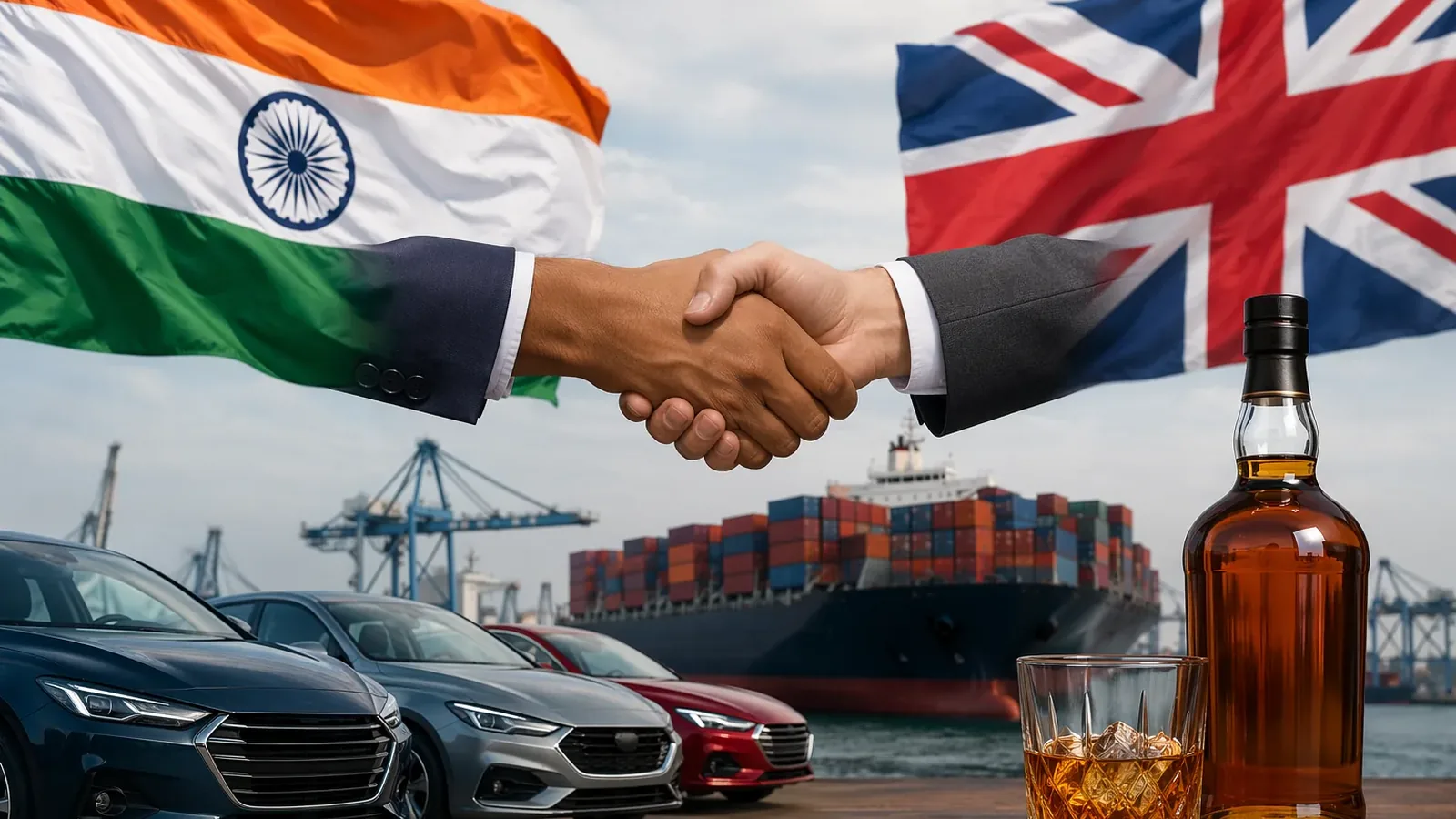
India and the United Kingdom are set to implement their Comprehensive Economic and Trade Agreement (CETA) starting July 15, marking a significant milestone in bilateral trade relations. The agreement aims to expand market access, reduce tariffs, and enhance cooperation across goods and services, potentially reshaping trade flows between the two economies. It introduces structured tariff reductions, quota-based access in sensitive sectors, and improved mobility provisions for professionals.
Efforts are underway to ensure customs notifications and implementation systems are ready to avoid delays in transmitting benefits. Officials have stated that consignments shipped from the first day will qualify for preferential access under the agreement.
Market Access Expansion
The CETA is expected to open a market worth over $500 billion for Indian exporters, offering improved access across goods and services. India is projected to gain tariff advantages of 7, 10 percent compared to existing trade conditions. Over 99 percent of tariff lines will see duties eliminated under a phased liberalization schedule.
Hybrid Tariff Structure for Sensitive Goods
A hybrid structure combining tariff reductions and quantitative limits will be introduced for sensitive goods. While most tariff lines will eventually move toward zero duty, certain sectors, such as automotive products, will remain under quota controls to manage import exposure.
Automotive Sector Commitments
India will allow phased imports of up to 3.78 lakh conventional-engine passenger vehicles from the UK over a 15-year period under a quota system. Import duties on select categories will decrease from approximately 110 percent to 10 percent during this period. Differentiated treatment based on engine size and vehicle category, along with annual import caps, will be implemented. Additionally, limited access for electric, hybrid, and hydrogen-powered vehicles will begin in the sixth year, subject to price bands and quota ceilings. However, mass-market electric vehicles below a specified price threshold will remain excluded from concessions to protect India’s domestic EV industry.
Whisky and Spirits Tariff Reductions
The agreement will significantly lower import duties on UK whisky and gin, with tariffs dropping from 150 percent to 75 percent initially and further to 40 percent by the tenth year. Industry bodies have welcomed the move, citing benefits for bilateral trade, premiumization, and the spirits value chain. The International Spirits and Wines Association of India (ISWAI) noted that reduced duties on Scotch whisky imports, including bulk Scotch used for blending and bottling, will create value across the industry and expand consumer choice. However, the Confederation of Indian Alcoholic Beverage Companies (CIABC) has urged state governments to withdraw concessions for bottled-in-origin imported brands, arguing that lower import duties combined with state-level incentives could make imported products cheaper than domestic ones.
Steel Sector Safeguards
India’s concerns regarding UK steel safeguard measures have been addressed in the agreement. Around 85 percent of India’s steel exports will remain outside the scope of restrictive measures, with concessions secured across 188 tariff lines. India will continue engaging at the WTO level on unresolved issues.
Social Security Relief for Professionals
Under the Double Contribution Convention (DCC), Indian professionals temporarily posted in the UK will be exempt from social security contributions for up to five years. This provision is expected to reduce cost burdens for Indian IT and services firms, enhance competitiveness, and align conditions with agreements the UK has with other countries.
Boost to Services Trade and Investment
The agreement is poised to significantly enhance exports in services sectors such as information technology, financial services, education, and professional consulting. It also aims to deepen investment flows, with over 900 Indian companies currently operating in the UK amid steady growth in bilateral trade.
Ongoing Regulatory Discussions on the UK’s Carbon Border Adjustment Mechanism (CBAM) remain ongoing, with both sides continuing consultations on emerging trade-related environmental regulations while implementing the core provisions of the CETA.
The India-UK trade pact promises to strengthen economic ties, offering mutual benefits across multiple sectors while addressing sensitive areas through phased and structured approaches.
Frequently asked questions
When does the India-UK trade deal take effect?
The Comprehensive Economic and Trade Agreement (CETA) between India and the UK launches on July 15. Consignments shipped from the first day will qualify for preferential access under the agreement.
What tariff advantages will India gain from this trade deal?
India is projected to gain tariff advantages of 7, 10 percent compared to existing trade conditions. Over 99 percent of tariff lines will see duties eliminated under a phased liberalization schedule, opening a market worth over $500 billion for Indian exporters.
How will the automotive sector be affected by the trade deal?
India will allow phased imports of up to 3.78 lakh conventional-engine passenger vehicles from the UK over 15 years under a quota system. Import duties will decrease from approximately 110 percent to 10 percent during this period. Limited access for electric, hybrid, and hydrogen-powered vehicles begins in the sixth year, while mass-market electric vehicles below a specified price remain excluded to protect India's domestic EV industry.
What changes are being made to import duties on UK spirits?
Import duties on UK whisky and gin will drop from 150 percent to 75 percent initially and further to 40 percent by the tenth year. This includes tariff reductions on bulk Scotch used for blending and bottling in India.
You may also like


Most read
- 1
Air China Adds Extra Flight for Passengers Stranded in Fuel-Starved Cuba
- 2
Western disturbance to bring rain, hail and strong winds across north India
- 3
Yogi Adityanath Directs No Occupied Houses Be Demolished for Achhalda Bridge
- 4
Gwalior Temple Truck Crash Kills 12, Injures 28-29 Devotees During Navratri
- 5
Schools Shut in Five Tamil Nadu Districts, Including Chennai, Amid Heavy Rain
Comments
No comments yet. Be the first to comment.