
99% of Indian Exports Get Duty-Free Access Under New U.K. Trade Pact
Amit Shah announces 99% of Indian exports will gain duty-free access under the new India-U.K. trade treaty, boosting competitiveness and economic growth.

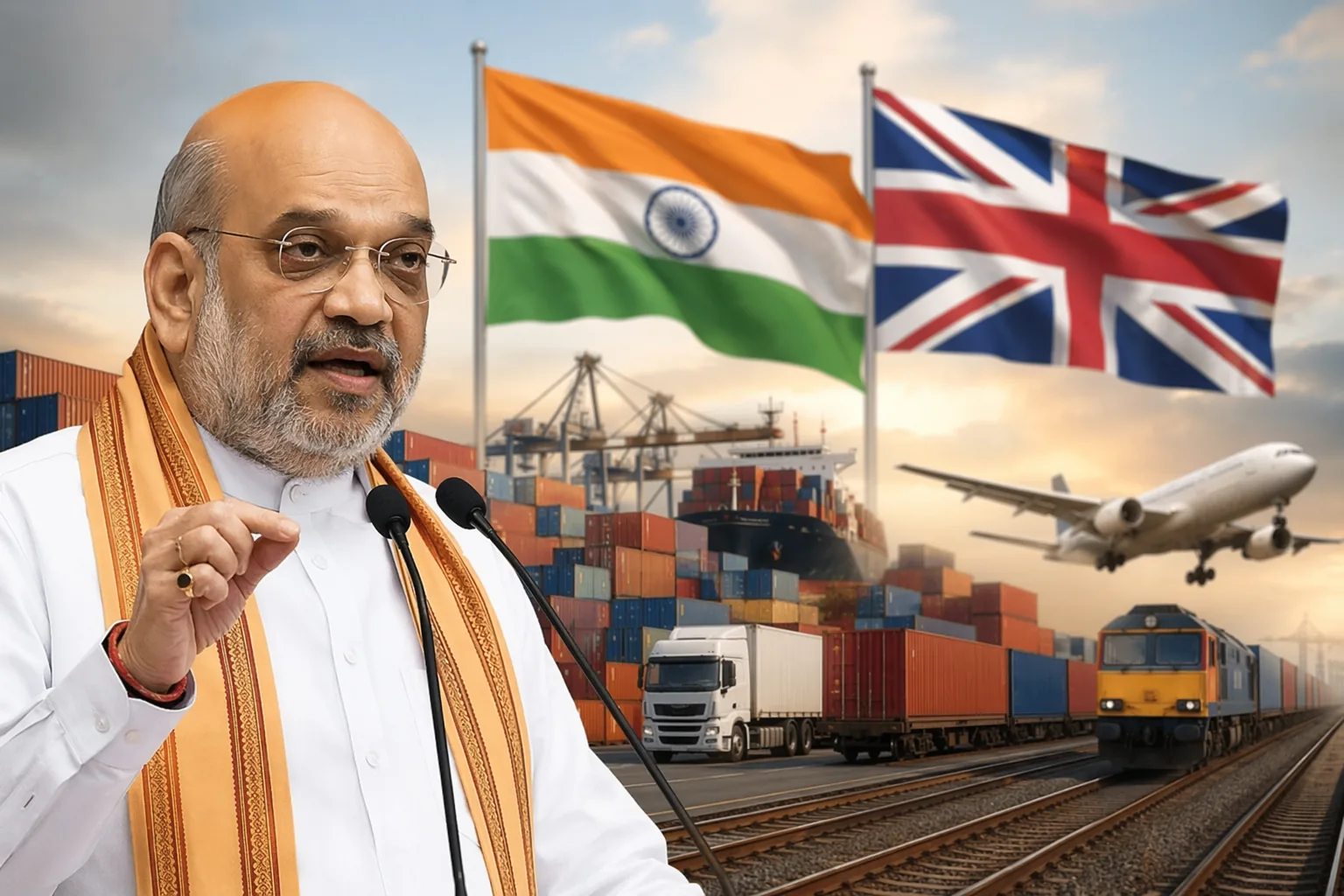
India's exports to the United Kingdom have entered a new era of competitiveness, with the Comprehensive Economic and Trade Agreement (CETA) coming into force today, July 15, 2026. Union Home Minister Amit Shah announced that the treaty will provide zero-duty market access for 99% of Indian exports, marking a significant milestone for labour-intensive sectors like textiles, leather, engineering, food processing, pharmaceuticals, and MSMEs.
A Boost for Labour-Intensive Industries
Mr. Shah highlighted the transformative potential of the agreement, stating it will unlock untapped opportunities for Indian businesses. The zero-duty access is expected to significantly lower costs for exporters, making Indian goods more competitive in the U.K. market. Additionally, the treaty includes provisions to ease restrictions on Indian professionals working in the United Kingdom, further strengthening bilateral ties.
Doubling Trade and Economic Growth
Signed last year by Prime Minister Narendra Modi and U.K. Prime Minister Keir Starmer, the CETA is projected to double annual trade between the two nations, which currently stands at approximately £48 billion. By 2030, the agreement aims to boost both countries' GDPs by nearly £5 billion annually, underscoring its long-term economic impact.
A Step Towards 'Viksit Bharat'
Calling the treaty "key to a Viksit Bharat," Mr. Shah emphasized its alignment with Prime Minister Modi's vision for a developed India. He described the agreement as a testament to the government's pro-people diplomacy, designed to benefit industries and workers across the country.
The India-U.K. trade treaty is set to redefine bilateral economic relations, offering unprecedented opportunities for Indian exporters while fostering deeper professional and economic collaboration.
Source: The Hindu
Frequently asked questions
What is the India-U.K. trade pact and when did it come into force?
The Comprehensive Economic and Trade Agreement (CETA) between India and the United Kingdom came into force on July 15, 2026. It was signed last year by Prime Minister Narendra Modi and U.K. Prime Minister Keir Starmer.
Which Indian sectors benefit most from the zero-duty access?
Labour-intensive sectors benefit most, including textiles, leather, engineering, food processing, pharmaceuticals, and MSMEs (micro, small, and medium enterprises).
What are the projected economic benefits of the trade agreement?
The CETA is projected to double annual trade between India and the U.K., currently at approximately £48 billion. By 2030, the agreement aims to boost both countries' GDPs by nearly £5 billion annually.
Does the agreement include provisions for Indian professionals?
Yes, the treaty includes provisions to ease restrictions on Indian professionals working in the United Kingdom, strengthening bilateral ties beyond trade.
You may also like



Most read
- 1
Air China Adds Extra Flight for Passengers Stranded in Fuel-Starved Cuba
- 2
Western disturbance to bring rain, hail and strong winds across north India
- 3
Yogi Adityanath Directs No Occupied Houses Be Demolished for Achhalda Bridge
- 4
Gwalior Temple Truck Crash Kills 12, Injures 28-29 Devotees During Navratri
- 5
Schools Shut in Five Tamil Nadu Districts, Including Chennai, Amid Heavy Rain
Comments
No comments yet. Be the first to comment.