
Bihar government plans green makeover for Gaya's barren hills
Bihar government aims to transform Gaya's barren hills into green zones, boosting eco-tourism and local employment with over one lakh saplings.

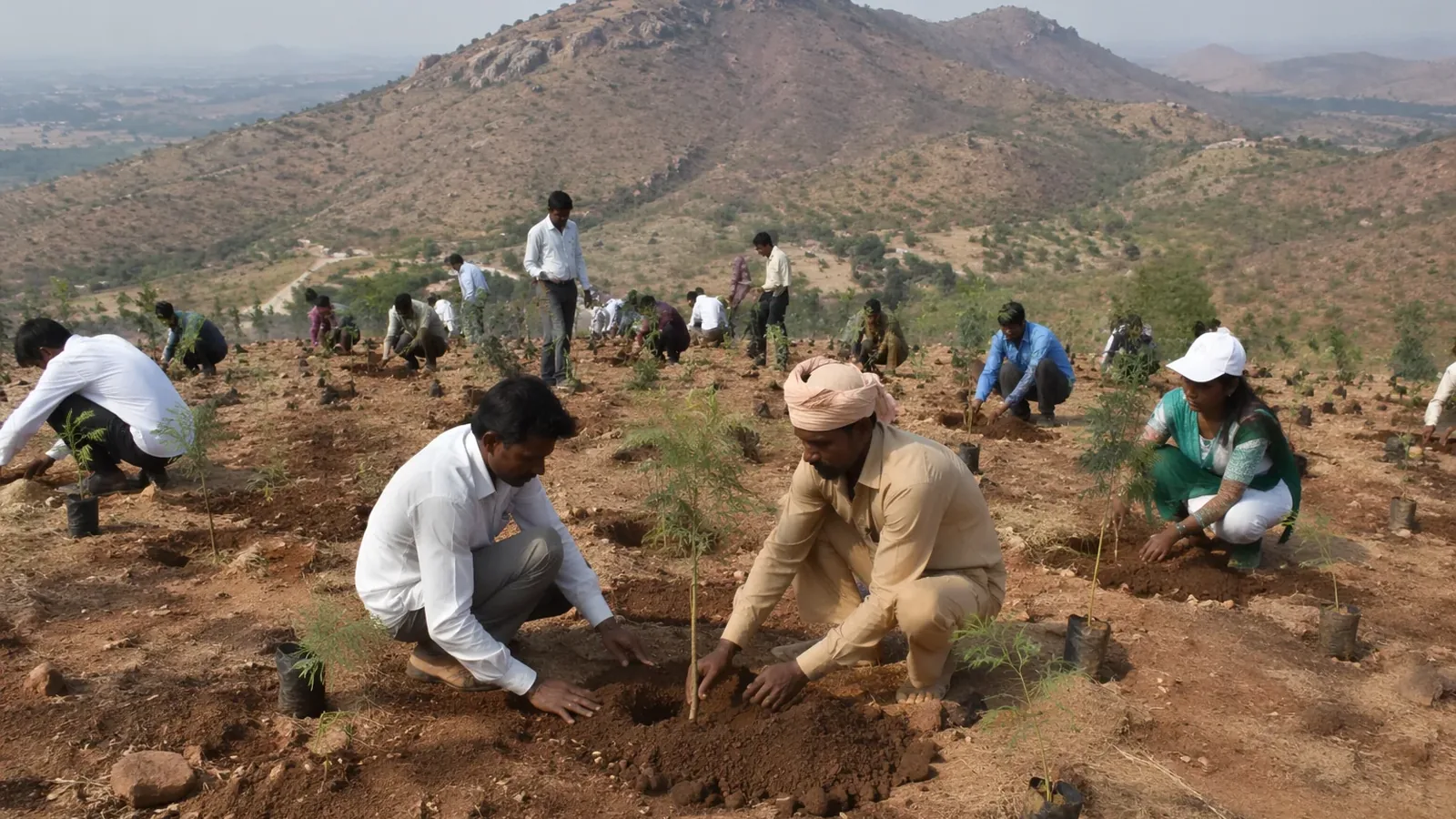
The Bihar government has unveiled an ambitious plan to transform the barren hills in and around Gaya and Bodh Gaya into lush green zones as part of a broader eco-tourism initiative. The project, spearheaded by the state tourism department in collaboration with the forest, environment, and climate change department, aims to restore the environment while creating new tourist attractions. Over one lakh saplings will be planted using the seed ball technique to rejuvenate the landscape.
This eco-tourism drive extends beyond Gaya and Bodh Gaya, targeting other scenic and wildlife-rich areas across the state, such as Rajgir, Nawada, Kaimur, Bhagalpur, Munger, Begusarai, and West Champaran. The initiative seeks to showcase Bihar's natural beauty and wildlife, offering residents and visitors alike an opportunity to experience the state's diverse landscapes.
Additionally, the project is expected to attract tourists from across the country, thereby boosting revenue and creating employment opportunities for local communities. The focus will be on hills with religious and historical significance, including Dungeshwari, Brahmayoni, Pretshila, Ramshila, Gurupa, and Barabar hills in Gaya and Bodh Gaya. These twin cities are already major hubs for religious tourism, drawing Buddhist and Hindu pilgrims from around the globe.
Frequently asked questions
What is the Bihar government's green makeover project for Gaya and Bodh Gaya?
The Bihar government has unveiled a plan to transform barren hills in and around Gaya and Bodh Gaya into lush green zones as part of an eco-tourism initiative. The project, led by the state tourism department in collaboration with the forest, environment, and climate change department, will plant over one lakh saplings using the seed ball technique to rejuvenate the landscape.
Which areas across Bihar are included in this eco-tourism initiative?
The eco-tourism drive extends beyond Gaya and Bodh Gaya to include other scenic and wildlife-rich areas such as Rajgir, Nawada, Kaimur, Bhagalpur, Munger, Begusarai, and West Champaran. The project focuses on hills with religious and historical significance including Dungeshwari, Brahmayoni, Pretshila, Ramshila, Gurupa, and Barabar hills.
What are the expected benefits of this green makeover project?
The project is expected to restore the environment, create new tourist attractions, attract tourists from across the country, boost revenue, and create employment opportunities for local communities. It will showcase Bihar's natural beauty and wildlife to residents and visitors.
Why are Gaya and Bodh Gaya suitable locations for this eco-tourism initiative?
Gaya and Bodh Gaya are already major hubs for religious tourism, drawing Buddhist and Hindu pilgrims from around the globe. The hills in these twin cities have religious and historical significance, making them ideal for combining eco-tourism with existing pilgrimage attractions.
You may also like
 Accident
Police Driver Tez Narayan Sah Dies After Bolero Hits Truck In Bihar
 Education
Patna Science College Alleges Five Fake Voter Entries In Bihar Poll Roll
 Politics
JD(U) MLA Anant Singh Clarifies Remarks Amid Bihar Council Poll Controversy
 Agriculture
Bihar to Begin Staggered Paddy Procurement November 1, MSP Set at ₹2,441
Most read
- 1
Air China Adds Extra Flight for Passengers Stranded in Fuel-Starved Cuba
- 2
Western disturbance to bring rain, hail and strong winds across north India
- 3
Yogi Adityanath Directs No Occupied Houses Be Demolished for Achhalda Bridge
- 4
Gwalior Temple Truck Crash Kills 12, Injures 28-29 Devotees During Navratri
- 5
Schools Shut in Five Tamil Nadu Districts, Including Chennai, Amid Heavy Rain
Comments
No comments yet. Be the first to comment.