
Bihar to Begin Staggered Paddy Procurement November 1, MSP Set at ₹2,441
Bihar will start staggered paddy procurement on November 1, offering Rs 2,441 per quintal for common paddy and payment within 48 hours.

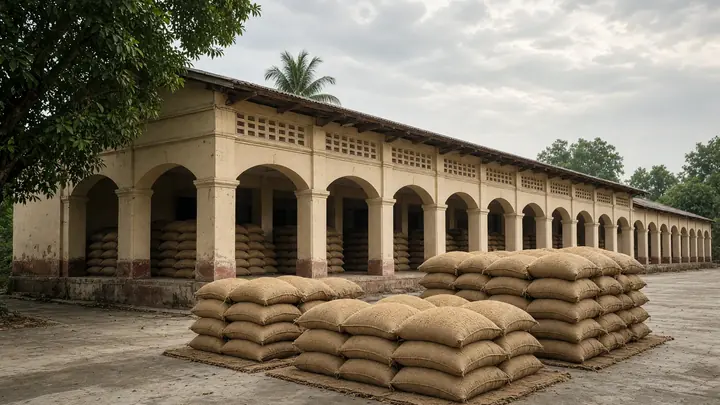
न्यूनतम समर्थन मूल्य
Bihar will begin government procurement of paddy from November 1, with the procurement schedule divided between north and south Bihar and the Grade-A support price fixed at ₹2461 per quintal. The common paddy support price has been set at ₹2441 per quintal. Farmers have also been told that payment will be made within 48 hours, while an Agri Stack ID will be required for the procurement process.
Bihar sets staggered procurement schedule
Government paddy procurement will start in north Bihar on November 1 and in south Bihar on November 15. The staggered schedule was announced as preparations for the procurement exercise continued across the state.
Cooperation Minister Ram Kripal Yadav reviewed the preparations on Friday and directed the officials concerned to maintain complete transparency in paddy procurement. The direction places the focus on how the procurement process will be carried out, in addition to the prices announced for the two categories of paddy.
The minimum support price for common paddy has been fixed at ₹2441 per quintal, while Grade-A paddy will receive ₹2461 per quintal. The stated objective of the arrangement is to provide farmers a fair price for their produce.
The two rates apply to the procurement categories identified in the Bihar announcement, with Grade-A paddy carrying the higher support price. The announced rates therefore give farmers a defined price reference as government procurement begins in different parts of the state.
Payment promised within 48 hours
The Bihar government has said that eligible farmers will receive payment within 48 hours of the procurement process. The payment assurance is part of the procurement arrangements announced along with the minimum support prices.
Farmers will be identified and their data used through Agri Stack for paddy procurement. All interested farmers have been asked to obtain their Agri Stack ID in time. The procurement update describes the ID as necessary for farmers seeking to sell paddy under the arrangement.
Farmers who want to sell their paddy can apply through the portal esahkari.bihar.gov.in. The portal has been provided for applications from farmers interested in selling their produce through the procurement system. This makes advance registration an important part of the process for those planning to take paddy to government procurement channels.
The presidents, managers and office-bearers of PACS and trade mandals may also be involved in supporting the procurement work. The arrangement indicates that local cooperative and market-level functionaries are expected to assist with implementation.
The announced schedule, price categories, application portal and payment timeline together outline the main steps currently specified for Bihar's paddy procurement. The state has separately asked officials to ensure transparency while the procurement exercise is conducted.
Pest attack raises concern for paddy crop
The procurement announcement comes as farmers are also facing concerns over the condition of the paddy crop. After low rainfall, the crop is now being affected by attacks from the brown madhua insect and Chatra disease.
The report says the spread of these problems could adversely affect yields. Farmers had already been worried because of low rainfall, and the pest attack has increased their concern about the standing paddy crop.
Farmers are spraying pesticides to protect the crop, but the effect has so far appeared limited. Some relief had come after a small amount of rain at the end of Bhadon, following low rainfall during Sawan. However, the appearance of pests around the time the panicles emerged has again increased the farmers' difficulties.
Farmers Rabindra Singh, Balmiki Sharma, Manoj Kumar and Pramod Mahto said the disease was spreading rapidly. They reported that the leaves were getting scorched, plant growth had stopped, and the plants were turning yellow and beginning to be destroyed.
The farmers also said that their efforts to save the crop had not produced the desired result. Their account describes the crop damage at a stage when the plants were developing panicles and the effect of the pest attack had become more visible.
Dr Anita, an agricultural scientist at Krishi Vigyan Kendra, Lodipur, said complaints about Chatra disease had been received from farmers. Farmers have been seeking advice through mobile phones, and measures for treatment are being explained to them.
The disease is reported to produce spots on the leaves and stems, after which the crop begins to scorch. The reported damage can reduce production by 50 to 60 per cent. The report also says that excessive grass on field bunds can contribute to the spread of the disease.
Farmers have been advised to use urea in balanced quantities and avoid dense planting of paddy. These recommendations are part of the crop-protection advice provided in the report alongside guidance on spraying when an infestation appears.
When the disease is seen, the report advises spraying propiconazole 25 EC or hexaconazole 5 EC after mixing it with 500 litres of water per hectare. The same advisory says that stem borer activity is also increasing at this time.
For protection against the stem borer, the report recommends spraying fipronil 05 EC or cartap hydrochloride 50 SP. The stated purpose of the treatment is to reduce crop damage.
The pest situation adds a separate risk to the procurement season because the reported disease and insects may affect the quantity produced before farmers bring their paddy for sale. The procurement rates and the crop-protection advice therefore appear together in the Bihar update, with one concerning the price received and the other the condition of the crop.
Four procurement centres opened in Jhansi
A separate procurement update from Jhansi says that four government purchase centres have been opened for paddy. The centres are intended to purchase paddy from farmers under the minimum support price arrangement.
The common paddy price in the Jhansi update is ₹2441 per quintal, while the Grade-A price is ₹2461 per quintal. The report says the rate is ₹72 per quintal higher than last year.
The procurement is being conducted under the minimum support price scheme for the Kharif marketing year 2026-27. Under that arrangement, the support price is listed as ₹2441 per quintal for common paddy and ₹2461 per quintal for Grade-A paddy.
Farmers have been instructed to bring paddy after drying it and to ensure that it is clean. The instruction sets out the condition in which the grain should be brought to the purchase centres.
The centres will purchase paddy from farmers between 9 in the morning and 5 in the evening. The four centres are located at Chirgaon Mandi First, Mandi Second, Moth and Samthar.
The Jhansi procurement centres will also accept jowar. For the Kharif marketing year 2026-27, the support price for hybrid jowar has been fixed at ₹4023 per quintal and the price for Maldandi jowar at ₹4073 per quintal.
Farmers can sell both jowar and paddy at the centres listed in the Jhansi update. A control room has also been opened for the district, and farmers can report problems on 0510-4063090.
The Jhansi arrangements add operating details that are not included in the Bihar announcement, including fixed centre timings, the list of centres and a phone number for complaints or other problems. Both updates list ₹2441 per quintal for common paddy and ₹2461 per quintal for Grade-A paddy, while the Bihar report separately specifies the north and south Bihar starting dates and the 48-hour payment assurance.
For Bihar farmers, the immediate requirements described in the announcement are obtaining an Agri Stack ID, applying through the designated portal and following the procurement schedule for their region. At the same time, the reported spread of disease and insect attacks remains a concern because the crop may suffer substantial production losses if the problem continues.
Frequently asked questions
When will Bihar begin paddy procurement?
Paddy procurement will start in north Bihar on November 1 and in south Bihar on November 15.
What is the minimum support price for paddy in Bihar?
The support price is ₹2441 per quintal for common paddy and ₹2461 per quintal for Grade-A paddy.
When will eligible farmers receive payment?
Eligible farmers will receive payment within 48 hours of the procurement process.
What do farmers need for paddy procurement?
Farmers need an Agri Stack ID and can apply through esahkari.bihar.gov.in.
You may also like
 Accident
Police Driver Tez Narayan Sah Dies After Bolero Hits Truck In Bihar
 Education
Patna Science College Alleges Five Fake Voter Entries In Bihar Poll Roll
 Politics
JD(U) MLA Anant Singh Clarifies Remarks Amid Bihar Council Poll Controversy
 Bihar
Prashant Kishor's Remark on Samrat Choudhary Sparks Bihar Political War
Most read
- 1
Air China Adds Extra Flight for Passengers Stranded in Fuel-Starved Cuba
- 2
Western disturbance to bring rain, hail and strong winds across north India
- 3
Yogi Adityanath Directs No Occupied Houses Be Demolished for Achhalda Bridge
- 4
Gwalior Temple Truck Crash Kills 12, Injures 28-29 Devotees During Navratri
- 5
Schools Shut in Five Tamil Nadu Districts, Including Chennai, Amid Heavy Rain
Comments
No comments yet. Be the first to comment.