
Ancient Cannons Unearthed at Adoor Mahalingeswara Temple in Kerala
Explore the historical significance of ancient cannons at Adoor Mahalingeswara temple, Kerala, dating back to the 18th century.

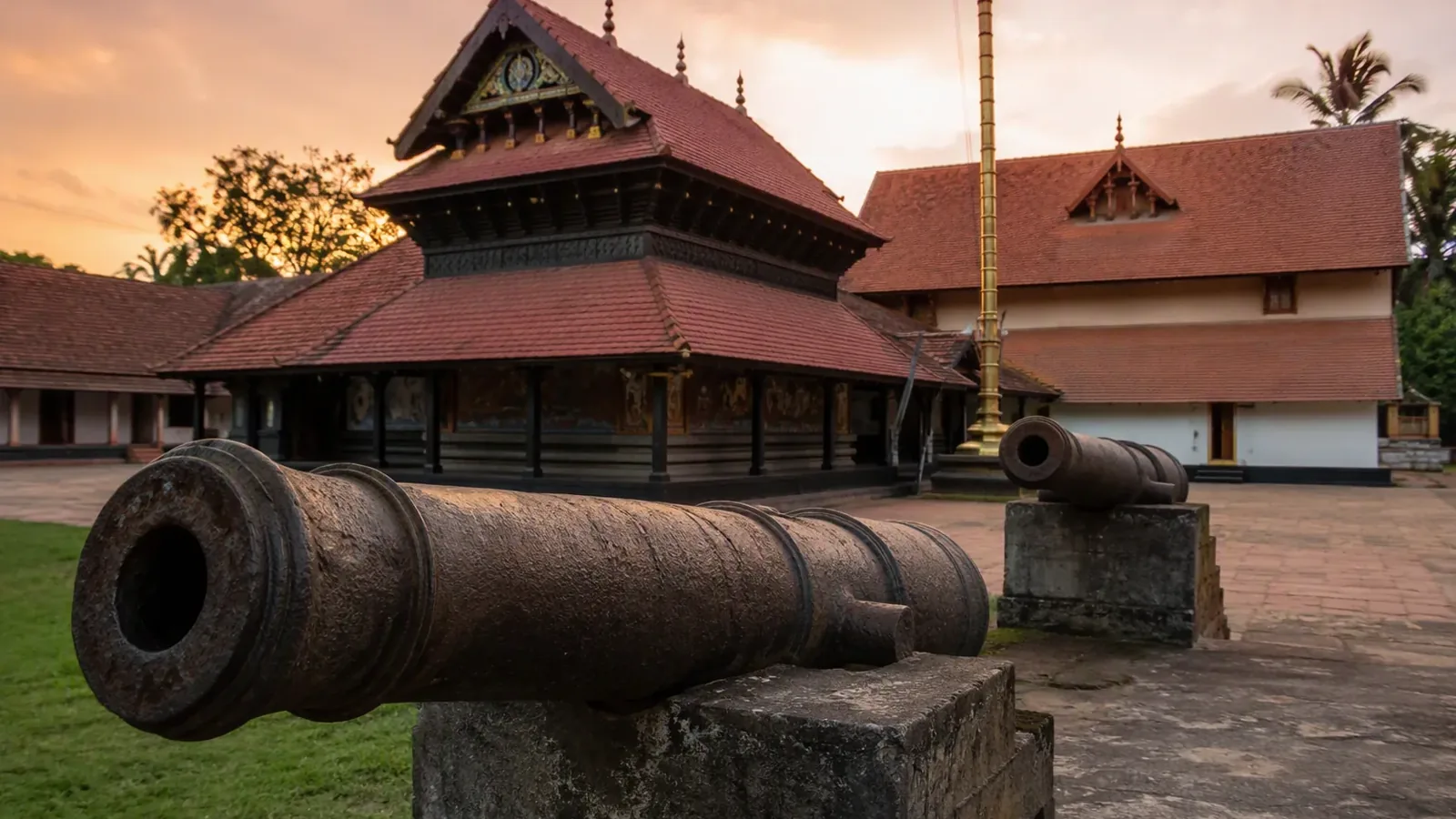
Two ancient cannons preserved at the Adoor Mahalingeswara temple in Kasaragod district, Kerala, have become the focus of renewed historical interest. Believed to date back to the 18th century or earlier, the cannons are thought to have been used as mobile field artillery and may have local origins, according to experts.
A Temple Steeped in History
The Adoor Mahalingeswara temple, located in Delampady Gram Panchayat, is already a significant historical and architectural site. Dating back to the 10th century, it is renowned for its Gajaprishta-style architecture, the famous Adoor inscription, and unique features like the Balikkal (sacrificial stone) and Sathyakallu (oath stone). The discovery of the cannons has added to the temple’s archaeological and historical importance.
Rare Cannons Spark Scholarly Interest
Dr. Nandakumar Koroth, a historian from Nehru Arts and Science College, Kanhangad, recently examined the cannons during a visit to study the Adoor inscription. He noted that the cannons, made from an alloy, measure 96 cm and 90 cm in length, respectively. Their design includes side trunnions for mounting on wheeled carriages and a top opening for loading gunpowder. This suggests they were used as portable artillery during military campaigns.
The absence of European markings or manufacturing details implies the cannons were likely locally produced and predate British rule in South Canara, established around 1800. However, their exact origins remain uncertain, as no inscriptions or records link them to any specific ruler or battle.
Tipu Sultan Connection: Fact or Folklore?
Local oral traditions associate the cannons with Tipu Sultan’s military expeditions in the late 18th century. According to temple renovation committee volunteer Balakrishnan Adoor, the ruler is believed to have reached the temple during a campaign against local chieftains, with the intention of looting it. However, no written records corroborate this legend, and historians remain cautious about attributing the cannons to Tipu Sultan or his forces.
Relics of an Uncertain Past
The cannons were reportedly found elsewhere within the temple compound and later relocated to their current position for preservation. Excavation work near the temple and a nearby school also unearthed large iron balls, thought to be cannonballs, further deepening the mystery.
Kannada scholar N. Radhakrishna, who has studied the temple’s inscriptions, noted that while the epigraphs document donations by rulers of the Kumbla dynasty, they provide no clues about the cannons’ origins. “There is no documentary evidence linking these cannons to Tipu Sultan or any particular battle,” he said, adding that similar traditions exist in other temples without historical proof.
A Testament to a Storied Past
The cannons at Adoor Mahalingeswara temple remain enigmatic relics, offering a glimpse into the region’s turbulent history while raising questions about their origins and purpose. Their presence, coupled with the temple’s rich architectural and epigraphic heritage, underscores the cultural and historical significance of this ancient site.
Source: The Hindu
Frequently asked questions
What is the historical significance of the cannons found at Adoor Mahalingeswara Temple?
The cannons, believed to date back to the 18th century or earlier, add to the temple's archaeological and historical importance as they may have been used as mobile field artillery.
Who examined the cannons and what did they discover?
Dr. Nandakumar Koroth, a historian, examined the cannons and noted their dimensions, design features, and suggested that they were locally produced portable artillery.
Is there any connection between the cannons and Tipu Sultan?
Local traditions associate the cannons with Tipu Sultan's military expeditions, but historians caution that there is no written evidence to support this connection.
What unique architectural features does Adoor Mahalingeswara Temple have?
The temple is known for its Gajaprishta-style architecture, the Adoor inscription, and unique elements like the Balikkal (sacrificial stone) and Sathyakallu (oath stone).
What else was discovered during the excavation near the temple?
Excavation work near the temple unearthed large iron balls, believed to be cannonballs, which adds to the mystery surrounding the cannons.
You may also like
 Religious
KSRTC to Deploy Over 1,000 Buses for Sabarimala Pilgrimage
 Kerala
Kerala Government Raises DA, DR For Employees And Pensioners To 37%
 Kerala
Nearly 7,000 unlicensed homestays reportedly operate across Keralam’s tourist destinations
 Health
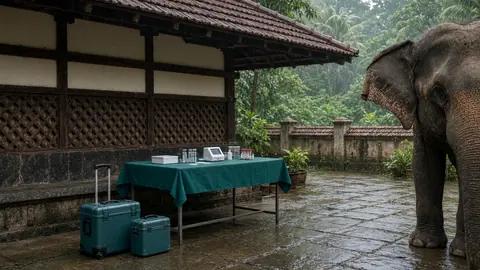
17 Captive Elephants Screened in Kerala Amid Concerns Over Sudden Deaths
Most read
- 1
Air China Adds Extra Flight for Passengers Stranded in Fuel-Starved Cuba
- 2
Western disturbance to bring rain, hail and strong winds across north India
- 3
Yogi Adityanath Directs No Occupied Houses Be Demolished for Achhalda Bridge
- 4
Gwalior Temple Truck Crash Kills 12, Injures 28-29 Devotees During Navratri
- 5
Schools Shut in Five Tamil Nadu Districts, Including Chennai, Amid Heavy Rain
Comments
No comments yet. Be the first to comment.