
AI Takes Over 37% of Entry-Level Jobs in India, Study Finds
A study reveals AI now manages 37% of entry-level tasks in India, surpassing the global average. Discover the implications for future job roles.

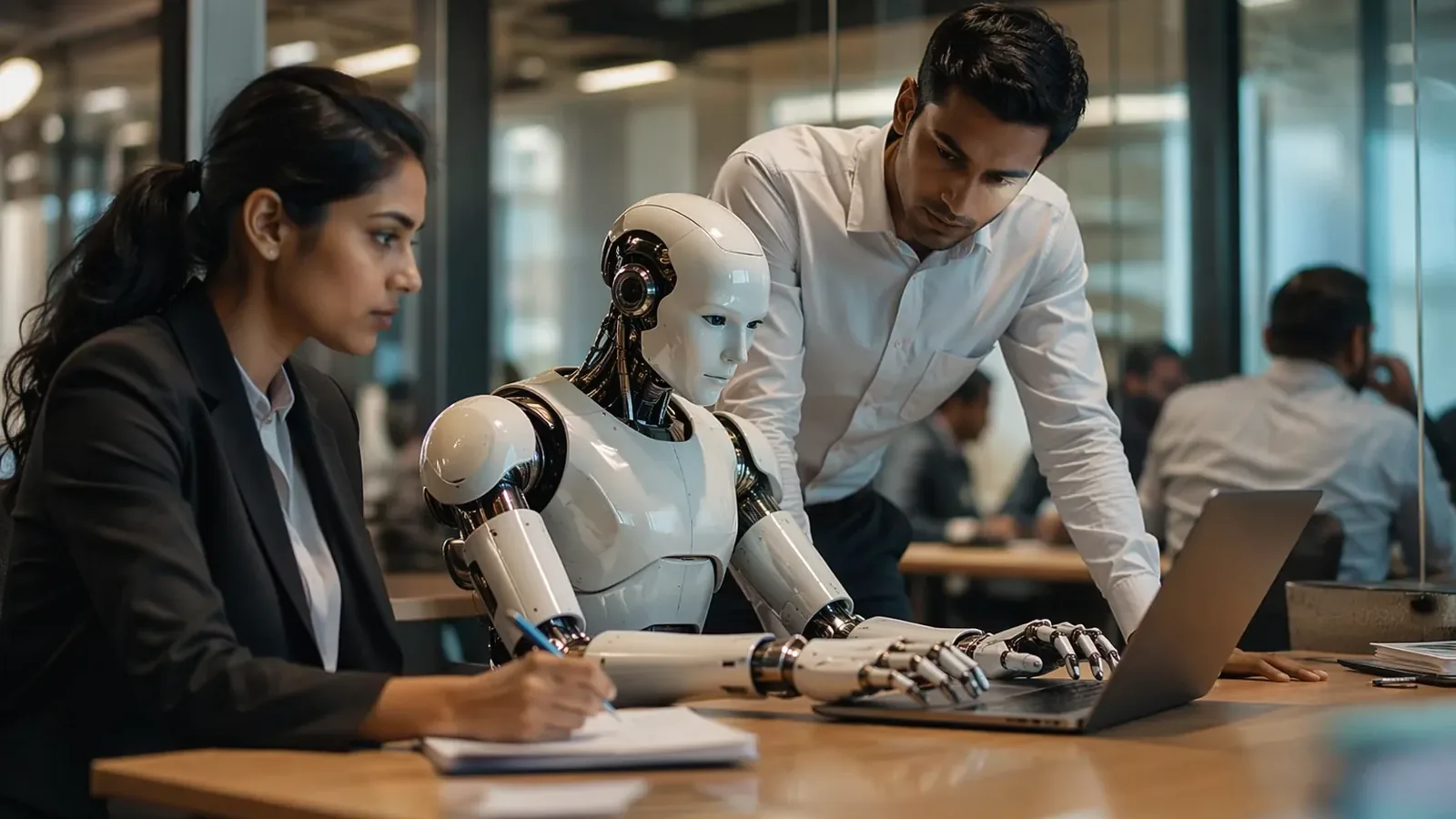
Artificial intelligence is transforming entry-level employment in India, with 37% of tasks traditionally performed by fresh graduates now being handled by AI, according to a study released by Cognizant and Pearson on Thursday. This figure surpasses the global average of 33%, positioning India as a leader in the evolving landscape of entry-level work.
The study, titled The AI Workforce Pulse: The Adaptability Imperative, surveyed 750 HR leaders from the US, UK, and India, all at director level or above and employed at companies with over 1,000 employees. Notably, 18% of respondents reported that AI now manages half or more of entry-level tasks. For India, where entry-level roles constitute a significant portion of the job market, this represents a fundamental shift rather than a minor adjustment.
The report suggests that the nature of entry-level jobs is undergoing a profound transformation. Future hires in such roles are expected to resemble air traffic controllers rather than traditional data-entry clerks. Instead of performing routine tasks, these employees will supervise AI systems, validate their outputs, interpret results, and address edge cases requiring human judgment.
This shift is expected to accelerate, with 96% of HR leaders anticipating that entry-level roles will evolve into supervisory positions within the next five years. Additionally, 94% believe AI will create entirely new junior roles that do not yet exist. Interestingly, liberal arts degrees and interdisciplinary educational backgrounds are gaining favor among HR professionals, with two-thirds rating such credentials more highly than before.
As AI increasingly handles technical execution, human skills such as judgment, effective communication, and the ability to discern when a technically correct solution may still be inappropriate are becoming more valuable. However, companies face challenges in preparing employees for this transition. While 91% of HR leaders report rising demand for AI-related training, 60% admit their training programs are struggling to keep pace with the rapid changes AI is bringing to the workplace.
India reflects this global trend, with 63% of firms acknowledging difficulties in meeting AI training demands. However, Indian companies are ahead of their US counterparts in dedicating time for AI training, with 63% of Indian firms making such provisions compared to 49% in the US. Middle managers play a critical role in this transition, with 95% of HR leaders identifying them as key to ensuring employees effectively integrate AI into their workflows.
The study underscores a crucial takeaway: success in the AI-driven workplace will not hinge on how quickly companies replace tasks with automation but on how effectively they enable humans and AI to collaborate.
Frequently asked questions
What percentage of entry-level jobs in India are now handled by AI?
According to a study by Cognizant and Pearson, AI now handles 37% of tasks traditionally performed by entry-level workers in India, which exceeds the global average of 33%.
How are entry-level job roles expected to change in the future?
Entry-level roles are expected to transform from routine task performers into supervisory positions where employees supervise AI systems, validate outputs, interpret results, and handle edge cases requiring human judgment.
What skills are becoming more valuable as AI handles technical work?
Human skills such as judgment, effective communication, and the ability to determine when a technically correct solution may be inappropriate are becoming increasingly valuable in the AI-driven workplace.
Are companies prepared to train employees for AI-related roles?
While 91% of HR leaders report rising demand for AI training, 60% admit their training programs are struggling to keep pace with rapid AI changes. However, 63% of Indian firms are making provisions for AI training, ahead of the US at 49%.
You may also like
 Technology
CEA Nageswaran Releases White Paper On AI, Automation And Jobs
 Politics
Tamil Nadu Government to Tackle Education-Employment Gap, Says Speaker
 Technology
77% of Indian Professionals Use AI at Work, Report Reveals
 Politics
Indian Youth Congress demands 50 lakh government job vacancies filled within one year
Most read
- 1
Air China Adds Extra Flight for Passengers Stranded in Fuel-Starved Cuba
- 2
Western disturbance to bring rain, hail and strong winds across north India
- 3
Yogi Adityanath Directs No Occupied Houses Be Demolished for Achhalda Bridge
- 4
Gwalior Temple Truck Crash Kills 12, Injures 28-29 Devotees During Navratri
- 5
Schools Shut in Five Tamil Nadu Districts, Including Chennai, Amid Heavy Rain
Comments
No comments yet. Be the first to comment.