
Agra Gharana Maestro Pt. Indudhar Nirody Passes Away At 91
Pt. Indudhar Nirody, an Agra gharana vocalist, musicologist and mentor rooted in the Bhatkhande tradition, passed away at 91.

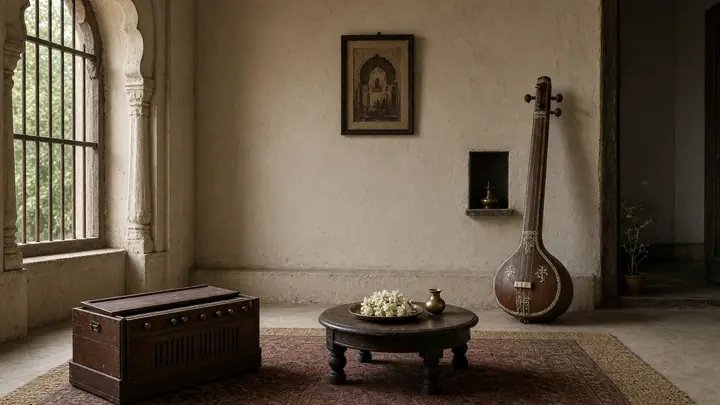
Pt. Indudhar Nirody, a vocalist, musicologist and mentor who remained connected to his gurus for six decades, passed away on September 22 at the age of 91.
He leaves behind an invaluable treasury of traditional wisdom, ragas and bandishes, along with a body of teaching, writing and archival work rooted in the Bhatkhande parampara.
A musical lineage shaped by Bhatkhande and Ratanjankar
Nirody’s musical worldview was firmly grounded in the vision of Pt. Vishnu Narayan Bhatkhande, who undertook the monumental task of framing Ragasangeet into a comprehensive Shastra while preserving a vast collection of gharanedar bandishes for future generations.
His training placed him directly within the legacy of acharya S.N. Ratanjankar, known as Annasaheb, through four of Ratanjankar’s prime disciples: S.C.R. Bhat, K.G. Ginde, Pt. Chidanand Nagarkar and Pt. Dinkar Kaikini.
Ratanjankar himself had trained under Gwalior stalwart Pt. Antubua Joshi, Pt. Vishnu Narayan Bhatkhande and Aftab-e-Mousiqi Ustad Faiyaz Khan.
Through this succession of teachers, Nirody became a direct descendant of Annasaheb’s legacy.
His taalim under these stalwarts developed into a seamless synthesis of Agra and Gwalior gayaki, with K.G. Ginde serving as his primary ideal.
Nirody often recalled that both Gindeji and Bhatji had also trained under the Gwalior maestro Pt. Rajabhaiya Poochwale.
That lineage was not only a matter of inheritance but also of sustained practice, close listening and immersion in performance.
For six decades, Nirody remained associated with his gurus and accompanied them across India, giving him the opportunity to absorb the intricacies of performance and raag development.
One incident remembered from his training reflected the precision expected of him.
When his guru Annasaheb auditioned him, he asked whether Nirody could sing raag Hameer without its defining phrase, “Ga ma dha.”
Nirody rendered it flawlessly, much to Annasaheb’s delight.
Khayal, dhrupad-dhamar and thumri
Khayal was Nirody’s main domain, but he was equally at ease with dhrupad-dhamar and thumri, both as a performer and as a teacher.
His approach remained deeply rooted in tradition, and he was often critical of modern trends.
For him, grammar, or shastra, took precedence over glamour.
He believed that true mastery came through patient taalim, devotion, purity and perseverance.
That emphasis on discipline shaped both his performance and his teaching.
In his lessons, he focused on the exact elements required for raga badhat, including swar shuddhata, raga shuddhata, swarocchar, aakar, kan swar, meend, gamak, bol upaj, taan and breath control.
He taught both Dhrupad and Khayal styles of nom-tom alap, explaining their subtle architectural beauty and strength.
Over the years, he imparted the nuances of more than a hundred raags and several hundred compositions.
He demonstrated how each bandish could offer a distinct aesthetic approach to the development of a raag.
The teaching was therefore not limited to the reproduction of compositions; it involved understanding the possibilities contained within each bandish.
From government service to full-time teaching
Beyond the concert platform, Nirody worked as a senior executive in a government Insurance firm.
After retirement, he dedicated himself more fully to teaching music.
He served as a visiting professor at Dr. Gangubai Hangal Music University, Mysuru, and Karnataka University, Dharwad.
His disciples included Aditi Kaikini-Upadhya, Veerabhadrayya, Sharada Bhat, Bhaskar and the writer of the tribute.
His teaching also continued through personal, residential and sustained musical exchanges.
The writer’s journey as Nirody’s disciple began in November 2002 after the writer had quit an IT profession in Bengaluru in 2001 to pursue music full-time.
The writer had earlier accompanied Nirody on the Harmonium before becoming his student, and later provided him vocal support during concerts.
Nirody accepted the student on two conditions: there would be no tuition fees, because he believed knowledge should be passed on freely as his gurus had done; and the student would travel every fortnight from Bengaluru to Mysuru for two-day residential stays.
Those visits continued until the pandemic, after which the lessons moved online.
In Nirody’s final months, when his health restricted vocal exertion, the musical exchanges continued quietly through text messages.
The account of this learning relationship records that taalim in November 2022 began with raag Bhimpalas and continued for 11 months because Nirody wanted the student to absorb every subtle nuance of the raag.
That first lesson was described as humbling and as an introduction to the depth of vocal music.
A major archival contribution
Nirody’s contribution extended beyond performance and direct discipleship.
He wrote essays on subjects including samay chakra and thaat frameworks.
He also anchored a 13-episode programme on the Agra Gharana, broadcast on Akashvani Bangalore.
His lecture-demonstrations focused particularly on the 10 thaats and their associated raags.
One of his lifelong missions was to create an audio reference for all the 1,896 compositions contained in Bhatkhandeji’s six-volume Kramik Pustak Malika.
Nirody recorded the entire body of work as “Samarpan”, offering it as his gurudakshina.
The recording was later made available online, free of cost, as an archival resource for students.
“Samarpan” earned acclaim from Pt. Rajeev Taranath, Pt. Sharad Sathe and Pt. Ajoy Chakrabarty.
The project gave students access to a large body of compositions while reflecting Nirody’s commitment to preserving and sharing the tradition he had inherited.
Recognition for a lifetime of music
Nirody was a top-grade All India Radio and Doordarshan artiste, and his artistic journey was recognised with several honours.
These included the Central Sangeet Natak Akademi Award in 2014, presented by the former President Pranab Mukherjee.
He also received the Rajya Sangeet Vidvan Puraskar in 2014.
Dr. Gangubai Hangal Music University conferred an honorary doctorate on him in 2015.
His other honours included the Gaurav Prashasthi in 2006 and first prize in the All India Music Competition in 1955.
He received the competition prize from former President Rajendra Prasad.
The range of these recognitions accompanied a career that combined performance, scholarship, teaching and archival preservation.
“How fortunate I am”
Nirody’s teaching was also marked by a refusal to separate musical learning from humility and respect.
During lessons, he kept theka on the dagga while the student played the tanpura.
He refrained from using modern digital gadgets during taalim sessions.
During the stays in Mysuru, musical discussions often continued late into the night.
He never spoke disparagingly of fellow musicians; instead, he highlighted their strengths and explained what could be learnt from each of them.
When his gurus were mentioned, he would say, “You can’t imagine how fortunate I am to have learnt from such stalwarts. You will not understand.”
Those words, along with his training, music and philosophy, remain with the disciple who recorded this tribute.
Through his performances, lessons, compositions, writings and the “Samarpan” archive, Nirody’s work brought together the traditions of Agra and Gwalior while remaining anchored in the discipline of the Bhatkhande parampara.
His musical inheritance now survives in the knowledge he transmitted, the disciples he mentored and the resources he created for students.
Source: The Hindu
Frequently asked questions
Who was Pt. Indudhar Nirody?
Pt. Indudhar Nirody was an Agra gharana vocalist, musicologist and mentor rooted in the Bhatkhande parampara.
When did Pt. Indudhar Nirody pass away?
Pt. Indudhar Nirody passed away on September 22 at the age of 91.
Which musical styles did Pt. Indudhar Nirody perform and teach?
Khayal was his main domain, and he also performed and taught dhrupad-dhamar and thumri.
What did Pt. Indudhar Nirody emphasize in his teaching?
He emphasized patient taalim, devotion, purity, perseverance, raga grammar and technical elements such as swar shuddhata, aakar, meend, gamak and breath control.
You may also like
 Uttar Pradesh
Agra ACP Imran Ahmed Helps Elderly Woman Living Alone In Forest Hut
 Politics
BJP Names Former MLA Ram Pratap Singh Chauhan as Agra Rajya Sabha Candidate
 Uttar Pradesh
Agra to host fourth Taj Half Marathon on February 14, 2027
 Health
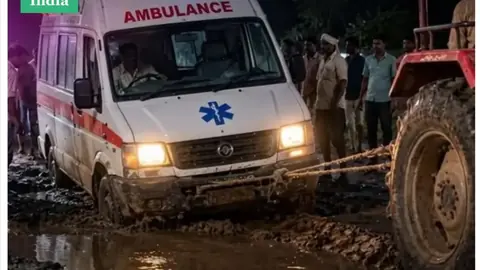
Pothole on rural road delays ambulance, pregnant woman loses unborn child in Agra
Most read
- 1
Air China Adds Extra Flight for Passengers Stranded in Fuel-Starved Cuba
- 2
Western disturbance to bring rain, hail and strong winds across north India
- 3
Yogi Adityanath Directs No Occupied Houses Be Demolished for Achhalda Bridge
- 4
Gwalior Temple Truck Crash Kills 12, Injures 28-29 Devotees During Navratri
- 5
Heavy Rain Waterlogs Bengaluru, Snarls Traffic; Ride-Hailing Fares Surge
Comments
No comments yet. Be the first to comment.