
Vizhinjam Port Gains Customs Status, Set to Boost India's Maritime Trade
Vizhinjam Port's new customs status could transform India's maritime trade, reducing costs and enhancing logistics for exporters.

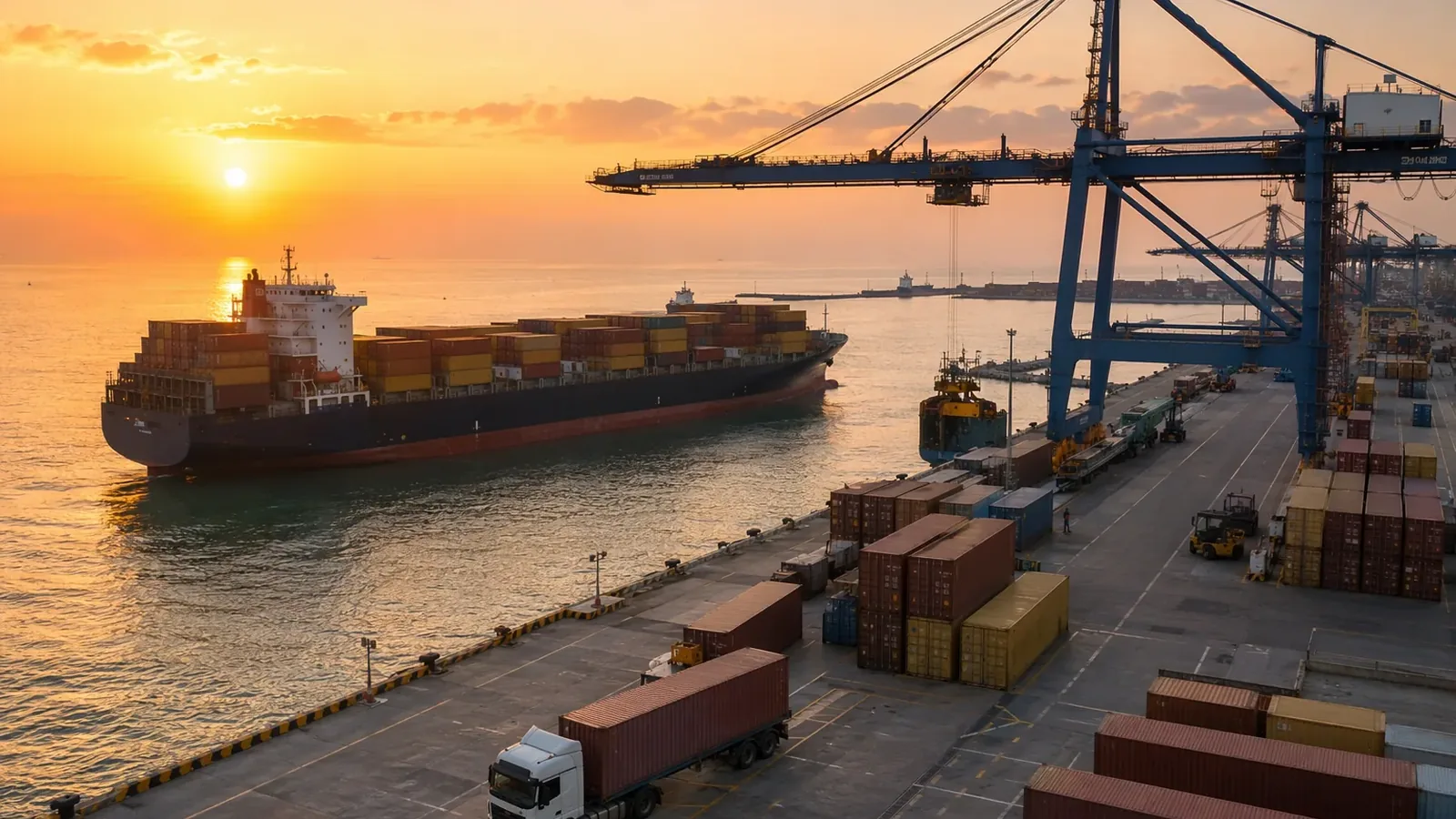
The Vizhinjam International Transshipment Seaport in Kerala has been officially notified as a customs port, enabling it to handle direct export and import operations for the first time. This marks a significant shift from its earlier role as an exclusive transshipment hub, where containers were transferred between vessels without entering domestic markets.
Why This Development Matters
India has long relied on foreign ports like Colombo, Singapore, and Jebel Ali for transshipment cargo, with nearly 75% of such traffic routed through these hubs. This dependence has not only increased transit times but also added costs of $80, $100 per container for Indian traders. The Vizhinjam port’s new status could help India reclaim a significant portion of this trade, saving an estimated $200, 220 million annually while reducing logistical delays.
Additionally, the port’s strategic location, just 10 nautical miles from the busy East-West international shipping lane, positions it as a key player in regional maritime trade. Its ability to accommodate massive “mother vessels” carrying up to 20,000 containers (TEUs) further enhances its potential to become a major transshipment hub for the Indian subcontinent.
Natural and Structural Advantages
Vizhinjam’s natural depth of 18, 20 metres, located just one kilometre from the shore, is a standout feature. Unlike other Indian ports, it requires no costly or environmentally disruptive dredging to accommodate the world’s largest cargo ships. This natural advantage significantly reduces maintenance costs, making it a more sustainable and economically viable option.
The port’s connectivity is another asset. Located just 2 km from a national highway, 12 km from a major railway line, and 15 km from Trivandrum airport, it offers seamless movement of goods across India. This logistical ease could enhance supply chain efficiency, lower costs, and boost the competitiveness of Indian exporters.
Operational Milestones and Future Expansion
Since its operations began in July 2024, Vizhinjam has handled 2 million TEUs within 18 months, making it one of the fastest-growing container ports globally. Currently equipped to manage 1 million containers annually, the port is set to expand its capacity by an additional 6.4 million TEUs across two more phases. This growth aligns with its gradual transformation into a full-fledged export-import gateway.
Broader Implications for India’s Maritime Strategy
The port’s development is part of India’s broader push for port-led growth under initiatives like the Sagarmala Programme and Maritime India Vision 2030. These programmes aim to modernise port infrastructure, enhance connectivity, and promote coastal and inland waterways, with a combined investment of nearly ₹9 lakh crore projected by 2047. Vizhinjam’s success could serve as a model for similar projects, reinforcing India’s maritime ambitions.
By reducing dependence on foreign transshipment hubs, Vizhinjam not only boosts India’s revenue retention but also strengthens its resilience against geopolitical disruptions in global trade. As the port evolves, it could play a pivotal role in repositioning India as a key player in regional and global maritime logistics.
Source: Indian Express
Frequently asked questions
What is the significance of Vizhinjam Port being notified as a customs port?
Vizhinjam Port's new customs status allows it to handle direct export and import operations, marking a shift from its previous role as a transshipment hub.
How much could Vizhinjam Port save Indian traders annually?
The port could save Indian traders an estimated $200, 220 million annually by reducing dependence on foreign ports.
What are the natural advantages of Vizhinjam Port?
Vizhinjam Port has a natural depth of 18, 20 metres close to shore, requiring no costly dredging, which reduces maintenance costs.
What is the current capacity of Vizhinjam Port and its future expansion plans?
Currently, Vizhinjam Port can manage 1 million containers annually and plans to expand its capacity by an additional 6.4 million TEUs.
How does Vizhinjam Port fit into India's broader maritime strategy?
The port's development is part of India's initiatives like the Sagarmala Programme and Maritime India Vision 2030, aimed at modernizing port infrastructure and enhancing connectivity.
You may also like
 Kerala
Vizhinjam Port Receives Customs Approval for Export-Import Operations
 Politics
PM Modi Meets French CEOs to Strengthen India-France Economic Ties
 Politics
BJP MP Gulam Ali Khatana alleges Pakistan orchestrated OIC’s anti-India resolutions
 Politics
Jaishankar Welcomes UAE Foreign Minister Sheikh Abdullah in Mumbai for Talks
Most read
- 1
Air China Adds Extra Flight for Passengers Stranded in Fuel-Starved Cuba
- 2
Western disturbance to bring rain, hail and strong winds across north India
- 3
Yogi Adityanath Directs No Occupied Houses Be Demolished for Achhalda Bridge
- 4
Gwalior Temple Truck Crash Kills 12, Injures 28-29 Devotees During Navratri
- 5
Schools Shut in Five Tamil Nadu Districts, Including Chennai, Amid Heavy Rain
Comments
No comments yet. Be the first to comment.