
BJP MP Gulam Ali Khatana alleges Pakistan orchestrated OIC’s anti-India resolutions
Senior BJP leader and Rajya Sabha MP Er. Gulam Ali Khatana has strongly condemned the anti-India references in resolutions adopted at the Organisation of Islamic Cooperation (OIC) Council of Foreign

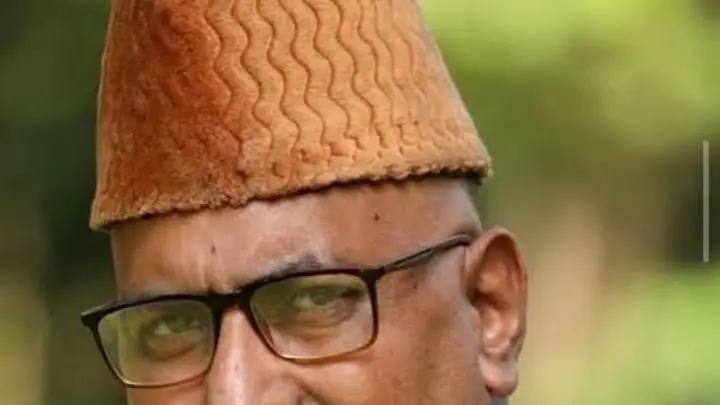
Senior BJP leader and Rajya Sabha MP Er. Gulam Ali Khatana has strongly condemned the anti-India references in resolutions adopted at the Organisation of Islamic Cooperation (OIC) Council of Foreign Ministers’ Meeting held in Baghdad on October 17, 18, 2026. He accused Pakistan of orchestrating the resolutions to push a narrow political agenda and described them as an attempt to malign India and interfere in its internal affairs.
“I strongly and unequivocally condemn the unwarranted, malicious and politically motivated anti-India references contained in the resolutions adopted at the Organisation of Islamic Cooperation (OIC) Council of Foreign Ministers’ Meeting held in Baghdad on October 17, 18, 2026,” Khatana said.
He said the assertions against India were baseless and had been driven by Pakistan’s propaganda. According to Khatana, it was deeply regrettable that an organisation claiming to represent the collective interests of the Islamic world had once again allowed itself to become a platform for Pakistan’s campaign against India.
Khatana made it clear that Jammu & Kashmir and Ladakh are integral, inalienable and inseparable parts of India. He said no resolution drafted under Pakistan’s influence, no politically motivated narrative and no unwarranted interference by an international forum could change this position.
“Jammu & Kashmir and Ladakh are integral, inalienable and inseparable parts of India,” he said, adding that the OIC had neither the locus standi nor the moral authority to comment on matters falling exclusively within India’s sovereign jurisdiction.
He also referred to developments in Jammu & Kashmir under the leadership of Prime Minister Shri Narendra Modi. Khatana said the region had witnessed a significant transformation since the abrogation of Article 370, with unprecedented emphasis on infrastructure development, improved connectivity, tourism, investment and the delivery of development benefits to the people.
He said the people of Jammu & Kashmir deserved peace, progress, dignity and opportunity, and should not be reduced to pawns in what he described as Pakistan’s geopolitical games.
Khatana also targeted Pakistan over its record in Pakistan-occupied Jammu & Kashmir, or PoJK. He said Pakistan, while lecturing the world on human rights, must first answer for allegations of repression, violence and brutality in the areas under its control.
He referred to reports of force against civilian protesters, including the deaths of innocent people, women and children. Khatana said these reports exposed what he called the glaring hypocrisy of a state attempting to divert attention from its own failures by manufacturing controversy over India.
“Pakistan cannot conceal its conduct behind propaganda, nor can it escape accountability by exploiting international platforms,” he said.
According to Khatana, the only outstanding issues concerning Jammu & Kashmir are Pakistan’s vacation of the areas under its illegal and forcible occupation and its immediate cessation of support for cross-border terrorism. He said these were the realities that the international community must confront instead of giving credibility to claims that were politically motivated and factually untenable.
Khatana also rejected the OIC’s insinuations against India, including allegations invoking Islamophobia. He said India was a civilisational nation that had upheld pluralism, coexistence and respect for all faiths.
He contrasted India’s constitutional values and democratic institutions with what he described as Pakistan’s persistent record of minority persecution, sectarian violence, political instability and governance failures. Khatana said Pakistan’s attempts to lecture India on religious harmony amounted to duplicity and diversion.
He questioned whether the OIC wanted to remain a credible international organisation or continue functioning as an instrument of Pakistan’s anti-India agenda. He said the organisation’s repeated endorsement of one-sided, inflammatory and politically engineered resolutions undermined its credibility, integrity and standing.
Khatana called on member states that genuinely believed in dialogue, peace and international cooperation to reject what he described as the misuse of the organisation. He also urged them to demand accountability and meaningful reform within the OIC.
“India is a sovereign, strong and confident nation. We will not accept interference in our internal affairs, nor will we allow malicious propaganda to undermine our national unity and territorial integrity,” he said.
He said Pakistan and its supporters must understand that India’s sovereignty was non-negotiable and that Jammu & Kashmir was an integral part of India. No amount of international posturing, he added, could change this position.
Khatana urged the OIC to abandon what he called its discriminatory approach, reject Pakistan-sponsored propaganda and act with fairness, responsibility and respect for the sovereignty of member and non-member states alike.
“India will stand firm. Our sovereignty is supreme, our territorial integrity is inviolable, and our national resolve is unshakable,” he said.
Frequently asked questions
Who condemned the anti-India references in the OIC resolutions?
Senior BJP leader and Rajya Sabha MP Er. Gulam Ali Khatana condemned the references.
Where and when were the OIC resolutions adopted?
They were adopted at the OIC Council of Foreign Ministers’ Meeting in Baghdad on October 17 and 18, 2026.
What did Khatana allege about Pakistan’s role?
He alleged that Pakistan orchestrated the resolutions to promote a narrow political agenda and malign India.
What did Khatana say about Jammu and Kashmir and Ladakh?
He said Jammu and Kashmir and Ladakh are integral, inalienable and inseparable parts of India.
What developments in Jammu and Kashmir did Khatana highlight?
He highlighted infrastructure development, improved connectivity, tourism, investment and the delivery of development benefits since the abrogation of Article 370.
You may also like
 Opinion
Big Indian AI SuperChip Dream: Bharatiya Chips Powering the Electronic Revolution
 National
Singareni revises pay scales for 1,800 officers, aligning them with Coal India
 Sports
Nandani Sharma Climbs 26 Places to 45th in ICC T20I Rankings
 Politics
Jaishankar Welcomes UAE Foreign Minister Sheikh Abdullah in Mumbai for Talks
Most read
- 1
Air China Adds Extra Flight for Passengers Stranded in Fuel-Starved Cuba
- 2
Western disturbance to bring rain, hail and strong winds across north India
- 3
Yogi Adityanath Directs No Occupied Houses Be Demolished for Achhalda Bridge
- 4
Gwalior Temple Truck Crash Kills 12, Injures 28-29 Devotees During Navratri
- 5
Heavy Rain Waterlogs Bengaluru, Snarls Traffic; Ride-Hailing Fares Surge
Comments
No comments yet. Be the first to comment.