
UP 2027 election will test BJP's grip on power after decade of dominance
2027 UP assembly election poses critical challenge to BJP's decade-long political dominance after 2024 setbacks and rising public discontent.

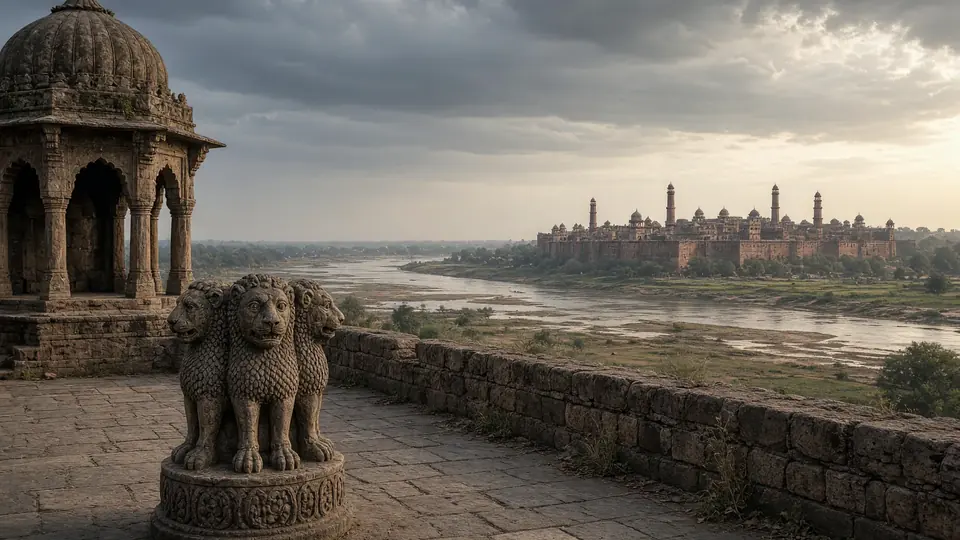
The crucial Uttar Pradesh test of the BJP's hegemony
The 2027 assembly election in Uttar Pradesh is shaping up as a critical test of whether the political framework that propelled the Bharatiya Janata Party from Lucknow to New Delhi retains its electoral force, following a series of setbacks that have punctured the party's aura of invincibility.
Signs of vulnerability after a decade of dominance
The political dominance of the BJP, which appeared almost unassailable after 2014, is beginning to show cracks. The 2024 general election marked an important setback: the party lost its parliamentary majority and had to depend on its allies to form the government. This electoral reversal represented the first major dent in a decade-long ascendancy that had reshaped Indian politics.
Since the 2024 general election, disillusionment has acquired greater political salience through youth protests, rising prices, unemployment and failures of governance, particularly irregularities in the education and examination systems. These accumulated grievances have combined to create a political environment markedly different from the one that sustained the BJP's uninterrupted rise through the previous decade.
To these challenges can be added the defeat of the Constitutional Amendment Bill on delimitation and women's reservation in April, the Cockroach Janta Party (CJP) protests that led to the resignation of the then Union Education Minister and the complete washout of the monsoon session of Parliament, as both the Prime Minister and Home Minister stayed away. Questions over accountability for the excessive police action against student protesters on July 20, compounded by the absence of the two leaders from Parliament, reinforced the impression of a government unwilling to answer for its actions.
But these setbacks do not by themselves amount to an erosion of hegemony. The BJP remains a formidable political force, retaining a substantial electoral base and considerable ideological appeal. What is now at issue is whether the forces that produced the BJP's dominance are beginning to encounter limits.
Why Uttar Pradesh is the decisive battleground
Uttar Pradesh is where the question of limits can be most clearly tested. The State is not merely India's most populous; it is the citadel of BJP power, central to the party's rise to national prominence. In the 2014 general election, the BJP won 71 of the State's 80 seats, establishing it as a crucial pillar of its national power. This overwhelming victory in Uttar Pradesh provided the foundation for the party's parliamentary majority and signalled a fundamental realignment of Indian politics.
In the 2019 general election, the party won 62 seats on its own despite the formidable alliance of the Samajwadi Party and the Bahujan Samaj Party. The State's electoral weight was thus instrumental to its successive parliamentary majorities at the Centre. Beyond the arithmetic of seats, U.P. is still the crucible of the BJP's majoritarian politics and its Hindu-Muslim mobilisation. A weakening of the BJP here would therefore have implications far beyond the State.
The 2024 reversal and the Ayodhya paradox
The 2024 general election strongly indicates that the BJP had lost ground in U.P.. Its tally fell from 62 seats in 2019 to 33, while the SP won 37 and the Congress six. This represented a dramatic erosion of the party's position, reducing it from commanding dominance to a minority position in the State's parliamentary delegation.
The sharpest erosion occurred in Awadh, once the heartland of the Ayodhya temple movement. In 2022, the BJP won 101 of Awadh's 154 Assembly seats. In 2024, it was leading in only 51 of those Assembly segments, 50 fewer than the number it had won in 2022. The scale and geography of this decline made the 2024 general election result extremely significant.
The timing added to the significance. The 2024 general election followed the inauguration of the Ram temple in Ayodhya, which was the culmination of a political and cultural project that had animated the BJP and the wider Hindu right for decades. Yet, the inauguration did not produce the electoral impact that might have been expected: most strikingly, the BJP lost the Faizabad seat, which includes Ayodhya itself. It also lost in many constituencies around it.
This does not mean that Ayodhya or the majoritarian politics surrounding it has ceased to matter. The consequential point is that it was no longer enough to win elections even in the movement's heartland. The fact that the erosion was most visible in this region adds to its significance, given the subsequent controversy over donations to the temple. The episode, whose effects are still being felt across the State, showed that even powerful ideological symbols are not beyond questions of integrity.
The unravelling of a political formula
This matters because the BJP's political hold in U.P. has rested on a combination of communal mobilisation, a durable electoral base and social coalitions built around the temple campaign. The 2024 general election showed that this alignment could be disrupted. Its longer-term implications will depend on whether that disruption proves temporary or marks a lasting shift in the electorate's preferences and expectations.
The 2024 result also suggests that voters are becoming less willing to let a single dimension of politics overwhelm all others, especially when claims of economic performance do not match the realities on the ground. U.P. remains among the poorer-performing economies of the north and east, as it has for decades. Its economy has grown, but growth has not fundamentally altered its relative economic position or generated enough productive employment.
Economic distress in industrial clusters
The gap between the rhetoric of transformation and economic experience on the ground is particularly visible in the State's industrial clusters. In Kanpur, Firozabad, Bhadohi and Moradabad, exporters have faced serious disruption from the tariff regime of the United States, and the duties raised on Indian goods, with falling orders, shrinking market access and risks to employment, principally among temporary and contract workers.
These industrial centres, which have traditionally been sources of employment and economic activity, now face an uncertain future as global trade dynamics shift against them. The impact on workers, particularly those in precarious employment arrangements, has compounded broader anxieties about economic security in a State where formal employment opportunities remain scarce.
Youth anger over examination failures
The frustration among young voters is strikingly evident in the precarity of employment and recruitment. Many were actively involved in the anti-National Eligibility cum Entrance Test protests earlier in the year. U.P. has seen repeated examination leaks and cancellations.
In 2024, the police constable examination, taken by around 48 lakh candidates for 60,244 posts, was cancelled following a paper leak. The Review Officer/Assistant Review Officer examination was similarly cancelled amid allegations of irregularities, where out of a total of 10.76 lakh registered candidates, about 6.8 lakh candidates appeared, competing for just 411 posts.
For a generation that invests years in its preparation for scarce government jobs, such failures are not merely administrative lapses. They can mean the loss of money spent on coaching and applications, income and opportunity in a State where government employment remains a highly valued path to economic security. The repeated nature of these failures has transformed what might have been seen as isolated incidents into evidence of systemic dysfunction, feeding a broader narrative of governance failure that cuts across caste and community lines.
A more contested electoral landscape ahead
In these circumstances, the 2027 U.P. election is likely to be more closely contested than those that the BJP has faced in the State in recent years. The party remains the strongest contender, but the 2024 result has opened space for the Opposition and revealed strains at various levels that were barely perceptible in earlier elections.
The government is working overtime to address the gap on several fronts, reflected in a slew of measures to promote local entrepreneurship and provide stipends for students in corporate and technical institutions. It is also set to introduce new schemes for women, such as the Mahila Udyami Credit Yojana, under which around one crore women associated with self-help groups are expected to receive interest-free credit of up to ₹1 lakh in stages.
These initiatives represent an acknowledgment that the political formula that delivered successive victories needs recalibration in the face of changed voter expectations and economic realities. The focus on entrepreneurship, student support and women's economic participation suggests an attempt to address multiple dimensions of the discontent that surfaced in the 2024 election.
Opposition parties sense an opportunity
The Opposition, too, sees an opening. Both the SP and the Congress are seeking to strengthen their appeal among younger voters, with their leaders, Akhilesh Yadav and Rahul Gandhi, focusing on student unrest, unemployment and widening caste fault lines, particularly divisions among upper castes and between them and the Other Backward Classes.
Convergence between the two parties, as in 2024, could bolster the Opposition's chances in the 2027 U.P. election. The alliance model that delivered results in the parliamentary election offers a template for challenging the BJP's dominance, provided the parties can maintain coordination and address the organizational challenges that have historically hampered Opposition unity in the State.
A referendum on the BJP's national dominance
The 2027 election will therefore reveal more than the BJP's ability to recover lost seats. It will show whether the political template that carried the party to power from Lucknow to New Delhi still commands the same electoral force. The 2024 result has already shown that this template is no longer invulnerable in U.P.. The 2027 election will determine whether the shift revealed in 2024 becomes more durable.
What happens in U.P. could therefore alter the political balance on which the BJP's national dominance has rested. The State's pivotal role in national politics means that any significant erosion of the party's position in Uttar Pradesh would inevitably reverberate across the country, potentially reshaping the terms of political competition at the national level.
The outcome will provide crucial evidence of whether the BJP's decade-long dominance represented a fundamental realignment of Indian politics or a more contingent achievement vulnerable to shifts in voter priorities and economic circumstances. For a party that has built its national position substantially on the foundation of its Uttar Pradesh stronghold, the stakes could not be higher.
Zoya Hasan is Professor Emerita, Centre for Political Studies, Jawaharlal Nehru University. Published - September 18, 2026 12:16 am IST.
Source: The Hindu
Frequently asked questions
Why is the 2027 Uttar Pradesh election considered a critical test for the BJP?
Uttar Pradesh is the citadel of BJP power and central to the party's rise to national prominence. The state's electoral weight has been instrumental to the BJP's successive parliamentary majorities. The 2027 election will test whether the political framework that propelled the BJP from Lucknow to New Delhi retains its electoral force after a decade of dominance.
What setbacks has the BJP faced since 2014?
The BJP lost its parliamentary majority in the 2024 general election and had to depend on allies to form the government. Additionally, the party faced defeats including the Constitutional Amendment Bill on delimitation and women's reservation in April, and has dealt with youth protests, rising prices, unemployment, and governance failures.
What grievances have emerged that could affect the BJP's electoral prospects?
Since the 2024 general election, disillusionment has grown due to youth protests, rising prices, unemployment, and failures of governance, particularly irregularities in education and examination systems. These accumulated grievances have created a political environment markedly different from the one that sustained the BJP's rise through the previous decade.
What was the BJP's performance in Uttar Pradesh in previous general elections?
In the 2014 general election, the BJP won 71 of the state's 80 seats, establishing it as a crucial pillar of national power. In the 2019 general election, the party won 62 seats on its own despite a formidable alliance of the Samajwadi Party and the Bahujan Samaj Party.
You may also like

Most read
- 1
Tesla audits Chinese suppliers to scale up Optimus robot production
- 2
Former minister Lakhan Singh Rajput to inaugurate temple bhandara at Shri Chakreshwar Mahadev
- 3
Firozabad BSA finds four government schools locked during inspection
- 4
Tamil Nadu dengue cases fall for third consecutive year to 17,049
- 5
Social workers stage silent protest at Fufund railway station for train halts
Comments
No comments yet. Be the first to comment.