
The influence of Dalit voters in Uttar Pradesh
The influence of Dalit voters in Uttar Pradesh The Congress is trying to turn the Ramlila Ground episode in Haldwani into a political opening among Dali…

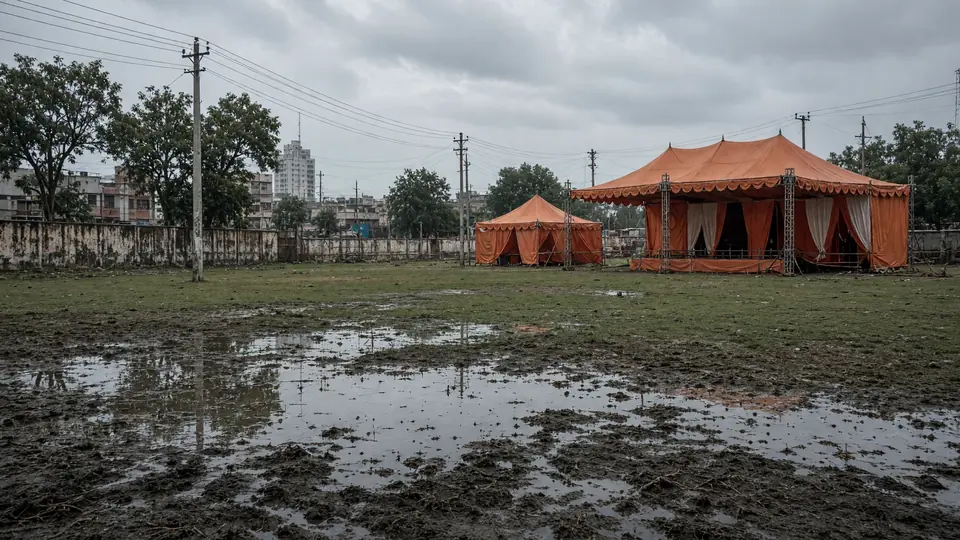
The Congress is trying to turn the Ramlila Ground episode in Haldwani into a political opening among Dalit voters, even as available voting data show that the larger shift in Uttar Pradesh has benefited the BJP far more than the Congress.
More than six months before the 2027 Assembly elections in Uttar Pradesh, parties are already searching for issues that can help them mobilise voters.
One such issue has emerged from the Congress rally addressed by Mallikarjun Kharge at the Ramlila Ground in Haldwani, after which a puja performed by some people was described as a shuddhikaran, or purification, puja.
The Congress is seeking to capitalise on that incident despite knowing that its Dalit support in Uttar Pradesh is minuscule.
The party is trying to expand its appeal among Dalit communities, but the more important question in the State is how much of the Dalit vote is now transferable and which party or alliance can attract it in large enough numbers to matter in the 2027 Assembly election.
BSP’s older dominance has weakened
The Bahujan Samaj Party had long remained the most popular choice among Dalit voters in Uttar Pradesh, with stronger support among Jatavs and somewhat weaker support among non-Jatav Dalits.
Over the years, a large number of Jatavs voted for the BSP, though a decline is visible in recent elections.
When the BSP came to power in Uttar Pradesh in the Assembly elections held in 2007, 86% of Jatavs voted for the party, while 54% of non-Jatav Dalits did so.
By the last Assembly elections held in 2022, the BSP’s support had dropped to 65% among Jatavs and 27% among non-Jatav Dalits.
This decline shows that the BSP’s hold over the Dalit vote has weakened over the years.
At the same time, the Bharatiya Janata Party has made noticeable inroads among Dalit voters, though the gains are described as still not sizable enough.
The pattern becomes more revealing when Jatav and non-Jatav Dalit voting behaviour is examined separately.
Among Jatavs, support for the BJP/National Democratic Alliance increased from just 3% in 2002 to about 20% in the Assembly elections held in 2022.
Over the same period, the BSP’s support among Jatavs declined from 76% in 2002 to 65% in 2022.
Among non-Jatav Dalits, the shift was sharper.
The BJP/NDA’s support among non-Jatav Dalits increased from 12% in 2002 to 40% in 2022.
During the same period, the BSP’s support among non-Jatav Dalits fell from 45% to 27%.
The data therefore suggest that the weakening of the BSP is not merely a fragmentation of the Dalit vote.
Much of the vote that has moved away from the BSP has gone to the BJP, particularly among non-Jatav Dalits.
Non-Jatav Dalits show the sharper move
Between 2002 and 2022, support for the BJP/NDA among non-Jatav Dalits increased by 28 percentage points.
Among Jatavs, the corresponding increase in support for the BJP/NDA was 17 percentage points.
This difference is important because it indicates that the BJP/NDA’s expansion among Dalit voters has been stronger among non-Jatav Dalits than among Jatavs.
The weakening of the BSP’s hold among Dalits is also visible in its overall decline in Uttar Pradesh.
The BSP’s vote share in the State declined from 30.4% in 2007 to 12.8% in 2022.
Over the same period, the BJP/NDA’s vote share increased from 18.5% to 43.8%.
The Samajwadi Party/SP+, with the plus indicating allies, also increased its vote share from 25.4% to 36.3%.
The BSP’s overall vote share therefore fell sharply, while both the BJP+ and SP+ expanded their bases.
This broader trend matters because the Dalit vote remains electorally important, but the evidence suggests it is no longer tied firmly to one party in the way it once was.
The weakening of the BSP does not mean that Dalit voters have stopped having clear political preferences.
Rather, the data indicate that those preferences have shifted in ways that have helped the BJP significantly, especially among non-Jatav Dalits.
The SP has also retained a meaningful share of Dalit support.
Congress sees an opening, but data show a difficult task
The Congress’s support among Dalit voters is extremely low, as it is among many other communities.
Even so, the party does not want to miss an opportunity and sees the Ramlila Ground incident as a chance to bring sections of Dalit voters back into its fold.
The party’s challenge is that it has failed to secure considerable Dalit support among both Jatavs and non-Jatav Dalits.
Its vote share has remained in the single digits among both groups, except in the 2012 Assembly elections.
In the 2012 Assembly elections, the Congress secured 16% of the non-Jatav Dalit vote.
Even that gain among non-Jatav Dalits did not become a durable shift in favour of the Congress.
By 2022, the party’s support among non-Jatav Dalits had fallen back to just 4%.
The Congress continues to try to regain Dalit support from the BSP.
Available data, however, suggest that the Congress faces a difficult task.
The weakening of the BSP has not so far translated into a significant recovery for the Congress among either Jatavs or non-Jatav Dalits.
This is why the Haldwani episode may offer the Congress an issue to raise, but the electoral data do not yet show the party as a significant beneficiary of the BSP’s decline.
Why the Dalit vote remains central for 2027
Elections in Uttar Pradesh are due in early 2027, and parties are expected to continue trying to mobilise Dalits as well as other caste communities.
Only the results will show which party has managed to mobilise Dalit voters successfully.
The data already provide an important indication: the Dalit vote remains electorally important, but it is no longer as firmly attached to one party as it once was.
For the BSP, the evidence points to a long decline from its earlier position of strength among Dalit voters, especially when its 2007 and 2022 levels of support are compared.
For the BJP/NDA, the numbers show significant gains from the BSP’s decline, with the sharper rise coming among non-Jatav Dalits.
For the SP, the data show that it has retained a meaningful share of Dalit support while also expanding its overall vote share in Uttar Pradesh between 2007 and 2022.
For the Congress, the figures show that efforts to rebuild Dalit support have so far not produced a substantial recovery among Jatavs or non-Jatav Dalits.
Given the sizable share of Dalit voters in Uttar Pradesh, their preferences are likely to remain important to the outcome of the 2027 Assembly election.
The central question, therefore, is not whether the Dalit vote matters.
The more important question is how transferable that vote has become and whether any party can consolidate support across Jatav and non-Jatav Dalits.
Source: The Hindu
Frequently asked questions
What issue is the Congress trying to use to reach Dalit voters in Uttar Pradesh?
The Congress is trying to turn the Ramlila Ground episode in Haldwani, where a later puja was described as a shuddhikaran or purification puja, into a political opening among Dalit voters.
How has the BSP’s support among Dalit voters in Uttar Pradesh changed?
The BSP’s support has weakened. In 2007, it received support from 86% of Jatavs and 54% of non-Jatav Dalits, but by 2022 this had fallen to 65% among Jatavs and 27% among non-Jatav Dalits.
Which party has gained more from the shift in Dalit voting patterns?
The BJP has gained more than the Congress from the shift in Dalit voting patterns, especially among non-Jatav Dalits.
How much did BJP/NDA support rise among non-Jatav Dalits between 2002 and 2022?
BJP/NDA support among non-Jatav Dalits rose from 12% in 2002 to 40% in 2022, an increase of 28 percentage points.
How did BJP/NDA support among Jatavs change between 2002 and 2022?
BJP/NDA support among Jatavs increased from 3% in 2002 to about 20% in the 2022 Assembly elections.
You may also like
 Politics
U.P. International Trade Show 2026 set to position State as Globa
 National
Italy greenlights return of nuclear power after decades-long ban
 Weather
Collector inspects dengue prevention drive ahead of monsoon in Cuddalore
 Politics
AIMIM open to anti-BJP alliance in UP ahead of 2027 elections, Owaisi says
Most read
- 1
Tesla audits Chinese suppliers to scale up Optimus robot production
- 2
Former minister Lakhan Singh Rajput to inaugurate temple bhandara at Shri Chakreshwar Mahadev
- 3
Firozabad BSA finds four government schools locked during inspection
- 4
Tamil Nadu dengue cases fall for third consecutive year to 17,049
- 5
Social workers stage silent protest at Fufund railway station for train halts
Comments
No comments yet. Be the first to comment.