
Total lunar eclipse to turn Moon blood red, invisible from India on August 28
Total lunar eclipse on August 28, 2026 visible from Americas. Moon turns deep red as Earth's shadow covers 96%. Not visible from India.

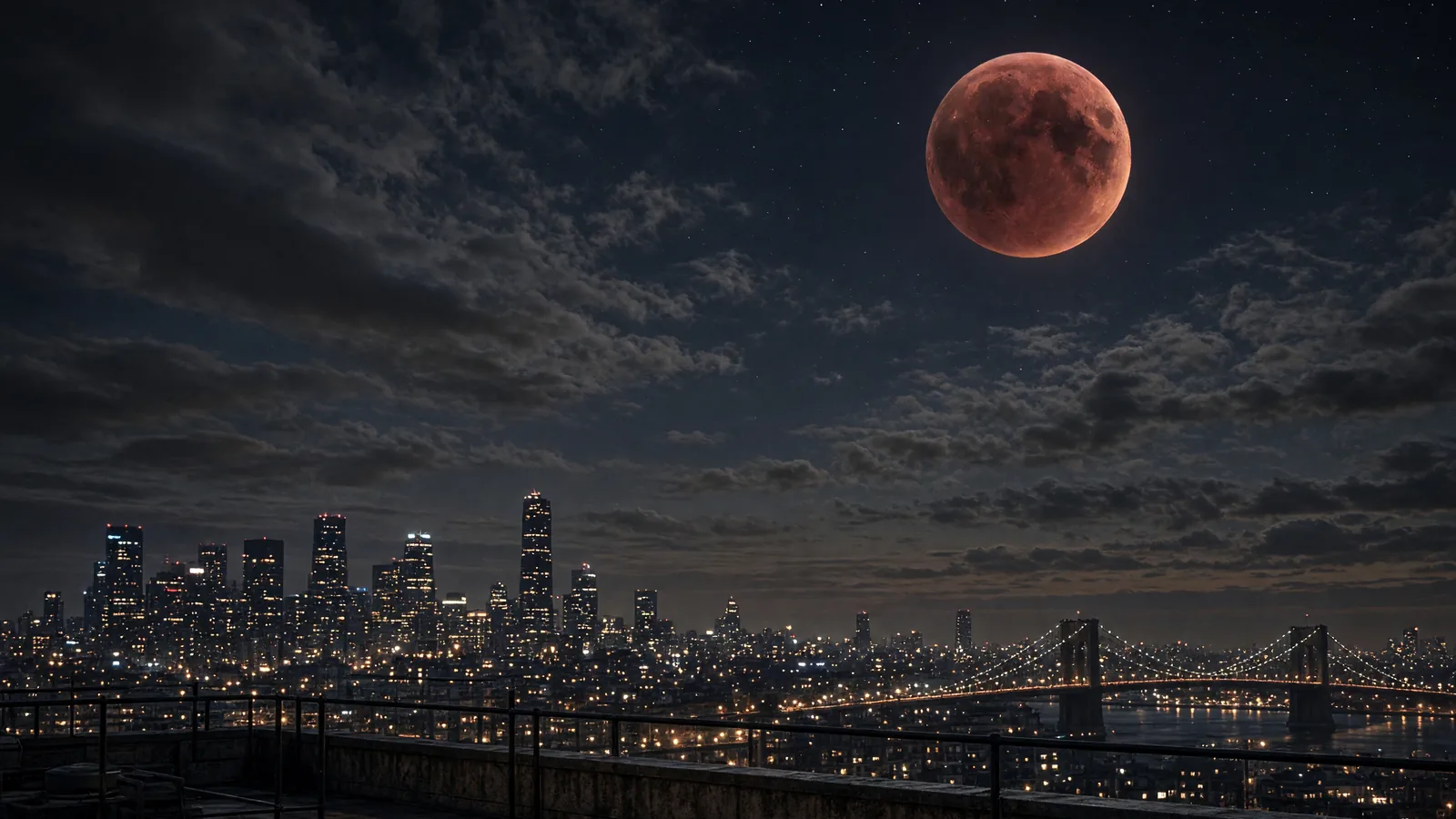
Total lunar eclipse sweeps Americas as India misses daylight event
Nearly one billion people across North and South America will witness a total lunar eclipse on August 28, 2026, when Earth's shadow will cover approximately 96% of the Moon's surface, turning it a deep red.
The eclipse will run from 6.53 a.m. to 12.32 p.m. IST, reaching maximum coverage at 9.43 a.m. IST when the Moon sits deepest inside Earth's shadow. However, the spectacle will remain invisible across India, Australia, Antarctica and the Pacific Rim because the event unfolds during daylight hours in those regions.
Who else can watch
Partial views will stretch across parts of Europe, Africa and West Asia, giving roughly 44% of the global population a chance to observe the phenomenon.
Why the Moon turns red
During a total lunar eclipse, the Moon moves entirely into the darkest part of Earth's shadow, the umbra, creating what astronomers call a "Blood Moon". The reddish-orange glow results from sunlight bending through Earth's atmosphere and filtering onto the lunar surface.
This contrasts with a partial lunar eclipse, where only a section of the Moon enters the umbra, and a penumbral eclipse, in which the Moon passes through Earth's faint outer shadow and the dimming is often too subtle for the naked eye to detect.
The timing question
A lunar eclipse can only occur during a full moon, when Earth aligns directly between the Sun and Moon, casting its shadow across the lunar surface. The August 2026 event has drawn heightened interest in India because it coincides with the Hindu festival of Raksha Bandhan, prompting searches for eclipse timings and duration despite its invisibility from the subcontinent.
Source: The Hindu
Frequently asked questions
When is the total lunar eclipse on August 28, 2026?
The eclipse will run from 6:53 a.m. to 12:32 p.m. IST, reaching maximum coverage at 9:43 a.m. IST when the Moon sits deepest inside Earth's shadow.
Why will the Moon appear red during the eclipse?
During a total lunar eclipse, the Moon moves entirely into Earth's darkest shadow (the umbra). The reddish-orange glow results from sunlight bending through Earth's atmosphere and filtering onto the lunar surface.
Who can see the total lunar eclipse?
Nearly one billion people across North and South America will have the best view. Partial views will stretch across parts of Europe, Africa and West Asia. However, the eclipse will be invisible from India, Australia, Antarctica and the Pacific Rim because it occurs during daylight hours in those regions.
Why can't India see the eclipse despite high interest?
The August 2026 eclipse occurs during daylight hours in India, making it invisible from the subcontinent. Interest is heightened because the eclipse coincides with the Hindu festival of Raksha Bandhan.
You may also like
 Uttar Pradesh
Bahraich-Nepalganj railway line set to launch with new train services on August 31
 National
Sisters can tie rakhi all day Friday with no Bhadra obstruction this year
 Business
Tempsens IPO allotment finalised, shares credited August 27 with strong grey market premium
 Religious
DIG Yamuna Prasad reviews security at Baneshwar Mahadev Temple during Shravan
Most read
- 1
Air China Adds Extra Flight for Passengers Stranded in Fuel-Starved Cuba
- 2
Western disturbance to bring rain, hail and strong winds across north India
- 3
Yogi Adityanath Directs No Occupied Houses Be Demolished for Achhalda Bridge
- 4
Gwalior Temple Truck Crash Kills 12, Injures 28-29 Devotees During Navratri
- 5
Schools Shut in Five Tamil Nadu Districts, Including Chennai, Amid Heavy Rain
Comments
No comments yet. Be the first to comment.