
Tamil Nadu tops India in women's workforce participation, inspired by China
Tamil Nadu excels in women's workforce participation, inspired by China's model, with significant growth in electronics manufacturing and housing support.

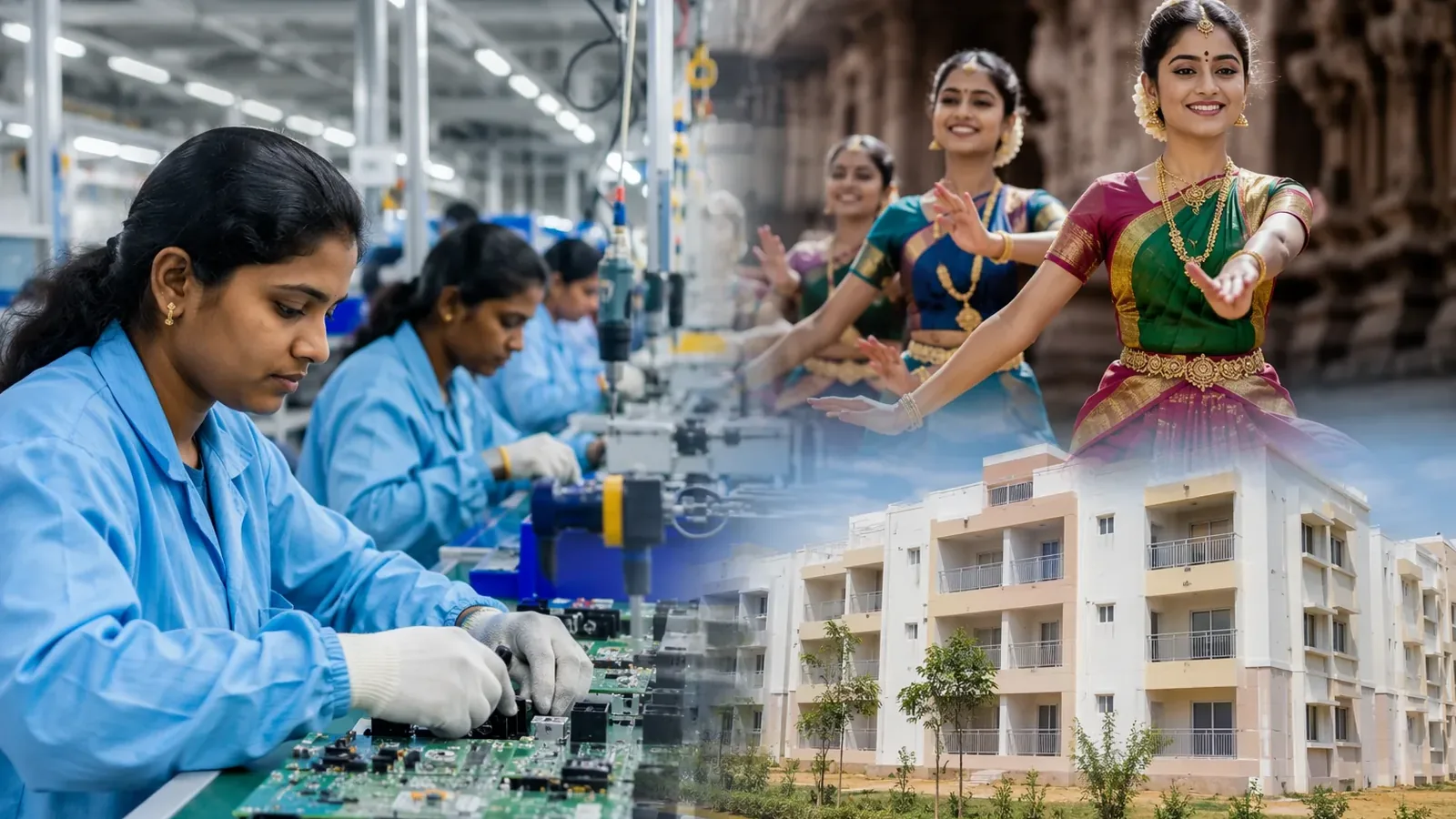
Tamil Nadu continues to set the benchmark for women’s workforce participation in India, leveraging a manufacturing model reminiscent of China's women-led electronics industry. Recent data from the Ministry of Statistics and Programme Implementation (MoSPI) highlights the state’s dominance, with Coimbatore and Madurai ranking among the top three cities for female Labour Force Participation Rate (LFPR) in urban India. Coimbatore recorded a 41.3% LFPR, while Madurai stood at 37%, far exceeding the national urban average of 27.7%.
Electronics Manufacturing: Tamil Nadu’s Stronghold
Tamil Nadu’s success is particularly evident in the electronics manufacturing sector. Between 2013-14 and 2023-24, the state’s share of women employed in the manufacture of computers, electronics, and optical products surged from 20% to 43%. This growth contrasts sharply with stagnation in Gujarat (10%) and declines in Maharashtra (24% to 6%) and Karnataka (11% to 8%). Tamil Nadu now accounts for nearly half of all women employed in this sector nationwide, with 14,814 of the total 34,531 workers as of 2023-24.
The state’s commitment to supporting women workers is exemplified by the August 2024 inauguration of a women-only residential complex in Vallam Vadagal, Sriperumbudur. Built by the State Industries Promotion Corporation of Tamil Nadu (SIPCOT) at a cost of ₹706.5 crore, the facility can house 18,720 workers, addressing a key barrier to women’s employment: housing.
Housing as Economic Infrastructure
Tamil Nadu’s innovative approach to housing has been pivotal in attracting and retaining women workers. The Tamil Nadu Working Women’s Hostels Corporation offers two models: large dormitories under SIPCOT and smaller, high-quality Thozhi hostels. Currently, 87% of the 19 Thozhi hostels are occupied, with plans to expand to 46 hostels in two years. This focus on housing as economic infrastructure, rather than welfare, has been instrumental in overcoming the logistical challenges that deter women from joining the workforce.
This strategy mirrors China’s factory town model, where dormitories for migrant workers have powered the nation’s manufacturing dominance. In Tamil Nadu, migrant women workers form a significant part of the labour pool, as evidenced by the state’s 12.1% share in female in-migration for work, the highest among major destination states.
Challenges and Opportunities
Despite its leadership, Tamil Nadu faces challenges in wages and working conditions. Salaried women in Chennai earned an average monthly wage of ₹22,919 in 2025, lower than the urban India average of ₹23,707. Wages in Coimbatore and Madurai were even lower, at ₹19,149 and ₹18,247, respectively. However, wage growth in Tamil Nadu has been robust, rising by 83% between 2013-14 and 2023-24, outpacing the national average of 36%.
The state’s industrial momentum shows no signs of slowing down. Recent agreements include a ₹15,000-crore deal with Vikram Solar for a Battery Energy Storage System manufacturing facility and a ₹1,000-crore expansion by Hitachi. These developments are expected to further boost women’s employment in Tamil Nadu.
Why It Matters
Tamil Nadu’s success in integrating women into its workforce offers a blueprint for other states aiming to enhance female participation in manufacturing. By addressing barriers such as housing and leveraging strategic investments, the state has created an ecosystem conducive to women’s employment. As India seeks to expand its manufacturing base, Tamil Nadu’s model could play a crucial role in shaping a more inclusive industrial landscape.
Source: Indian Express
Frequently asked questions
Which state in India has the highest women's workforce participation?
Tamil Nadu leads India in women's workforce participation, with cities like Coimbatore recording 41.3% female Labour Force Participation Rate (LFPR) and Madurai at 37%, both far exceeding the national urban average of 27.7%.
How has Tamil Nadu's share of women in electronics manufacturing changed?
Tamil Nadu's share of women employed in computer, electronics, and optical product manufacturing surged from 20% to 43% between 2013-14 and 2023-24, now accounting for nearly half of all women employed in this sector nationwide.
What role has housing played in Tamil Nadu's women workforce strategy?
Tamil Nadu built a women-only residential complex in Sriperumbudur (₹706.5 crore, housing 18,720 workers) and operates Thozhi hostels with 87% occupancy rates. Housing is treated as economic infrastructure rather than welfare, addressing a key barrier to women's employment.
How do women's wages in Tamil Nadu compare to the national average?
Salaried women in Chennai earned ₹22,919 monthly in 2025, slightly lower than India's urban average of ₹23,707. However, Tamil Nadu saw 83% wage growth between 2013-14 and 2023-24, outpacing the national average of 36%.
You may also like
 Tamil Nadu
 CM Vijay Gives ₹5.96 Crore Aid To Families Of Police Personnel
 Tamil Nadu
 keeps special officers in charge of rural bodies till April 2027
 Politics
Tamil Nadu guest lecturers await government order for ₹5,000 honorarium hike
 Weather
Assessment flags cyclonic wind, flood risks to telecom towers in Assam, Tamil Nadu
Most read
- 1
Air China Adds Extra Flight for Passengers Stranded in Fuel-Starved Cuba
- 2
Western disturbance to bring rain, hail and strong winds across north India
- 3
Yogi Adityanath Directs No Occupied Houses Be Demolished for Achhalda Bridge
- 4
Gwalior Temple Truck Crash Kills 12, Injures 28-29 Devotees During Navratri
- 5
Schools Shut in Five Tamil Nadu Districts, Including Chennai, Amid Heavy Rain
Comments
No comments yet. Be the first to comment.