
Swiss researchers develop carbon-capturing beads from dairy and tofu waste
Swiss researchers find that dairy and tofu waste can effectively capture CO2, outperforming existing technologies in carbon removal.

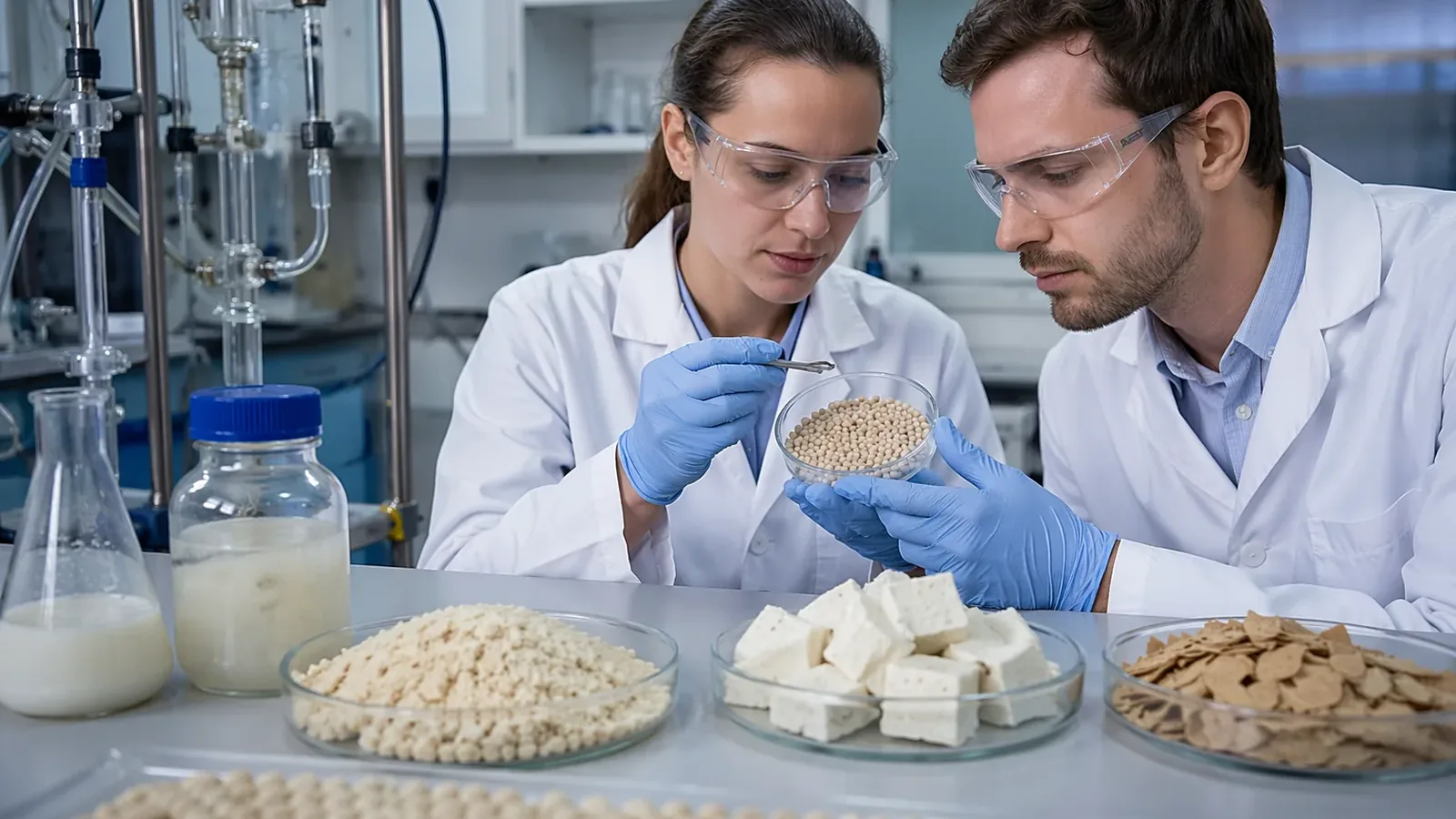
Dairy and Tofu Waste Could Help Capture Carbon, Say Swiss Researchers
Protein-rich waste from dairy and tofu production could be transformed into an innovative solution for capturing carbon dioxide from the atmosphere, according to researchers at ETH Zurich. The team has developed a method to extract proteins from these byproducts and combine them with potassium hydroxide to create porous beads capable of trapping CO2.
Dairy and tofu production generates significant amounts of protein-rich liquid waste, much of which is discarded rather than reused in food manufacturing. The process of removing carbon dioxide from the air, known as Direct Air Capture (DAC), has been a focus of global climate efforts. ETH Zurich researchers, led by materials scientist Raffaele Mezzenga, published their findings in the journal Proceedings of the National Academy of Sciences (PNAS).
The study revealed that the carbon-capturing beads outperformed existing DAC technologies in laboratory tests. The beads work by leveraging a chemical reaction: when exposed to air, the potassium hydroxide within them reacts with carbon dioxide, converting it into hydrogen carbonate and effectively removing CO2 from the atmosphere.
The material, described as a sponge-like substance, can absorb substantial amounts of CO2 and can be reused up to 30 times without significant loss of efficiency. During testing, one gram of the protein-based beads captured 97 milligrams of CO2, suggesting that one kilogram of the material could theoretically remove nearly 100 grams of CO2.
This new approach exceeds the efficiency of conventional DAC technologies by 10 to 50 percent, offering a promising advancement in the fight against climate change. However, DAC remains an energy-intensive and costly process, presenting challenges for large-scale implementation.
ETH Zurich has been at the forefront of DAC innovation, with its spin-off company Climeworks being among the first to commercialize the technology. As the Intergovernmental Panel on Climate Change (IPCC) emphasizes the need for technologies capable of removing billions of tons of atmospheric carbon dioxide, advancements like these could play a crucial role in global climate mitigation efforts.
Frequently asked questions
What are the carbon-capturing beads made from?
The beads are made by extracting proteins from dairy and tofu production waste and combining them with potassium hydroxide to create porous, sponge-like beads.
How effective are these beads at capturing carbon dioxide?
One gram of the protein-based beads captured 97 milligrams of CO2 in testing, meaning one kilogram could theoretically remove nearly 100 grams of CO2. The beads outperform conventional Direct Air Capture technologies by 10 to 50 percent.
How many times can the beads be reused?
The beads can be reused up to 30 times without significant loss of efficiency.
Who developed this technology?
Researchers at ETH Zurich, led by materials scientist Raffaele Mezzenga, developed the technology. Their findings were published in the Proceedings of the National Academy of Sciences (PNAS).
You may also like
 National
Shravasti celebrates 80th Independence Day with focus on environmental conservation
 National
Saurabh Balmiki aims to plant 20,000 trees in Lodha
 National
Graduates Urged to Embrace Ethics and Sustainability in Architecture
 Politics
Ludhiana Launches ₹5 Crore Project to Combat Urban Heat Island Effect
Most read
- 1
Air China Adds Extra Flight for Passengers Stranded in Fuel-Starved Cuba
- 2
Western disturbance to bring rain, hail and strong winds across north India
- 3
Yogi Adityanath Directs No Occupied Houses Be Demolished for Achhalda Bridge
- 4
Gwalior Temple Truck Crash Kills 12, Injures 28-29 Devotees During Navratri
- 5
Schools Shut in Five Tamil Nadu Districts, Including Chennai, Amid Heavy Rain
Comments
No comments yet. Be the first to comment.