
Supreme Court: RTI Activism Now a Business, Rejects Bail Plea of
The Supreme Court has termed RTI activism as a business while rejecting the anticipatory bail plea of activists Rakesh Behl and Rajiv Kumar. Both are accused of obstructing road construction in Punjab's Gurdaspur and intimidating workers at the site.


The Supreme Court has stated that RTI activism has turned into a business, as it rejected the anticipatory bail plea of RTI activists Rakesh Behl and Rajiv Kumar. The duo is accused of obstructing road construction work in Gurdaspur, Punjab. According to the FIR, they allegedly intimidated workers and supervisors at the construction site. The case was heard on Monday by a bench comprising Justice Sandeep Mehta and Justice Vijay Bishnoi. Justice Bishnoi questioned the authority of the activists, asking, "Who are you to oversee the construction of these roads? What authority do you have? Who granted you these rights?"
Earlier, the Punjab-Haryana High Court had denied anticipatory bail to the two activists on May 14. RTI activism, which involves using the Right to Information Act to bring transparency in government operations and expose corruption, has seen misuse in some cases, with individuals reportedly using it to intimidate or blackmail officials.
Separately, the Supreme Court had commented on May 5 that Public Interest Litigation (PIL) has increasingly become a tool for private, publicity, monetary, and political interests rather than serving public welfare. The court criticized the misuse of legal processes in a 2006 PIL filed by the Indian Young Lawyers Association challenging restrictions on women’s entry into Kerala’s Sabarimala temple.
Key Points
- Supreme Court rejected anticipatory bail plea of RTI activists Rakesh Behl and Rajiv Kumar.
- Both accused of obstructing road construction in Gurdaspur, Punjab.
- Justice Bishnoi questioned the activists' authority to oversee construction.
- Punjab-Haryana High Court had earlier denied bail on May 14.
- Supreme Court highlighted misuse of PILs for private and political interests.
Frequently asked questions
Why did the Supreme Court reject the bail plea of RTI activists Rakesh Behl and Rajiv Kumar?
The Supreme Court rejected their anticipatory bail plea because they are accused of obstructing road construction work in Gurdaspur, Punjab, and allegedly intimidating workers and supervisors at the construction site. The court also expressed concern that RTI activism has turned into a business.
What charges are the RTI activists facing?
According to the FIR, Rakesh Behl and Rajiv Kumar are accused of obstructing road construction work in Gurdaspur, Punjab, and intimidating workers and supervisors at the construction site.
What did Justice Bishnoi question about the activists' authority?
Justice Bishnoi questioned who gave the activists the authority to oversee construction of roads, asking 'Who are you to oversee the construction of these roads? What authority do you have? Who granted you these rights?'
How has the Supreme Court characterized the misuse of Public Interest Litigation?
The Supreme Court stated that Public Interest Litigation (PIL) has increasingly become a tool for private, publicity, monetary, and political interests rather than serving public welfare, citing a 2006 PIL filed against restrictions on women's entry into Kerala's Sabarimala temple as an example.
You may also like
 Religious
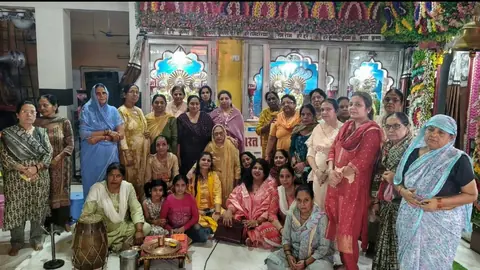
Devotees Gather for Maa Bhawani Kirtan and Worship in Chandausi
 Sports
Shubman Gill Added To Punjab Squad For Ranji Clash Against Chhattisgarh
 Politics
Pargat Singh Takes Charge as Punjab Congress Chief, Says Party Is United
 Politics
Punjab Has 31,370 Vacant Teacher Posts, Education Minister Tells Assembly
Most read
- 1
Air China Adds Extra Flight for Passengers Stranded in Fuel-Starved Cuba
- 2
Western disturbance to bring rain, hail and strong winds across north India
- 3
Yogi Adityanath Directs No Occupied Houses Be Demolished for Achhalda Bridge
- 4
Gwalior Temple Truck Crash Kills 12, Injures 28-29 Devotees During Navratri
- 5
Schools Shut in Five Tamil Nadu Districts, Including Chennai, Amid Heavy Rain
Comments
No comments yet. Be the first to comment.