
Shravasti Imposes Section 163 Restrictions From October 10 To November 28
An order issued by the Court of the District Magistrate, Shravasti, has imposed prohibitory restrictions under Section 163 of the Bharatiya Nagarik Suraksha Sanhita, 2023.

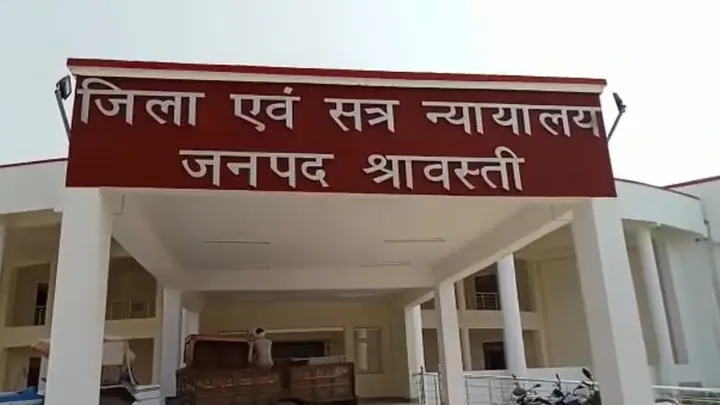
An order issued by the Court of the District Magistrate, Shravasti, has imposed prohibitory restrictions under Section 163 of the Bharatiya Nagarik Suraksha Sanhita, 2023. The order will remain in force across the limits of Shravasti from 10.10.2026 to 28.11.2026 and will apply to people residing in the district as well as those entering it.
The order has been issued in view of several festivals and commemorative occasions scheduled in the district. These include Maharaja Agrasen Jayanti on 11-10-2026, Dussehra (Mahashtami) on 19-10-2026, Dussehra/Vijay Dashami on 20-10-2026, and Maharshi Valmiki Jayanti on 26-10-2026.
The list also includes the birth anniversaries of Sardar Vallabh Bhai Patel and Acharya Narendra Dev on 31-10-2026, Narak Chaturdashi on 05-11-2026, Diwali on 08-11-2026, Govardhan Puja on 09.11.2026, and Bhai Dooj/Chitragupta Jayanti on 11.11.2026.
Chhath Puja will be observed on 15.11.2026, followed by Veerangana Uda Devi Shaheed Diwas on 16.11.2026. Guru Nanak Jayanti/Kartik Purnima will be observed on 24.11.2026.
The order says that Shravasti is extremely sensitive from a communal point of view. It has been issued to maintain communal harmony, peace and public safety in the district and to ensure that the festivals and other occasions are observed and conducted in a peaceful environment.
District Magistrate Annapurna Garg has exercised the powers given under Section 163 of the Bharatiya Nagarik Suraksha Sanhita, 2023, to issue the restrictions. The order contains 31 provisions covering weapons, explosives, public gatherings, processions, sound systems, inflammatory material, forced shutdowns, public property, political displays and examinations.
Under the first restriction, no person or group in the district may move around carrying a lathi, stick, firearm, deadly weapon, explosive substance, prohibited knife or any other object that can be used to strike or attack. The restriction will not apply to sticks being used for support by elderly, disabled, helpless or sick people. Police officers and personnel deployed on duty will also remain exempt from this restriction.
No person or group may bring explosive material to any place or enter the district boundaries with such material. The order separately prohibits the spreading of rumours within the district. It also bars the distribution of any leaflet or handbill that may create excitement or provocation.
The order prohibits any person or group from using sound-amplification equipment at any place for publicity or announcements that may create, or have the possibility of creating, caste-based or communal tension. Written or oral statements and messages that may create communal tension or enmity, or have the possibility of doing so, may not be publicised or circulated.
The use of sound-amplifying equipment, including loudspeakers and DJs, has also been prohibited. No person or group may write hateful slogans or words on a wall if they hurt the feelings of any person or community or create excitement among them. No one may encourage another person to do so.
No person or group may organise a meeting, panchayat, rally, staging of a play or any similar programme at a public place without obtaining prior permission from the concerned Sub-Divisional Magistrate. Public gatherings and programmes therefore require permission from the designated magistrate before they are held.
The order also places restrictions on religious processions. Apart from events conducted in the traditional manner, no person or group may take out a religious procession at any other place without prior permission. No existing procession may be converted into a different form without prior permission. Such programmes may not be organised at any place where public movement is obstructed or is likely to be obstructed.
No programme may be organised in a closed place if it does not have proper entry and exit routes for the community or people who gather there. The order requires the organisers of any gathering to ensure that people can enter and leave through suitable passages.
The collection or storage of acid or bottles containing beverages that could cause injury if shaken, broken or thrown at a person is also restricted. No person or group may collect or arrange for the collection of such bottles except at the specified place or shop.
No person or group may organise a procession, sit-in protest or demonstration within the district without prior permission from the competent authority. For this purpose, permission from the concerned Sub-Divisional Magistrate must be obtained at least 48 hours in advance.
The order also prohibits the forced collection of donations. No person or group may forcibly collect contributions from any person, passer-by or vehicle. During the festivals covered by the order, no person or group may carry out any activity that adversely affects the communal or social environment or affects the maintenance of peace.
A separate provision states that no person or group may do anything that damages the communal environment or creates an atmosphere of tension. The order repeats this restriction in another provision, making clear that activities likely to worsen the communal atmosphere or create tension are not permitted.
Within the limits of Shravasti district, five or more people may not gather at any place. However, this restriction will not apply to traditional places of worship, fairs, funeral processions, wedding processions and similar ceremonies mentioned in the order.
If a person holding an arms licence fears for their life and feels unsafe, they must submit an application to the competent authority to obtain a permission letter for carrying their licensed weapon with them. The weapon may be carried for that purpose only after permission is obtained according to the prescribed process.
No new tradition may be started by any person, community or organisation for the purpose of gathering a community. The order also prohibits any person or group from forcibly pressuring someone to close a shop, office, business establishment or transport service. No person or group may itself attempt to force such a closure.
The use of slogans or abusive words that may spread excitement among the general public, any particular class or any community is prohibited. The order further states that no person may damage bus stands, government buildings, government offices or any other public property. No one may affect buses, traffic or other communication resources.
The order specifically refers to the magistrates mentioned in paragraph 12. No person or group may use a sound-amplification device or sound box at any place without obtaining permission from those magistrates. Such equipment must also not be kept in an unsafe manner in advance at religious or other places where anti-social elements or their gangs could use it to spread religious or social hatred, frenzy, enmity or violence.
The use of sound-amplification equipment, loudspeakers, sound boxes, DJs or any other system used to address the public is also regulated by time. From 6 a.m. to 10 p.m., no person or group may use such equipment at any public place or any other place without prior permission from the competent magistrate.
From 10 p.m. to 6 a.m., the use of sound-amplification equipment will not be allowed because the Hon’ble Supreme Court has completely prohibited the use of such equipment during those hours. The order further states that the sound level of such equipment must not exceed the prescribed standard mentioned in the Noise Pollution (Regulation and Control) Rules, 2000.
The restriction on religious processions is repeated in another provision. It states that, apart from traditionally conducted events, no religious procession may be taken out at any other place without prior permission, and no existing procession may be converted into another form. Such a programme may not be held at a place where public movement is obstructed or is likely to be obstructed.
No person or group may create any disturbance in the work of personnel deployed for examinations. The order also prohibits any act intended to stop an examinee from appearing in an examination, or any act that may result in the examinee being deprived of the opportunity to take the examination.
No person or group may create any kind of obstruction or interference in any examination-related proceedings or arrangements. The provisions therefore cover both the work of personnel deployed for examinations and the arrangements connected with the examination process.
The order prohibits any person, political party or supporter of a political party from putting up a toran gate or entrance gate on any public place or private property. It also prohibits wall writing, the pasting of posters or pamphlets, and the installation or display of cut-outs, banners, hoardings and flags on government property.
The order’s definition of a public place includes government land, buildings, boundary walls, signboards, P.W.D. mile stones, traffic signboards and electric poles. These places are included for the purpose of the restriction on wall writing and other displays.
Wall writing, pasting of posters and the installation of other material that temporarily or permanently defaces property are prohibited. The order also bars the installation at the said meeting place of publicity material that cannot be easily removed.
The order states that no person or group may do anything that prevents an examinee from taking an examination or creates the possibility of the examinee being unable to appear in it. It also prohibits any interference or obstruction in examination-related proceedings and arrangements.
The District Magistrate has stated that the order needs to be enforced immediately. Since it is not possible to hear all concerned parties, the order has been passed ex parte. It will apply to persons living within the district and to those entering Shravasti during the period from 10.10.2026 to 28.11.2026.
In unavoidable circumstances, any Executive Magistrate posted in the district may relax any of the restrictions listed in the order, or one particular restriction, where considered necessary. The order states that violation of the order, or any part of it, will be punishable under Section 223 of the Bharatiya Nyaya Sanhita, 2023.
Frequently asked questions
When will the Section 163 restrictions remain in force in Shravasti?
The restrictions will remain in force from October 10, 2026, to November 28, 2026.
Why were the restrictions imposed in Shravasti?
They were imposed to maintain communal harmony, peace and public safety during several festivals and commemorative occasions.
Who issued the restrictions under Section 163?
District Magistrate Annapurna Garg issued the restrictions under Section 163 of the Bharatiya Nagarik Suraksha Sanhita, 2023.
What does the first restriction prohibit?
It prohibits people and groups from carrying lathis, sticks, firearms, deadly weapons, explosives, prohibited knives or other objects that can be used to attack.
Who is exempt from the restriction on carrying sticks?
Elderly, disabled, helpless or sick people using sticks for support, as well as police personnel deployed on duty, are exempt.
You may also like
 National
Shravasti Administration Completes Preparations for Safe, Peaceful Durga Idol Immersion
 Religious
Grand Dussehra Bhandara Draws Hundreds of Devotees in Shravasti
 Religious
Navratri Maha Aarti Draws Devotees at Shravasti’s Navdurga Pandal
 Politics
BJP Ticket Aspirant Honours 165 School Sanitation Workers in Shravasti
Most read
- 1
Air China Adds Extra Flight for Passengers Stranded in Fuel-Starved Cuba
- 2
Western disturbance to bring rain, hail and strong winds across north India
- 3
Yogi Adityanath Directs No Occupied Houses Be Demolished for Achhalda Bridge
- 4
Gwalior Temple Truck Crash Kills 12, Injures 28-29 Devotees During Navratri
- 5
Heavy Rain Waterlogs Bengaluru, Snarls Traffic; Ride-Hailing Fares Surge
Comments
No comments yet. Be the first to comment.