
Punjab Has 31,370 Vacant Teacher Posts, Education Minister Tells Assembly
A rebel AAP MLA's challenge over teacher shortages puts Punjab's education claims under scrutiny as 31,370 posts remain vacant.

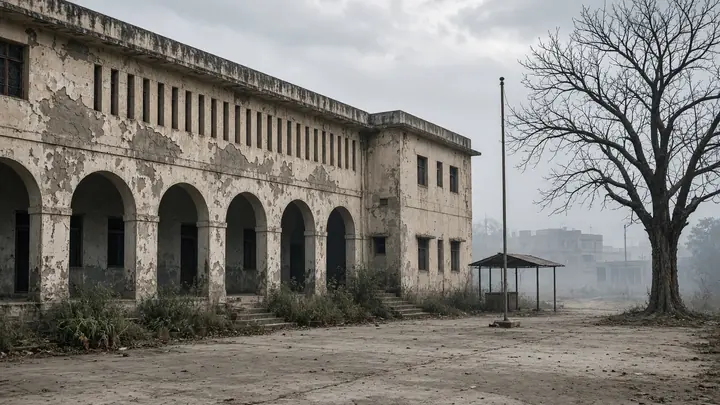
Rebel AAP MLA’s poser on ‘education revolution’ in Punjab: a reality check
Punjab’s education debate has acquired a sharper staffing focus after Education Minister Harjot Singh Bains told the Punjab Assembly in August 2026 that 31,370 teacher posts were vacant across cadres. The statement came amid a controversy involving Aam Aadmi Party MLA Sukhveer Singh Maiserkhana, who had gone public with allegations of teacher shortages in government schools in Maur constituency.
The AAP suspended Maiserkhana for alleged “anti-party activities and indiscipline”. The Opposition used the episode to question the government’s education record. But the dispute raises a question that goes beyond the party’s political fallout: what has Punjab’s much-publicised education revolution changed in classrooms?
Punjab’s learning record has a longer history
The government has a record it can point to. NITI Aayog’s May 2026 report, School Education System in India: Temporal Analysis and Policy Roadmap for Quality Enhancement, identified Punjab among the stronger performers in learning outcomes. The government’s response to the report celebrated the finding as evidence of reform.
The report is based on several datasets, including PARAKH Rashtriya Sarvekshan 2024, UDISE+ and ASER. It is therefore not simply a league table ranking States against one another.
Punjab’s performance also has a history that predates the present government. The State recorded the highest numerical score in the Union Education Ministry’s Performance Grading Index for 2019-20, which was released in June 2021, before AAP came to power in 2022. Punjab shared the index’s highest grade, A++, with four other States and Union Territories.
That earlier record matters when the government’s current education claims are assessed. The 2026 NITI Aayog report uses a different framework, so the claim that Punjab moved from 27th to first should not be treated as a like-for-like comparison. Punjab’s progress did not begin with the present government, even though AAP has made school education a central part of its political identity.
AAP’s initiatives have included the Schools of Eminence scheme, teacher training, foundational-learning programmes and larger parent-teacher meetings. These measures have given the government a visible education agenda, but the record needs to be examined through both learning outcomes and the conditions in which teaching takes place.
What the flagship reforms have delivered so far
Under the Schools of Eminence scheme, 118 government schools were selected for upgrading. By March 2025, 14 of these schools had been inaugurated, while work at another 26 was reported to be complete or nearing completion, according to the Schools of Eminence progress report.
Teachers and school leaders have also been sent for training at institutions in Singapore, IIM Ahmedabad and the University of Turku in Finland. Mission Samarth has focused on foundational learning, while mega parent-teacher meetings have sought to involve families more closely in school affairs.
These initiatives have changed the public conversation about government schools. They have also created a set of visible markers for the government’s reform effort: upgraded schools, training programmes, foundational-learning work and larger meetings involving parents.
Their lasting value, however, depends on what happens after the training sessions and inauguration ceremonies are over. The central question is whether these interventions have produced sustained improvements in classroom teaching and learning across the wider government-school system.
The test is not simply how many schools have been selected, how many teachers have been trained or how many meetings have been held. A school needs more than upgraded buildings. It needs teachers who can cover the syllabus, teach the subjects assigned to them and give students regular classroom time.
Regularisation is not the same as filling vacancies
Employment security matters, but regularising existing workers does not automatically fill every vacant post. Punjab’s 2023 measures covered 14,417 contractual employees. A separate framework approved in 2026 concerned 65,048 outsourced workers across departments, including 7,704 in school education.
These were distinct exercises, not a single count of teachers newly recruited into vacant posts. That distinction is important because the number of workers covered by a regularisation or service framework cannot by itself establish whether schools have received teachers for all their sanctioned positions.
The available staffing figures offer a less celebratory view of the system. The Comptroller and Auditor General’s performance audit, Quality of School Education in Punjab, recorded 7,876 vacancies against 55,871 sanctioned Master-cadre posts as of March 2023.
At the Lecturer or Post Graduate Teacher level, covering Classes 11 and 12, 4,403 of 13,904 sanctioned posts were vacant. The audit also found substantial gaps in some subjects.
These audit figures do not establish the current vacancy position. They do show, however, that staffing shortages had been documented well before the latest controversy.
In August 2026, Bains told the Punjab Assembly that 31,370 teacher posts were vacant across cadres. He attributed part of the Master-cadre shortfall to a court stay on promotions. He also said the government intended to fill posts through promotions and recruitment.
The Assembly figure captures vacancies across cadres, while the earlier audit provides a separate historical snapshot of sanctioned posts and vacancies at particular levels. Neither figure, by itself, explains how staffing pressures are distributed between individual schools or subjects.
The pressure is visible at school level
A separate Samagra Shiksha review found that the proportion of government schools with an adverse pupil-teacher ratio rose from 18.6% in 2023, 24 to 19.9% in 2024, 25. The number of single-teacher government primary schools also increased from 1,884 to 2,158 over the same period.
These indicators describe a different part of the system from the State’s learning assessments. They do not cancel out Punjab’s learning gains. They show, instead, that a State can record strong performance in learning outcomes while some schools continue to face staffing pressure.
A State-level assessment records how students perform. It does not tell parents whether their own school has a mathematics teacher or whether classes are routinely being combined because posts remain vacant.
The Annual Status of Education Report, or ASER, 2024 offers another perspective on learning in rural Punjab. It found that 34.2% of Class 3 children could read a Class 2-level text, while 51.1% could solve at least a subtraction problem.
Among Class 5 children, 61.4% could read a Class 2-level text and 48.8% could solve a division problem. Arithmetic improved between 2022 and 2024, while Class 5 reading levels declined.
ASER and PARAKH use different methods. Neither establishes that teacher vacancies caused a particular learning outcome. Read alongside the staffing data, however, they show why no single assessment can tell the whole story of Punjab’s schools.
A strong learning result does not answer every question about classroom access. A vacancy figure does not, on its own, establish that a school is unable to function adequately. Both kinds of evidence are needed to understand whether the reform is reaching children in regular classroom conditions.
What the Maur controversy can, and cannot, show
The dispute involving Maiserkhana brings the larger question down to one school. The Education Minister said more than 90% of teacher posts in the constituency were filled.
At the School of Eminence in Ramnagar, where the MLA’s son studies, the government cited 25 teachers against 30 sanctioned posts. The school was reported to be serving 580 students across 19 sections.
The reported exchange over the MLA’s allegations provides a starting point, not a final verdict. Five vacancies do not automatically mean that the school cannot function adequately.
The more important questions are which posts are vacant, whether essential subjects are affected and how classes are being covered. A school may have an overall staffing figure that appears close to its sanctioned strength while still facing a serious gap in a subject needed by a particular group of students.
The available figures therefore need to be read with care. The constituency-level claim, the staffing position at the Ramnagar school and the State-wide Assembly figure refer to different levels of the system. They cannot be treated as interchangeable evidence.
Transparency is the missing link
The controversy also points to a problem of public accountability. A complete, current and publicly accessible record of school-wise staffing would allow parents and elected representatives to assess claims about teacher shortages against official data.
Such a record would need to publish sanctioned posts, teachers in position, subject-wise vacancies, enrolment and the number of sections. This would make it easier to identify where staffing gaps are most acute and whether essential subjects are adequately covered.
It would also help determine whether the benefits of the Schools of Eminence programme extend to schools beyond the flagship list. The scheme has selected 118 schools for upgrading, but the broader test of the education system is whether children in government schools can access regular teaching and adequate subject coverage beyond those selected institutions.
Punjab’s achievements deserve recognition, but its earlier progress belongs in the story too. The State’s learning performance cannot be credited entirely to the present government when the highest numerical score in the 2019-20 Performance Grading Index came before AAP came to power in 2022.
The rankings do not prove that staffing problems have been solved. The vacancies do not establish that the reforms have failed. The more useful test is whether children across the State can count on regular teaching, adequate subject coverage and the same basic conditions for learning, regardless of which government school they attend.
Rahul Verma is an independent researcher and sociology educator.
Source: The Hindu
Frequently asked questions
How many teacher posts were vacant in Punjab according to the Education Minister?
Education Minister Harjot Singh Bains told the Punjab Assembly that 31,370 teacher posts were vacant across cadres.
Which MLA raised concerns about teacher shortages in Punjab government schools?
AAP MLA Sukhveer Singh Maiserkhana raised allegations of teacher shortages in government schools in the Maur constituency.
What did the NITI Aayog’s May 2026 report say about Punjab’s education performance?
The report identified Punjab as one of the stronger-performing States in learning outcomes.
How many government schools were selected under Punjab’s Schools of Eminence scheme?
A total of 118 government schools were selected for upgrading under the Schools of Eminence scheme.
You may also like
 Religious
Devotees Gather for Maa Bhawani Kirtan and Worship in Chandausi
 Sports
Shubman Gill Added To Punjab Squad For Ranji Clash Against Chhattisgarh
 Politics
Pargat Singh Takes Charge as Punjab Congress Chief, Says Party Is United
 Politics
AAP's drug war promises delayed six times, Delhi CM alleges ahead of BJP yatra
Most read
- 1
Air China Adds Extra Flight for Passengers Stranded in Fuel-Starved Cuba
- 2
Western disturbance to bring rain, hail and strong winds across north India
- 3
Yogi Adityanath Directs No Occupied Houses Be Demolished for Achhalda Bridge
- 4
Gwalior Temple Truck Crash Kills 12, Injures 28-29 Devotees During Navratri
- 5
Heavy Rain Waterlogs Bengaluru, Snarls Traffic; Ride-Hailing Fares Surge
Comments
No comments yet. Be the first to comment.