
Nihang Sikhs: A Living Legacy of Sikh Warrior Tradition
Explore the unique legacy of Nihang Sikhs, guardians of Sikhism's warrior tradition, known for their martial prowess and spiritual heritage.

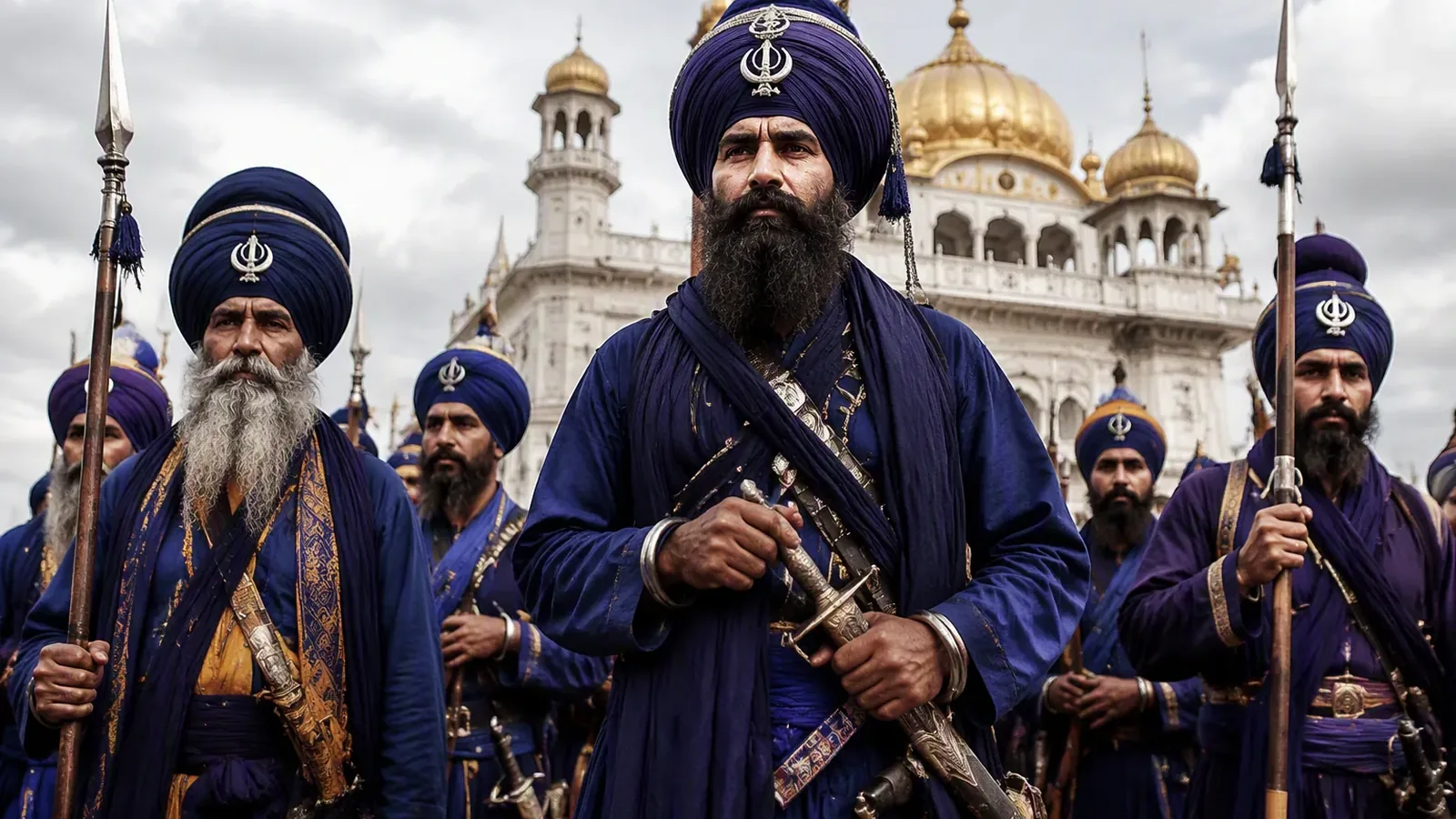
The Nihang Sikhs, with their striking blue robes, towering turbans adorned with steel ornaments, and traditional weapons, are a living embodiment of Sikhism's martial and spiritual heritage. Their unique appearance and practices have recently drawn attention following an incident at the Mata Sahib Devan Ji Gurdwara in Nanded, Maharashtra, where Shiromani Akali Dal leader Sukhbir Singh Badal was attacked by a man identified as a Nihang. The event has once again spotlighted this distinctive community and its historical significance.
---
Guardians of the Khalsa Panth
The Nihang tradition traces its origins to the creation of the Khalsa Panth by Guru Gobind Singh in 1699. Known as Guru ki fauj or the "Guru's army," they were established to protect Sikh communities during a time of intense persecution under Mughal and Afghan rulers. The name "Nihang" itself signifies fearlessness and detachment, with some interpretations linking it to the Persian word nahang (crocodile), symbolizing toughness and ferocity.
Over time, their martial prowess became integral to Sikh military forces, including the misls and Maharaja Ranjit Singh's army. Though their battlefield role diminished with the end of those conflicts, the Nihangs preserved their warrior ethos through rigorous training in weaponry, horsemanship, and physical endurance.
---
Decentralized and Mobile
Today, the Nihangs are not a standing army but custodians of a religious and martial tradition. Their community is highly decentralized, with no single governing body. Historically divided into two major factions, Baba Budha Dal and Taruna Dal, the Nihangs have since fragmented into over 30 smaller groups. Their semi-nomadic lifestyle includes an annual chalda vaheer (travelling band) that connects them to key Sikh religious sites like Anandpur Sahib, Amritsar, and Hazur Sahib in Nanded.
This mobility is not just practical but deeply symbolic, reinforcing their ties to Sikh history and providing opportunities to train, worship, and showcase their martial skills. Events like Hola Mohalla at Anandpur Sahib are a vivid display of their sant-sipahi (saint-soldier) ideal, featuring Gatka demonstrations, mock battles, and traditional rituals.
---
A Rigorous Way of Life
Being a Nihang involves more than donning blue robes and carrying weapons. The tradition demands strict adherence to bani (spiritual wisdom) and bana (attire), daily prayers, meditation, and mastery of Sikh scriptures. Physical training in Shastar Vidya (Sikh martial arts), horse-riding, and seva (selfless service) are equally important. Some Nihangs lead highly disciplined lives within their factions, while others balance family and work with their spiritual and martial commitments.
Their institutions are sustained through offerings from devotees and the management of religious and agricultural resources. Many groups maintain gurdwaras, camps, and educational centers, blending their semi-nomadic traditions with a rooted presence in Sikh religious life.
---
A Complex Modern Identity
The recent incident in Nanded underscores the challenges of understanding the Nihangs in contemporary contexts. Their decentralized structure means that the actions of one group or individual do not represent the entire community. Hazur Sahib, where the attack occurred, holds deep historical significance as the site where Guru Gobind Singh ended the line of human Gurus and bestowed eternal Guruship upon the Guru Granth Sahib. The presence of a Nihang-managed gurdwara here reflects their enduring institutional role.
While the era of armed conflict has passed, the Nihangs continue to embody a warrior vocabulary forged in times of persecution. They remain a living religious order, balancing their martial heritage with spiritual practices, and their identity endures as a testament to Sikhism's resilience.
Source: The Hindu
Frequently asked questions
What is the origin of the Nihang Sikhs?
The Nihang tradition traces its origins to the creation of the Khalsa Panth by Guru Gobind Singh in 1699.
What does the name 'Nihang' signify?
The name 'Nihang' signifies fearlessness and detachment, and is linked to the Persian word 'nahang' meaning crocodile, symbolizing toughness and ferocity.
How is the Nihang community organized today?
The Nihangs are highly decentralized with no single governing body, historically divided into two major factions, Baba Budha Dal and Taruna Dal, and now fragmented into over 30 smaller groups.
What does being a Nihang involve?
Being a Nihang involves strict adherence to spiritual wisdom and attire, daily prayers, meditation, mastery of Sikh scriptures, and physical training in Sikh martial arts.
What events showcase the Nihang's martial skills?
Events like Hola Mohalla at Anandpur Sahib feature Gatka demonstrations, mock battles, and traditional rituals, showcasing their saint-soldier ideal.
You may also like
 National
Science and spirituality exhibition draws 5,000 visitors in Guntur
 Religious
Shri Nagchandreshwar Temple opens for 24 hours during Nag Panchami
 Religious
Hundreds gather for rituals at Baba Jharkhandi Nath Temple during Sawan
 Health
Varanasi's "Subah-e-Banaras" yoga program transforms daily wellness routines
Most read
- 1
Air China Adds Extra Flight for Passengers Stranded in Fuel-Starved Cuba
- 2
Western disturbance to bring rain, hail and strong winds across north India
- 3
Yogi Adityanath Directs No Occupied Houses Be Demolished for Achhalda Bridge
- 4
Schools Shut in Five Tamil Nadu Districts, Including Chennai, Amid Heavy Rain
- 5
Gwalior Temple Truck Crash Kills 12, Injures 28-29 Devotees During Navratri
Comments
No comments yet. Be the first to comment.