
Neemuch's Bhadwa Mata Temple Draws Devotees Over Stepwell Healing Belief
In Neemuch district of Madhya Pradesh, the Mahamaya Bhadwa Mata Temple is known as “Malwa ki Vaishno Devi” and “Arogya Teerth”.

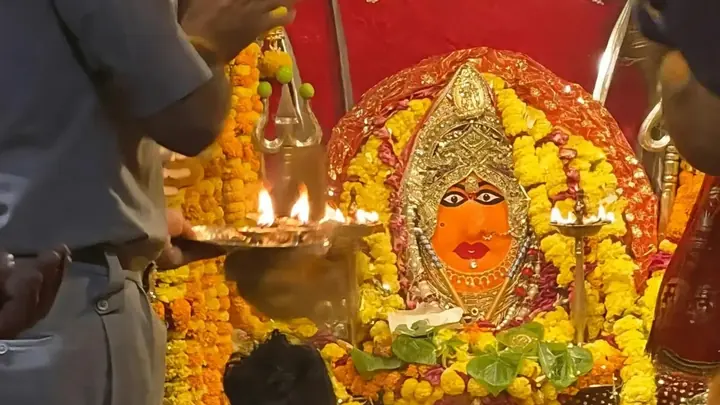
In Neemuch district of Madhya Pradesh, the Mahamaya Bhadwa Mata Temple is known as “Malwa ki Vaishno Devi” and “Arogya Teerth”. Located in Bhadwa village, the temple is regarded as one of Malwa’s important religious centres. Devotees come here not only with hopes that their wishes will be fulfilled, but also with prayers for better health.
The temple complex has an ancient stepwell. There is a religious belief that bathing in the water of this stepwell and having darshan of the goddess can benefit people suffering from paralysis, skin diseases and other illnesses. Because of this belief, devotees visit the temple not only from Madhya Pradesh, but also from Rajasthan and nearby areas.
The belief related to the stepwell’s water is religious. Available information does not establish any scientific evidence that its water can cure paralysis or epilepsy. Paralysis and epilepsy are serious illnesses, and medical treatment should continue in such cases. A visit to the temple is a matter of faith and should not be treated as a substitute for a doctor’s advice, medicines or rehabilitation treatment.
Several folk stories are associated with the origin of the Bhadwa Mata Temple. According to one belief, the goddess appeared in a dream to Pandit Pitambardas. She told him that her idol was buried in the ground near the roots of an arani tree in the village. The goddess instructed him to take out the idol and install it.
After this, excavation was carried out at the place mentioned in the dream. An idol of the goddess was found there, and it was installed. Worship and prayers then began at the site.
Another folk story is connected with the ancestors of the Bhil community. According to this account, two brothers named Dhannaji and Rupaji came to this region from Rajasthan. Dhannaji settled in Bhadwa village, while Rupaji went to the nearby village of Sawan.
In one episode from this story, Rupaji was sitting under an arani tree. It is believed that the goddess appeared to him in a dream that night and told him about her idol. The idol was then taken out and installed.
Different versions of these stories are in circulation. However, both accounts highlight two central elements: the discovery of the goddess’s idol under an arani tree and the goddess appearing in a dream.
One of the distinctive features of the Bhadwa Mata Temple is its tradition of worship. Members of Bhil community families have served as priests at the temple for generations. Local tradition and commonly cited historical accounts also mention Maharana Mokal of Mewar.
It is believed that Maharana Mokal granted the Bhil community the right to worship the goddess around Vikram Samvat 1482. There are different beliefs and historical claims among various communities about the temple’s worship tradition. Even today, priests from the Bhil community continue the tradition of conducting prayers and worship at the temple.
This tradition connects the temple with the cultural and social heritage of the region. The role of Bhil community priests remains an important part of the temple’s identity and its long-standing practices.
Inside the sanctum sanctorum, the idol of Mahamaya Bhadwa Mata is seated on a silver throne. Idols representing the nine forms of Navdurga have also been installed around the goddess. These forms are Brahmani, Maheshwari, Kaumari, Vaishnavi, Varahi, Narasimhi, Indrani, Shivdooti and Chamunda.
The temple complex also has idols and shrines connected with Lord Ganesha, Hanuman, Shiva-Parvati and Lord Vishnu. An akhand jyoti, or continuously burning lamp, is kept in front of the goddess. During Navratri, the goddess is given special adornment, and the number of devotees at the temple increases.
The ancient stepwell inside the temple complex is among its most discussed features. It is called “Arogya Teerth”, or a place associated with health and well-being. According to religious belief, devotees can get relief from illnesses by bathing in the stepwell’s water, having darshan of the goddess, applying vibhuti and completing a circumambulation of the temple.
Many people suffering from paralysis and physical disabilities stay at the temple for several days. Some devotees also carry the stepwell’s water back with them. The practice of applying vibhuti to the affected part of the body and tying a kalawa, or sacred thread, is also followed.
Devotees connect these religious practices with the blessings of the goddess. For people who come here, the temple is not only a place for darshan. It is also a centre of hope, prayer and mental support.
The health-related beliefs connected with the temple are a part of faith. They do not replace medical care. Delaying treatment for paralysis or epilepsy can be harmful. People suffering from these conditions should continue with the advice of doctors, prescribed medicines and rehabilitation treatment, even if they visit the temple for darshan.
Special fairs are organised at the Bhadwa Mata Temple during Chaitra Navratri and Sharadiya Navratri. Devotees arrive from distant places during these periods to have darshan of the goddess. Special prayers and a havan are organised on the occasion of Ashtami.
The number of devotees rises considerably during Navratri compared with normal days. The temple management arranges accommodation, food and other basic facilities for visitors. Dharamshalas and an annakshetra are also run at the temple.
Because of the large crowds during Navratri, planning the journey in advance is convenient for devotees. Chaitra and Sharadiya Navratri are considered the main occasions for visiting the temple.
The popularity of Bhadwa Mata has not remained limited to religious events. An effort was also made to take the glory of the goddess to people through the local language and cinema. Poet and senior politician Balkavi Bairagi made the Malvi-language film ‘Jai Bhadwa Mata’.
The film expressed the region’s culture, folk beliefs and devotion towards the goddess. The folk song ‘Malwa ki Rani Tharo Amrit Pani’, associated with the temple, has also remained popular among devotees. The song presents the water of the stepwell as a symbol of the goddess’s blessings and the faith of the people.
The Bhadwa Mata Temple is situated in Bhadwa village, Neemuch, Madhya Pradesh. It is approximately 18, 22 kilometres from Neemuch city and can be reached by road. The nearest major railway station is Neemuch.
The temple represents a meeting point of faith, tradition and hope. Its folk stories, the Bhil community’s priestly tradition, the idols of Navdurga, the Arogya Teerth stepwell and the cultural memory associated with a Malvi film give it a distinctive identity.
Devotees come to the goddess’s darbar with their wishes and seek her blessings. The strongest foundation of Bhadwa Mata’s reputation is the deep and unwavering faith of the people who visit the temple.
The traditions associated with the temple also show how religious places can become centres of collective memory and folk culture. For many visitors, the temple remains a source of support during difficult times, alongside being a place of worship and prayer.
Frequently asked questions
Where is the Mahamaya Bhadwa Mata Temple located?
It is located in Bhadwa village in Neemuch district of Madhya Pradesh.
Why do devotees visit the Bhadwa Mata Temple's stepwell?
A religious belief holds that bathing in its water and having darshan of the goddess may benefit people with paralysis, skin diseases and other illnesses.
Is there scientific evidence that the stepwell water cures illnesses?
No. The available information does not establish scientific evidence that the water can cure paralysis or epilepsy, and medical treatment should continue.
What is the temple's origin story?
Folk stories say the goddess appeared in a dream and revealed that her idol was buried near the roots of an arani tree, where it was later found and installed.
Who traditionally serves as priests at the temple?
Members of Bhil community families have served as priests there for generations.
You may also like
 Politics
Congress Leader Claims Jitu Patwari Will Fly MP’s New ₹250-Crore Jet
 Viral
MP reports fever patients; concerns over antibiotic self-medication
 Madhya Pradesh
 TET Gets Just 34,200 Applications From 1.5 Lakh Eligible Teachers
 Madhya Pradesh
 Government's New Bombardier Challenger 3500 Jet Reaches Bhopal
Most read
- 1
Air China Adds Extra Flight for Passengers Stranded in Fuel-Starved Cuba
- 2
Western disturbance to bring rain, hail and strong winds across north India
- 3
Yogi Adityanath Directs No Occupied Houses Be Demolished for Achhalda Bridge
- 4
Gwalior Temple Truck Crash Kills 12, Injures 28-29 Devotees During Navratri
- 5
Heavy Rain Waterlogs Bengaluru, Snarls Traffic; Ride-Hailing Fares Surge
Comments
No comments yet. Be the first to comment.