
Narottam Mishra Questions Exploitation Allegations Against Brahmins At Shivpuri Event
Former Madhya Pradesh Home Minister and senior BJP leader Dr. Narottam Mishra has raised a sharp question over allegations of exploitation levelled against Brahmins, saying at a Brahmin community

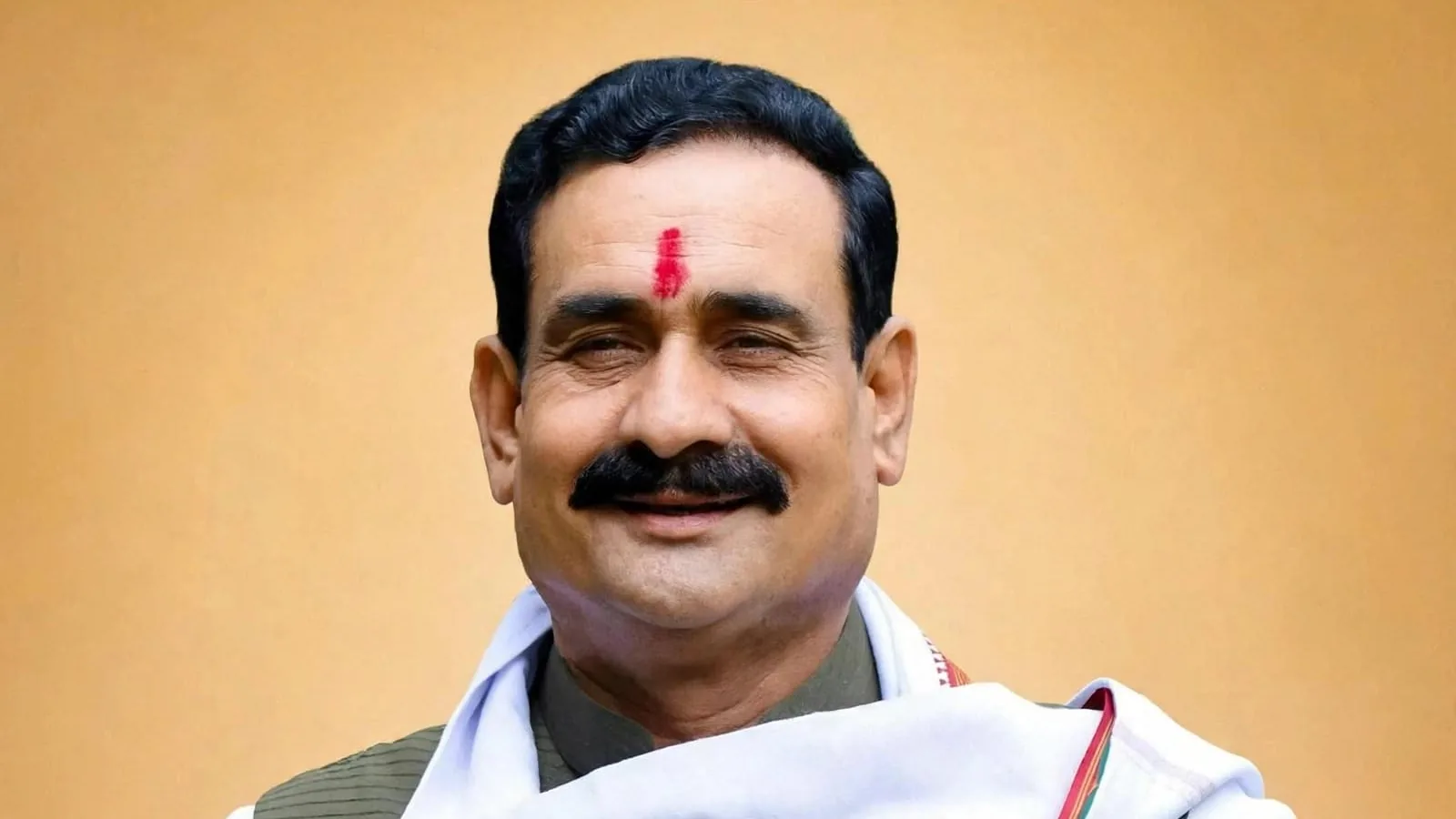
Former Madhya Pradesh Home Minister and senior BJP leader Dr. Narottam Mishra has raised a sharp question over allegations of exploitation levelled against Brahmins, saying at a Brahmin community programme in Shivpuri that Brahmins never ruled in any of the four yugas, so how could they have carried out exploitation.
Speaking at the event in Shivpuri, Mishra said that in Satyug, Treta Yug, Dwapar Yug and Kaliyug, all four yugas, Brahmins did not hold political rule. He asked: when Brahmins did not rule, how did they exploit society?
Mishra said that in the history of the country, different dynasties and rulers governed at different times, but it is not correct to always present Brahmins as rulers. Raising a question over the charge of social exploitation, he said that when power was not in the hands of Brahmins, how can the allegation of exploitation of the entire society be placed on them.
Referring to the present system, Mishra said that for about 70 years, the country has been governed according to the Constitution. In that situation, he said, it is natural to question why the Brahmin community is still put in the dock whenever social exploitation is discussed.
He described Brahmins as “not rulers, but carriers of culture”. Mishra said the community should maintain confidence in its history, tradition and contribution. His remarks were aimed at countering the narrative that holds Brahmins responsible for historical oppression, and he framed his argument around political power, social identity and cultural role.
Mishra also stressed unity within the Brahmin community. He said comments are being made continuously against the community and that Brahmins have been placing their views with restraint. However, he warned that it would be a mistake to mistake the community’s silence for weakness.
Invoking Lord Parshuram, Mishra said the Brahmin community has had knowledge of both shastra and shastra, scriptures and weapons. He also appealed to different sections of the community to end internal divisions and come together.
Mishra specifically referred to different groups within the Brahmin community, including Sanadhya, Bhargav and Kanyakubj. He said the community should not remain divided under such names and should instead move ahead in unity. According to him, there is strength in organisation, and the community should leave behind small differences.
In his familiar poetic style, Mishra also took a dig at those who criticise the Brahmin community. He said, “जुगनुओं ने शराब पी ली है, अब तो सूरज को गालियां देंगे।” Through this line, he expressed his displeasure over comments being made against Brahmins.
Mishra also responded to allegations related to control over temples and dividing society into castes. He asked that if Brahmins had captured temples, then the highest number of temples should have been of Lord Parshuram. He also referred to the caste certificate system while making his point.
At the programme, Mishra underlined what he called the historical and cultural role of the Brahmin community. He described Brahmins as a “brand of trust”. He also referred to episodes from the Ramayana and the Mahabharata and cited examples connected with the Brahmin appearance or attire.
The former Home Minister’s statement in Shivpuri has come at a time when public debate continues over caste representation, social identity and political participation. A large number of people from the community were present at the programme.
After Mishra’s remarks, his question, “ब्राह्मणों ने राज नहीं किया तो शोषण कैसे किया”, has become a point of discussion in political and social circles. His broader argument was that Brahmins were not rulers but carriers of culture, and that blaming the community for exploitation despite the absence of political rule in their hands is unfair.
The speech also focused on internal consolidation within the community. Mishra urged Brahmins not to split into sub-groups such as Sanadhya, Bhargav and Kanyakubj, and said that unity was necessary for the community to move forward. He linked this appeal to his wider message that the community should not allow its restraint or silence to be read as weakness.
By invoking Lord Parshuram, the Ramayana and the Mahabharata, Mishra placed his remarks within a cultural and religious frame. He argued that the Brahmin community’s role has historically been linked to knowledge, tradition, trust and cultural continuity, rather than political domination.
His remarks on temple control and caste divisions were also part of the same response to criticism. Mishra questioned the allegation that Brahmins had captured temples, saying that if this were true, temples dedicated to Lord Parshuram should have been the most numerous. He also brought up the system of caste certificates while speaking on the issue of social divisions.
The Shivpuri programme therefore became the stage for Mishra’s pointed defence of the Brahmin community, his appeal for unity among its different sections, and his challenge to allegations of exploitation made against Brahmins.
Frequently asked questions
What did Dr. Narottam Mishra say about Brahmins and exploitation at the Shivpuri event?
Dr. Narottam Mishra questioned how Brahmins could have carried out exploitation, stating that they never held political rule in any of the four yugas (Satyug, Treta Yug, Dwapar Yug, and Kaliyug).
How did Mishra describe the role of Brahmins in history?
Mishra described Brahmins as 'not rulers, but carriers of culture' who should maintain confidence in their history, tradition, and contribution.
What did Mishra advise the Brahmin community regarding internal divisions?
Mishra appealed to different sections of the community, such as Sanadhya, Bhargav, and Kanyakubj, to end internal divisions, leave behind small differences, and unite.
What point did Mishra make regarding temples and the Brahmin community?
Mishra responded to allegations of temple control by asking that if Brahmins had captured temples, then the highest number of temples should have belonged to Lord Parshuram.
You may also like
 Politics
Congress Leader Claims Jitu Patwari Will Fly MP’s New ₹250-Crore Jet
 Viral
MP reports fever patients; concerns over antibiotic self-medication
 Madhya Pradesh
 TET Gets Just 34,200 Applications From 1.5 Lakh Eligible Teachers
 Madhya Pradesh
 Government's New Bombardier Challenger 3500 Jet Reaches Bhopal
Most read
- 1
Air China Adds Extra Flight for Passengers Stranded in Fuel-Starved Cuba
- 2
Western disturbance to bring rain, hail and strong winds across north India
- 3
Yogi Adityanath Directs No Occupied Houses Be Demolished for Achhalda Bridge
- 4
Gwalior Temple Truck Crash Kills 12, Injures 28-29 Devotees During Navratri
- 5
Schools Shut in Five Tamil Nadu Districts, Including Chennai, Amid Heavy Rain
Comments
No comments yet. Be the first to comment.