
Mumbai's Summer Heat Alters Blood and Urine Health Markers, Study Reveals
A study finds Mumbai's summer heat impacts health markers in blood and urine tests, differing from other cities. Learn more about the findings.

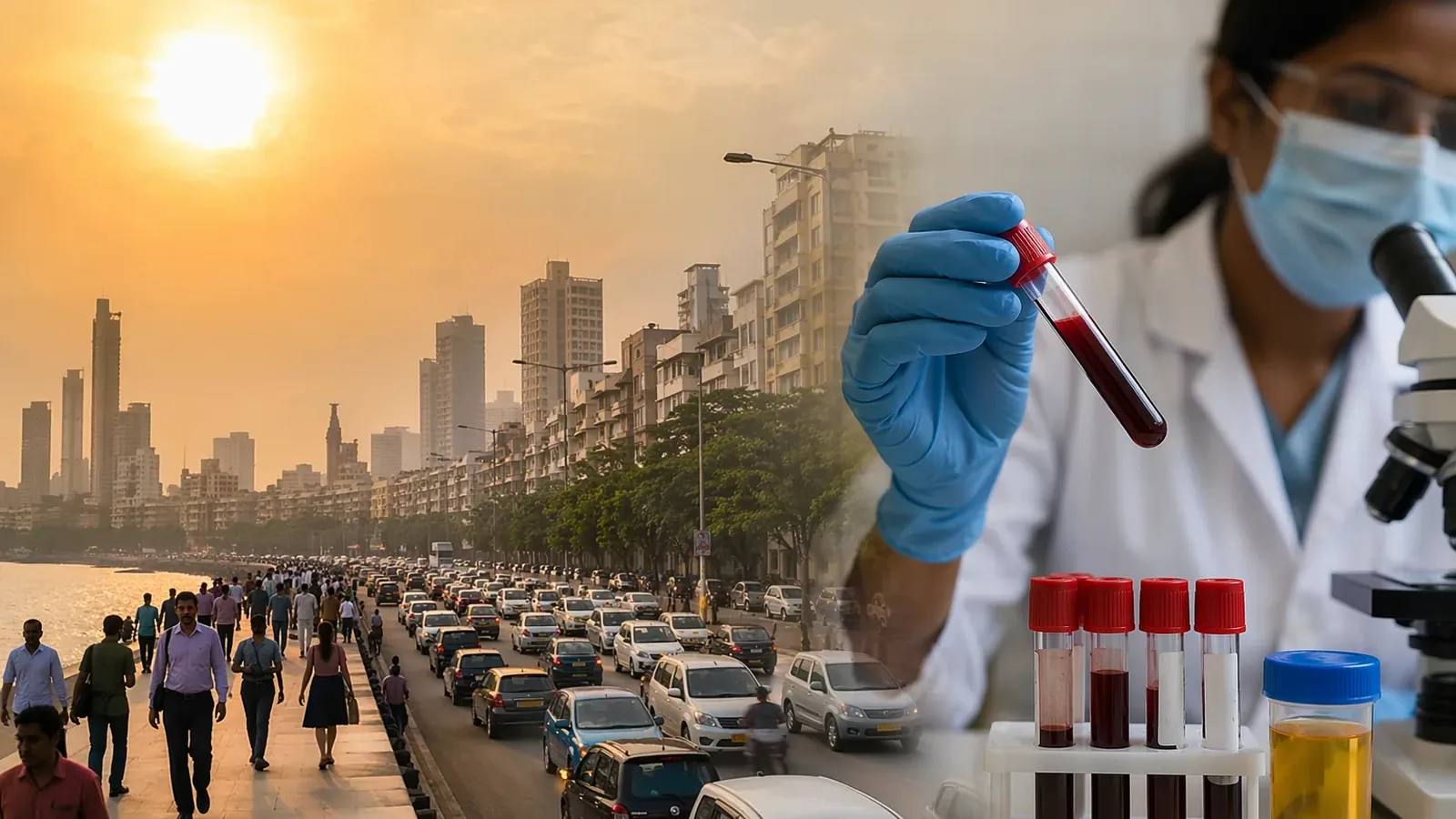
Mumbai’s summer heat appears to impact residents’ health in ways distinct from other Indian cities, according to a study conducted by Plum Health Insurance. The analysis examined routine health check-up data from 1,382 patients in the Mumbai metropolitan region, including Thane and Navi Mumbai, comparing results from the summer months of April-May 2026 with those from the winter period of November 2025-February 2026.
Unlike the dehydration patterns typically observed in hot and dry regions, Mumbai’s summer signals were marked by a rise in acidic urine, low iron levels, and lower haematocrit, a measure of red blood cell concentration. Specifically, the share of patients with acidic urine increased by 32 percent, low iron levels rose by 63 percent, and low haematocrit went up by 38 percent during summer. Surprisingly, concentrated urine, a common dehydration marker, fell by 9 percent during the same period.
The findings suggest that Mumbai’s humid coastal climate triggers physiological responses different from those seen in inland cities. “Mumbai’s summer signal is more about acidic urine and blood markers such as iron and haematocrit than concentrated urine, consistent with humid-heat stress rather than classic dry dehydration,” the report stated.
The study also highlighted contrasting patterns in neighbouring Pune, where summer did not produce clear dehydration signals. Among 823 patients analysed, concentrated urine levels were 22 percent lower in summer than in winter, while low sodium levels fell by 50 percent and low haematocrit dropped by 28 percent. Acidic urine levels remained steady. The report noted that Pune’s data deviates from the national summer-dehydration pattern, making it unsuitable as a “heatwave headline city.”
Elsewhere, inland cities such as Bengaluru, Hyderabad, and Delhi NCR showed stronger evidence of conventional dehydration patterns. Bengaluru, with the largest dataset of 6,808 patients, recorded increases across multiple markers, including low sodium, acidic urine, concentrated urine, and low haematocrit. Hyderabad exhibited one of the most pronounced urine-concentration signals, with concentrated urine rising by 45 percent and acidic urine increasing by 88 percent during summer. Delhi NCR also showed significant shifts, including a 28 percent rise in concentrated urine and a 29 percent increase in acidic urine.
Coastal cities presented mixed results. Chennai saw a 28 percent rise in concentrated urine alongside modest increases in low haemoglobin and low haematocrit, while acidic urine levels declined. However, the report advised caution with findings from smaller cities such as Jaipur, Ahmedabad, Indore, and Kolkata, which had limited sample sizes of fewer than 300 patients.
Overall, the study underscores that summer’s health effects vary significantly across India. Dry-heat cities tend to exhibit stronger dehydration signals, while humid coastal locations like Mumbai show more pronounced changes in blood markers and urine acidity.
Frequently asked questions
What health markers were affected by Mumbai's summer heat according to the study?
The study found a rise in acidic urine, low iron levels, and lower haematocrit among Mumbai residents during summer.
How did Mumbai's summer health indicators differ from those in Pune?
In Mumbai, acidic urine and low iron levels increased, while in Pune, concentrated urine levels decreased and acidic urine levels remained steady.
What was the percentage increase in patients with acidic urine in Mumbai during summer?
The share of patients with acidic urine increased by 32 percent during the summer months.
How does Mumbai's humid climate affect physiological responses compared to inland cities?
Mumbai's humid climate triggers responses characterized by acidic urine and altered blood markers, unlike the conventional dehydration patterns seen in inland cities.
What were the findings regarding dehydration patterns in other coastal cities like Chennai?
Chennai saw a 28 percent rise in concentrated urine, but also had modest increases in low haemoglobin and low haematocrit, while acidic urine levels declined.
You may also like
 Health
Cultural Activities Linked to Slower Aging, New Study Finds
 Health
Humidity and Pollution: Key Factors Behind Summer Acne in Delhi
 Weather
Deaths of three rugby players in Malaysia raise heatwave safety concerns
 Maharashtra
BMC to meet residents, priests after hundreds of fish die in Banganga Tank
Most read
- 1
Air China Adds Extra Flight for Passengers Stranded in Fuel-Starved Cuba
- 2
Western disturbance to bring rain, hail and strong winds across north India
- 3
Yogi Adityanath Directs No Occupied Houses Be Demolished for Achhalda Bridge
- 4
Schools Shut in Five Tamil Nadu Districts, Including Chennai, Amid Heavy Rain
- 5
Gwalior Temple Truck Crash Kills 12, Injures 28-29 Devotees During Navratri
Comments
No comments yet. Be the first to comment.