
Microsoft's MAI Models Surpass Frontier AI in Key Applications
Satya Nadella reveals Microsoft’s MAI AI models excel over frontier AI, optimizing costs and performance in key applications like GitHub Copilot and Excel.

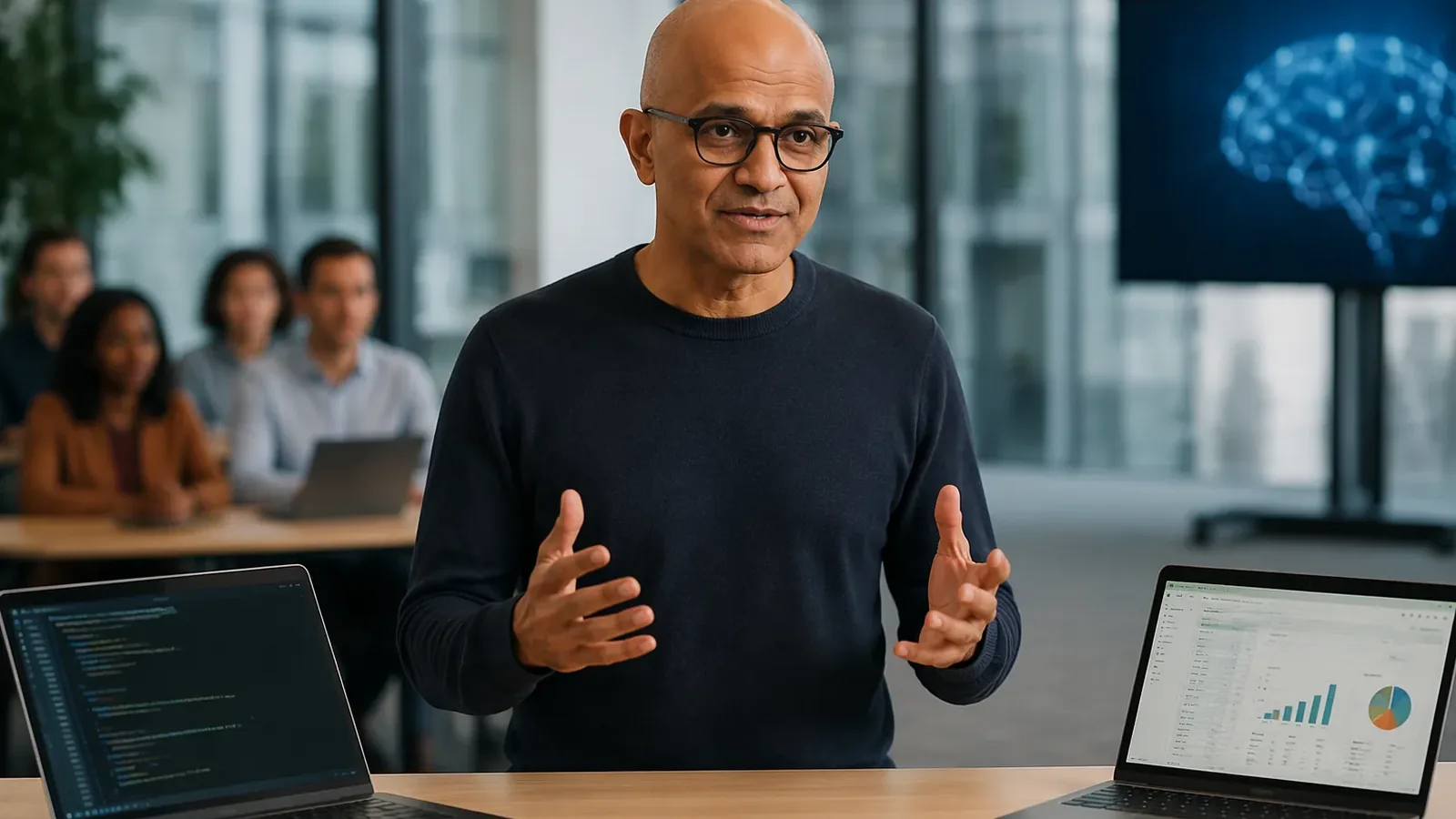
Microsoft CEO Satya Nadella has announced that the company’s in-house MAI (Microsoft AI) models are now outperforming general-purpose frontier AI models in several use cases, including GitHub Copilot, Excel, and Outlook, while significantly cutting costs. Nadella shared these updates in a blog post on July 23, highlighting Microsoft’s shift toward a tailored approach to artificial intelligence.
Focus on Optimised AI for Specific Tasks
Nadella outlined Microsoft’s “Frontier Diffusion & Control” strategy, which prioritises optimising AI systems for specific enterprise tasks rather than relying solely on a single, general-purpose frontier model. The MAI models are trained using reinforcement learning environments (RLEs) that mimic real-world customer workflows, enabling them to excel in specialised applications. This approach has already yielded notable performance gains in tools like GitHub Copilot and Excel.
“In a world where software has real marginal costs for the first time, how do we ensure frontier benefits are diffused across the entire ecosystem?” Nadella wrote. He explained that the key lies in balancing cost and outcomes by using the right AI model for each task and optimising the surrounding tools, context, and workflows.
Hybrid Approach with Frontier Models
While emphasising the success of its MAI models, Microsoft clarified that it is not abandoning frontier AI models developed by partners like OpenAI and Anthropic. Instead, these frontier models are integrated into a broader orchestration system alongside MAI. This hybrid approach allows Microsoft to reserve resource-intensive frontier models for complex tasks while assigning routine operations to the more efficient MAI models.
This strategy, described as “hill climbing,” involves continuous improvement of AI systems through product-specific evaluations and reinforcement learning based on real customer interactions. “We build RLEs where models learn inside the product system and are rewarded for completing the tasks customers actually care about,” Nadella explained.
Early Success and Broader Implications
According to Nadella, early deployments of MAI models have shown “promising results” in GitHub Copilot, Excel, and Outlook. The company is now extending this approach to other products like Copilot Chat and PowerPoint. Microsoft claims that these specialised models can match or exceed the performance of general-purpose frontier models for specific tasks while using fewer tokens, thereby reducing computational costs.
In a move to democratise this technology, Microsoft plans to make its framework available through Microsoft Foundry. This will enable enterprises to build their own AI agents tailored to their proprietary workflows, data, and evaluation systems. “What we are doing across our first-party products is also what every enterprise customer can be doing,” Nadella wrote.
Why It Matters
Microsoft’s strategy reflects a growing trend in AI development: moving away from one-size-fits-all models toward more efficient, task-specific systems. By reducing reliance on costly frontier models and focusing on real-world applications, the company aims to make AI more accessible and cost-effective for both its products and enterprise customers. This could set a new standard for how AI is deployed across industries.
Source: Indian Express
Frequently asked questions
What are Microsoft's MAI models and how do they differ from frontier AI?
MAI (Microsoft AI) models are in-house AI systems optimized for specific enterprise tasks rather than being general-purpose. Unlike frontier AI models, MAI models are trained using reinforcement learning environments that mimic real-world customer workflows, allowing them to excel in specialized applications like GitHub Copilot, Excel, and Outlook while significantly cutting costs.
Is Microsoft abandoning partnership with OpenAI and Anthropic?
No. Microsoft is using a hybrid approach that integrates frontier models from partners like OpenAI and Anthropic alongside its MAI models. Resource-intensive frontier models are reserved for complex tasks, while routine operations are handled by more efficient MAI models.
What are the performance benefits of MAI models?
MAI models have shown promising results in GitHub Copilot, Excel, and Outlook, matching or exceeding the performance of general-purpose frontier models for specific tasks while using fewer tokens and reducing computational costs.
How will enterprises benefit from Microsoft's AI strategy?
Microsoft plans to make its framework available through Microsoft Foundry, enabling enterprises to build their own AI agents tailored to their proprietary workflows, data, and evaluation systems, democratizing the same technology used in Microsoft's first-party products.
You may also like
 Technology
China promotes AI models in Europe to challenge US dominance
 Technology
Students Urged to Use Technology for Social Change at National Hackathon
 Technology
China's Quiet Leadership Style Poses Challenge to US Innovation Approach
 Politics
PM Modi Showcases India's Digital Strength at VivaTech in France
Most read
- 1
Air China Adds Extra Flight for Passengers Stranded in Fuel-Starved Cuba
- 2
Western disturbance to bring rain, hail and strong winds across north India
- 3
Yogi Adityanath Directs No Occupied Houses Be Demolished for Achhalda Bridge
- 4
Gwalior Temple Truck Crash Kills 12, Injures 28-29 Devotees During Navratri
- 5
Schools Shut in Five Tamil Nadu Districts, Including Chennai, Amid Heavy Rain
Comments
No comments yet. Be the first to comment.