
China's Quiet Leadership Style Poses Challenge to US Innovation Approach
Explore the clash of leadership styles between China's quiet approach and the US's loud innovation in the global AI race.


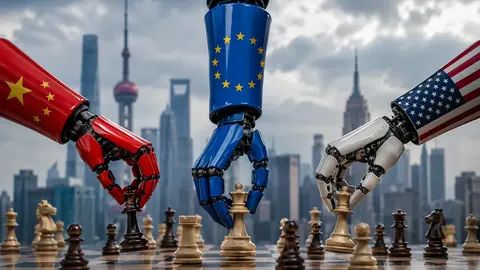
The global race for AI dominance is exposing a deeper ideological clash between two contrasting leadership styles: the disciplined, understated approach favoured by China and the visible, assertive style championed by the United States. This rivalry extends beyond technology, reflecting broader cultural differences in governance and corporate strategy.
East vs West: A Battle of Leadership Cultures
While the West often celebrates charismatic leaders who command attention, the East values leaders who demonstrate clarity, consistency, and vision. In China, quiet leadership, marked by discipline and long-term planning, has become a hallmark of both political and corporate spheres. This approach contrasts sharply with the loud leadership seen in the US, where visibility and dominance are often equated with effectiveness.
The leadership styles of Chinese President Xi Jinping and former US President Donald Trump epitomise this divide. Xi’s disciplined and strategic governance aligns with China’s focus on depth and consistency, while Trump’s brash, highly visible approach reflects the American tradition of bold, personality-driven leadership. These differences are mirrored in the corporate world, where Chinese companies often operate with a low-profile, methodical approach, while US firms thrive on innovation and public-facing dynamism.
Why Leadership Styles Matter in the AI Race
The contrasting leadership philosophies of China and the US are not just theoretical; they directly influence how each nation approaches critical industries like artificial intelligence. The US’s loud leadership style fosters a culture of rapid innovation, driven by individual brilliance and public competition. Meanwhile, China’s quiet leadership prioritises long-term strategies, collective effort, and state-guided development. This divergence could shape the future of global AI dominance, as each country’s approach brings unique strengths and vulnerabilities to the table.
As the rivalry between these two tech titans intensifies, the battle for AI supremacy is increasingly becoming a reflection of their broader cultural and leadership differences. Whether loud or quiet leadership proves more effective in the long run remains to be seen, but the stakes for global influence have never been higher.
Source: South China Morning Post
Frequently asked questions
What are the two contrasting leadership styles discussed in the article?
The article discusses China's quiet leadership style and the US's loud innovation approach.
How does China's leadership style differ from that of the United States?
China's leadership style is characterized by discipline, long-term planning, and a low-profile approach, while the US emphasizes visibility, assertiveness, and individual brilliance.
Who are the leaders mentioned as examples of these contrasting styles?
Chinese President Xi Jinping represents China's quiet leadership, while former US President Donald Trump exemplifies the US's loud leadership style.
What impact do these leadership styles have on the AI race?
The differing leadership philosophies influence how each nation approaches critical industries like artificial intelligence, with the US fostering rapid innovation and China prioritizing long-term strategies.
What cultural differences do these leadership styles reflect?
The leadership styles reflect broader cultural differences in governance and corporate strategy between the East and the West.
You may also like
 Technology
China promotes AI models in Europe to challenge US dominance
 Technology
CXMT Becomes China's Most Valuable Firm with 4 Trillion Yuan Valuation
 Technology
Antimatter promotes Chinese AI models to rival US tech dominance
 Technology
Guangdong Struggles to Retain AI Talent Amidst Fierce Competition
Most read
- 1
Air China Adds Extra Flight for Passengers Stranded in Fuel-Starved Cuba
- 2
Western disturbance to bring rain, hail and strong winds across north India
- 3
Yogi Adityanath Directs No Occupied Houses Be Demolished for Achhalda Bridge
- 4
Gwalior Temple Truck Crash Kills 12, Injures 28-29 Devotees During Navratri
- 5
Schools Shut in Five Tamil Nadu Districts, Including Chennai, Amid Heavy Rain
Comments
No comments yet. Be the first to comment.