
Major Oak, linked to Robin Hood, dies after nearly 1,000 years
The iconic Major Oak, linked to Robin Hood, has died after nearly 1,000 years. Discover its rich history and significance in British folklore.

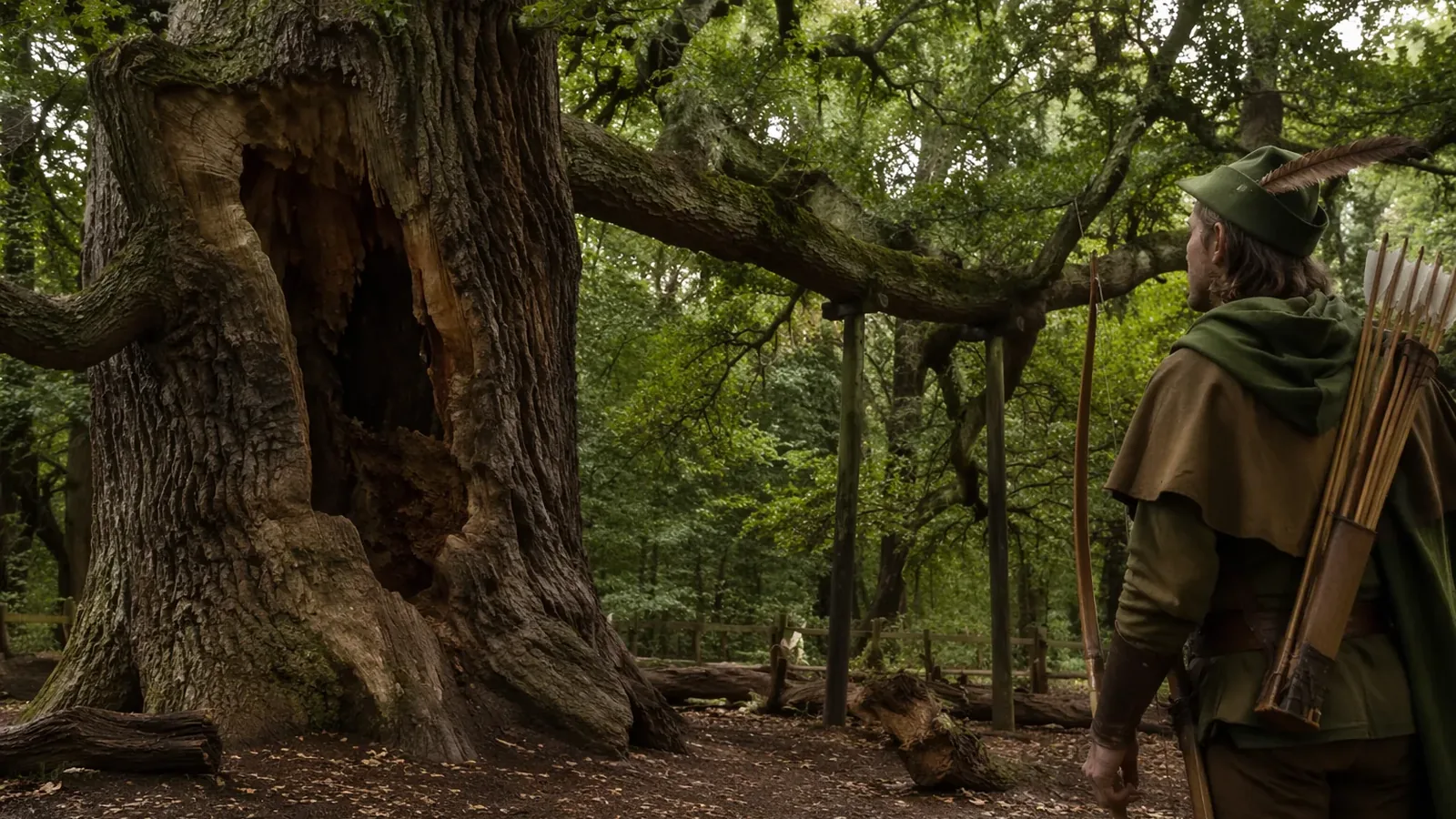
Deep within Sherwood Forest, the Major Oak stood as one of Britain’s most iconic natural landmarks, drawing visitors from across the globe. In June 2026, conservationists confirmed the death of this ancient tree after it failed to produce leaves for a second consecutive spring, marking the end of an extraordinary chapter in British history.
The Major Oak, estimated to be between 800 and 1,200 years old, was a living witness to centuries of history, including the reigns of monarchs, wars, and the evolution of Britain itself. Many experts place its age at approximately 1,000 years, meaning it likely began growing around the time of the Norman Conquest in 1066. Its immense size and longevity made it a treasured link to the past and a celebrated symbol of Nottinghamshire’s heritage.
The tree’s fame was largely rooted in folklore, particularly its association with the legendary outlaw Robin Hood. According to tales passed down through generations, Robin Hood and his Merry Men used the Major Oak as a hideout while evading the Sheriff of Nottingham. Stories of Robin Hood’s bravery, his fight against oppression, and his acts of stealing from the rich to help the poor transformed the tree into a symbol of justice and resistance. Though historians debate whether Robin Hood truly existed, his adventures solidified the Major Oak’s place in English folklore.
Before it became known as the Major Oak, the tree was referred to as the Cockpen Tree, reportedly named after cockfighting contests held beneath its sprawling branches. Its current name was bestowed in honor of Major Hayman Rooke, an 18th-century antiquarian and army officer who documented the tree and brought it to wider public attention.
The Major Oak was one of Britain’s largest oak trees, with a trunk circumference of around 11 meters and a canopy stretching nearly 28 meters across. Its massive branches grew so heavy with age that wooden and metal supports were installed to prevent them from collapsing, becoming a distinctive feature of the tree.
For centuries, visitors could climb inside the hollow trunk of the Major Oak, but growing tourism eventually took a toll on its health. Heavy footfall compacted the soil around the tree, damaging its roots and limiting access to water and oxygen. To protect the ancient oak, authorities fenced off the area in the 1970s, allowing people to admire it from a distance.
Despite extensive conservation efforts, the tree’s decline was accelerated by heatwaves, droughts, and the effects of climate change, which placed enormous stress on its ecosystem. These environmental challenges, coupled with the impact of tourism, ultimately led to its demise.
The Major Oak attracted an estimated 350,000 visitors annually, making it one of Britain’s most visited trees. In 2014, the Woodland Trust named it Tree of the Year, recognizing its cultural and ecological significance. For countless tourists, a trip to Sherwood Forest was incomplete without witnessing the legendary oak.
Although the original tree has died, its legacy endures. Acorns and cuttings from the Major Oak have been used to grow saplings planted across Britain and beyond, ensuring its story lives on. The tree itself will remain standing, continuing to provide habitat for wildlife and serving as a reminder of its remarkable history. For millions, the Major Oak will forever be intertwined with the legend of Robin Hood and the enduring magic of Sherwood Forest.
Frequently asked questions
What was the Major Oak and why was it famous?
The Major Oak was one of Britain's most iconic natural landmarks located in Sherwood Forest, estimated to be between 800 and 1,200 years old. It was famous for its association with the legendary outlaw Robin Hood, who according to folklore used the tree as a hideout with his Merry Men. The tree's massive size, with a trunk circumference of around 11 meters and a canopy stretching nearly 28 meters across, made it a treasured symbol of British heritage.
When did the Major Oak die and how was its death confirmed?
In June 2026, conservationists confirmed the death of the Major Oak after it failed to produce leaves for a second consecutive spring. This marked the end of nearly 1,000 years of life for the ancient tree.
What caused the Major Oak's decline?
The tree's decline was caused by multiple factors, including heavy tourism that compacted soil around its roots and limited access to water and oxygen. Additionally, heatwaves, droughts, and the effects of climate change accelerated its deterioration. To protect the tree, authorities fenced off the area in the 1970s to prevent further damage from visitor footfall.
How did the Major Oak get its name?
Before being called the Major Oak, the tree was known as the Cockpen Tree, reportedly named after cockfighting contests held beneath its branches. Its current name was bestowed in honor of Major Hayman Rooke, an 18th-century antiquarian and army officer who documented the tree and brought it to wider public attention.
You may also like


Most read
- 1
Air China Adds Extra Flight for Passengers Stranded in Fuel-Starved Cuba
- 2
Western disturbance to bring rain, hail and strong winds across north India
- 3
Yogi Adityanath Directs No Occupied Houses Be Demolished for Achhalda Bridge
- 4
Gwalior Temple Truck Crash Kills 12, Injures 28-29 Devotees During Navratri
- 5
Schools Shut in Five Tamil Nadu Districts, Including Chennai, Amid Heavy Rain
Comments
No comments yet. Be the first to comment.